


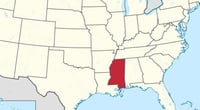
If you were to name the state with the lowest personal income in the U.S., Mississippi would certainly be on the list.
Looking at the numbers, it is clear that the median household income in Mississippi is about $52,000, which is far below the national average of $75,000, and the per capita personal income is only about $25,000.
The national average is around $41,000, so the gap is quite large. Additionally, the poverty rate is over 19%, the highest in the country.
So why is Mississippi's income level lower than that of other states?
The first reason is the industrial structure. Mississippi has traditionally been an agriculture-centered state. While agriculture is an important industry that supplies essential goods, it tends to have low wage levels and lower productivity compared to other high-tech industries. Although some manufacturing has recently taken root, it is not a hub for high-wage industries like California's IT, New York's finance, or Texas's energy. Ultimately, the industrial structure itself creates an environment that makes it difficult to raise income levels.
The second issue is the level of education. Education is often directly linked to income, and Mississippi still has relatively low educational achievement compared to other states. With a low percentage of individuals completing higher education or possessing specialized skills, opportunities to enter high-income jobs naturally decrease.
The third limitation is in the job market. Mississippi has very few headquarters of large corporations that drive economic growth. As a result, many people work in small businesses or are self-employed, which typically results in lower average incomes compared to those employed by large national companies.
The fourth factor is the concentration of low-wage industries. Even though there is manufacturing in Mississippi, it generally consists of labor-intensive sectors, and the service industry also makes up a significant portion. The problem is that most of these industries have low wage levels. There are many jobs in food service and retail, but the average hourly wage is below the national average.
Finally, we can point to the vicious cycle of poverty. With a high percentage of the population living in poverty, the average personal income is inevitably low, and the proportion of households relying on government assistance is relatively high. Within this structure, opportunities to escape poverty are limited, and the situation of being unable to raise personal income repeats itself.
The low personal income in Mississippi is not just a wage issue but the result of various factors such as industrial structure, education level, employment environment, and poverty rate intertwining. Therefore, while it may be difficult to resolve in the short term, expanding educational infrastructure and diversifying industries are likely to be important solutions in the long run.






 moo moo |
 ultron78 |
 garlic bread |
 Sugar Cream Door Bulletproof Noodles |
 urbanmint |
 frostingline |

 Deep South Mississippi |
 Good World Good Thoughts |
  DREAM BIG |
  frostbite |
  330 Forever My Love |
  El Dorado |
  dralix58 |
  Gorama Round |
  Skydiving |
  dreamport |
  Yellow Snowman |
  Toaster Pizza Magic Show |
  velvetnom |
  Anytime Journey |
  Mrs. Duluth |
  jaxter |
  Atlanta Mama |
  Baguette Blog |
  Tan Sol |
  US Embassy |
  Korean Mom |
  My NYC |