
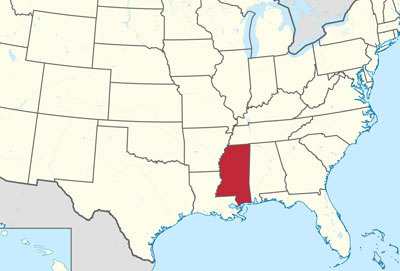
Mississippi became the 20th state of the United States in 1817. It joined the Confederacy during the Civil War (1861-1865) and maintained an agriculture-based economy until the early 20th century after the Reconstruction era.
However, in 1927, a major flood of the Mississippi River inundated many areas, significantly impacting the state's economy and society. In the 1960s, the civil rights movement was actively pursued, and in 1964, a law prohibiting racial discrimination in public places was passed.
Demographics
The population of Mississippi is approximately 2,949,965 (as of 2020), with a population density of 23.73 people/km². The major racial composition is 59.1% White, 37.8% Black, 3.4% Hispanic, and 1.1% Asian.
Median Income
Mississippi has the lowest median household income in the United States. This is due to the characteristics of the state's economic structure and industrial base, with many residents engaged in agriculture and low-wage industries. This income level affects various socioeconomic indicators such as education, healthcare, and housing in the state.
The history, demographics, and economic characteristics of Mississippi play a significant role in shaping the state's culture and social structure.
Main Features of Mississippi's Industries
Agriculture
Agriculture is the cornerstone of Mississippi's economy, with cotton, soybeans, corn, rice, and sweet potatoes being the main products. Cotton, in particular, is traditionally known as the state's representative agricultural product.
Manufacturing
In the manufacturing sector, major products include chemical products, food processing, petroleum products, and transportation vehicles. Pascagoula hosts a large oil refinery, and factories near Canton manufacture automobiles.
Services
The service sector accounts for about 75% of employment and gross domestic product in Mississippi. Major industries include casino gaming, tourism, and financial services, with many casinos operating in Biloxi and Tunica County.
These industries constitute Mississippi's economy, and each sector significantly influences the state's culture and social structure.








 frostingline |
 Certified Authentication Blog Page |
 Good World Good Thoughts |
 Lansinger |
  Deep South Mississippi |
  Tonky |
  viroma |
  cookie |
  Live and that's it |
  Alright Twain |
  eatontown blog |
  HAWAII Korean Church News |
  Amore |
  linex |
  Balancework |
  laro90 |
  MEDBIO American Doctor Blog |
  SWAT TEAM BLK |
  DREAM BIG |
  frostbite |
  330 Forever My Love |
  El Dorado |
  dralix58 |
  Gorama Round |
  Skydiving |