

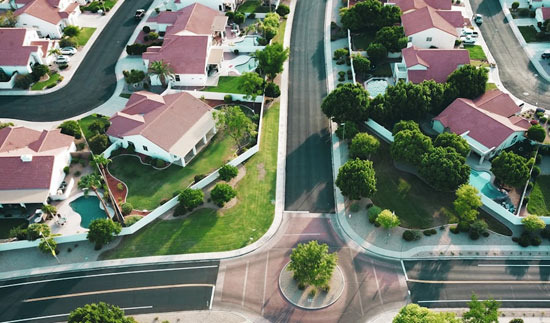
These days, when Koreans gather in Austin, there's a topic that comes up frequently: home prices.
Living in Austin, I remember that just 2-3 years ago, the atmosphere was one of urgency, with people saying, "If you don't buy now, you'll never be able to buy."
However, the mood has completely changed. Instead of the rush to buy, the question I hear more often is, "Is it okay to buy now?"
Recent data indicates that the Austin metro area is one of the few regions in the U.S. where 'residential land is significantly oversupplied.'
In simple terms, there is a lot of land ready for building, but there aren't as many people looking to buy homes as there used to be. Supply is piling up, but demand is not what it once was.
So, when I walk around the neighborhood these days, I still see many construction sites. Builders haven't stopped working.
However, they are not marketing aggressively like before. It feels like they are adjusting their pace. When I visit model homes, they are not as crowded as they used to be, and conditions like incentives or interest rate assistance are gradually increasing.
Why is this happening? The reason is interest rates. As mortgage rates have risen, the burden of monthly payments has significantly increased, even for the same house. Coupled with rising living costs, car payments, student loans, and uncertainty in the job market, people's psychology has definitely become more cautious.
From conversations with fellow Koreans, a common theme emerges: while incomes haven't increased significantly, expenses have skyrocketed. It's also hard to say that home prices are still affordable. As a result, more people are choosing to wait rather than stretch themselves to buy a home like before.
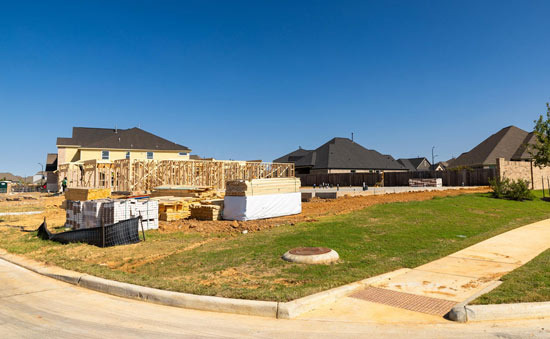
From the builders' perspective, the situation is similar. They have already secured land and are progressing with projects, but when buyers decrease, they have no choice but to slow down. The saying that if consumers are anxious, builders become anxious too, perfectly fits the current situation.
That said, it's hard to say that the Austin market has collapsed. It remains one of the cities in the U.S. with significant construction activity. The influx of population continues, and the long-term growth potential is still high. However, it has become clear that it is no longer a market that will rise unconditionally like before.
Personally, I feel this change: a few years ago, the market was driving people. Now, people are looking at the market and making judgments. The number of people rushing to buy has decreased, and more are crunching the numbers.
Recently, opinions within the Korean community have been divided. Some say, "Home prices will drop now," while others argue, "Austin will eventually rise." Both could be correct. In the short term, there may be adjustments, but in the long term, growth is likely. The question is when to enter during that period.
As a 35-year-old, my concerns have grown. If I wait too long and prices rise again, I might miss the opportunity, and if I jump in now and a correction happens, it could be burdensome. That's why I often hear this saying: "My financial situation is more important than market timing."
One thing is clear: the atmosphere has changed. In the past, the fear was 'not being able to buy,' but now the fear is 'buying incorrectly.' The reason there is so much talk about home prices in Austin seems to stem from that uncertainty.
The current market appears to be neither overheated nor in recession, but rather in a period of taking a breather. This makes it seem even more challenging, as psychology is driving the market more than numbers.
For the time being, discussions about Austin real estate will likely continue. Is now the opportunity, or is it just a brief pause? That's what we are trying to figure out.
 ThirstyJjang






 moo moo |
 ultron78 |
 garlic bread |
 Sugar Cream Door Bulletproof Noodles |
 urbanmint |
 quanta7 |
 Living with a Consistent Heart |
 U.S. Weather Bureau News |
 |
|  Dallas Fort Worth DFW |
  yentra |
  Make My Day |
  Victory 1988 |
  Tonky |
  viroma |
  cookie |
  Live and that's it |
  Alright Twain |
  eatontown blog |
  HAWAII Korean Church News |
  Amore |
  linex |
  Balancework |
  laro90 |
  MEDBIO American Doctor Blog |
  SWAT TEAM BLK |
  DREAM BIG |
  frostbite |
  330 Forever My Love |
  El Dorado |