

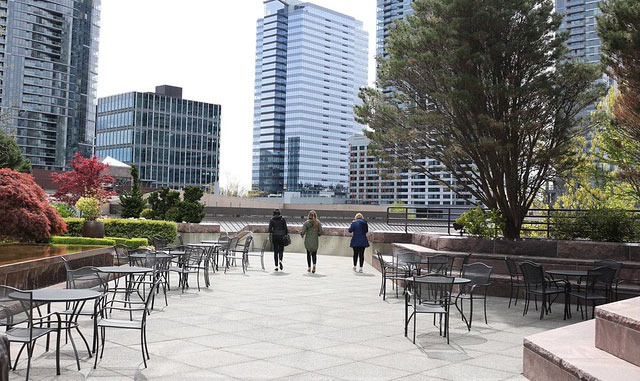
Recently, looking at the Washington state real estate market, it feels like Bellevue and Tacoma, while both in the Seattle metro area, are taking different paths. Both have seen significant increases in home prices and popularity, but the nature and durability of that increase are different. To put it simply, Bellevue has solidified its status as one of the top luxury residential markets in the West, while Tacoma still has a strong character as a growing intermediate destination.
In terms of the increase in home prices over the past few years, Bellevue overwhelmingly surpasses Tacoma. Tacoma has been chosen as a relatively affordable alternative due to the skyrocketing home prices in Seattle and Bellevue. This is an increase driven by so-called displaced demand. Therefore, while Tacoma has risen significantly in a short period, it started from a lower point and has been structurally pulled up by the surrounding markets.
In contrast, Bellevue has moved under a completely different logic. As Amazon chose Bellevue as its second key hub instead of downtown Seattle, tens of thousands of high-income workers moved in, and big tech companies like Meta and Google expanded significantly around Bellevue's office town, making home prices literally skyrocket. Currently, the median price of single-family homes in Tacoma is around $500,000 to $600,000, while Bellevue has already become a market exceeding $1.5 million to $2 million.
As of 2026, a key feature of the Bellevue real estate market is that high-income demand continues to flow in while supply is almost stagnant. Bellevue has very little geographical room for expansion. Due to lakes, nature reserves, and an already established urban structure, large-scale new housing supply is difficult. Yet, high-income tech workers keep coming in.
The school district is among the best in Washington state, commercial facilities are even more pleasant than in Seattle, and with a well-preserved natural environment, it has become a residential area preferred by the upper class rather than the middle class. This structure creates a foundation where prices are not easily undermined in the long term, despite short-term volatility.
Looking ahead, Bellevue is expected to see moderate increases or stability at high price levels rather than sharp spikes. Improvements in transportation infrastructure, such as light rail line expansions, are ongoing, and the employment base in the tech industry remains solid. Particularly important is the lack of inventory. Existing homeowners who bought during low-interest periods have no compelling reason to sell, so the number of homes on the market is extremely limited.
This structure acts as a support from above rather than pushing prices down. However, if high interest rates persist or there are large-scale restructurings in the tech sector, short-term adjustments are certainly possible. Still, the prevailing assessment is that it is a market with limited declines compared to other areas.
On the other hand, Tacoma is much more volatile than Bellevue. Thanks to relatively low prices, demand remains steady, but the driving force behind the increase is not rooted in high-income core industries like Bellevue. Therefore, it reacts more sensitively to economic trends and interest rate changes. Tacoma still has great growth potential, but it is difficult to compare its stability to Bellevue.
In summary, as of 2026, Bellevue has solidified its position as the absolute leader in the Seattle metro area, while Tacoma is a growth market leveraging price accessibility. In terms of stability and long-term holding value, Bellevue has the advantage, while Tacoma becomes a more interesting option for those looking for investment opportunities utilizing its relative low-price appeal.
Although the two cities are in the same region, one might think they are already different classes of real estate markets.






 moo moo |
 ultron78 |
 garlic bread |
 Sugar Cream Door Bulletproof Noodles |
 urbanmint |
 eclipse |
 French Macarons |
 Always Dreaming of Big Success |
 element |
 US Snowboard Information Exchange |
  Anytime Journey |
  Mrs. Duluth |
  jaxter |
  Atlanta Mama |
  Baguette Blog |
  US Embassy |
  Korean Mom |
  My NYC |
  Mr Oh |
  forevergee |
  festival |
  manchester |
  constant |
  Leapfrog Move |
  vibranto |
  Tora Tora |
  yellowbutter |
  Dolly |
  NYC saladbar |