

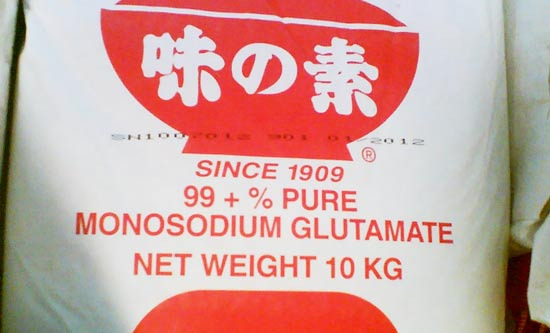
Honestly, in the past, I also felt that MSG, like Miwon, was somehow bad for my health.
Especially growing up hearing Korean moms say, "seasoning is bad for your health," I naturally thought that way too.
However, after living in the U.S., I found that the food culture is different, and after cooking for a long time, my thoughts gradually changed.
Among Americans, there was a very negative perception of MSG for a while.
In particular, the story of "Chinese Restaurant Syndrome" was famous, which turned out to be an urban legend.
There was a time when people said that eating takeout from Chinese restaurants would cause headaches or make you feel strange, treating MSG as a dangerous additive.
When I first came to the U.S., I saw many menus in Chinese restaurants that said "No MSG."
There was definitely an atmosphere that made it seem like using MSG was a big deal.
However, over time, the atmosphere has changed quite a bit.
The FDA classifies MSG as a generally safe ingredient, and various studies have shown that there are no significant issues.
Of course, some people may react sensitively, but that can happen with caffeine or certain foods as well.
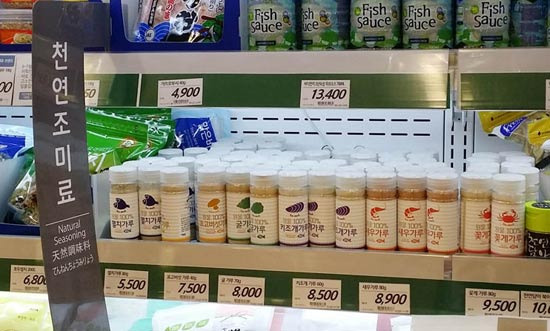
When you think about it, MSG is ultimately a flavor component that naturally occurs in food.
It's found in commonly known foods like mushrooms, tomatoes, and cheese, but in the past, the name itself sounded too chemical, making it seem scary.
Hearing terms like chemical seasoning, artificial seasoning, or even monosodium glutamate can easily kill your appetite.
This is why marketing and promotion are important.
I also initially used Miwon discreetly, but these days, I see many famous chefs using MSG naturally.
Especially in the U.S., the popularity of Asian food has significantly increased in recent years, and the perception of MSG seems to have changed quite a bit.
In ramen shops, Thai restaurants, and Korean restaurants, there is no longer an atmosphere that treats MSG like a devil.
People are even asking, "Why were we so afraid of MSG?"
Some analyze that the past negative perception was connected to biases against Asian food.
Of course, that doesn't mean we should use a lot of seasoning indiscriminately.
Too much of anything can be burdensome.
However, the atmosphere of assuming that "using Miwon = harmful to health" has decreased significantly in the U.S.
These days, I use a little bit when making soup or stir-frying at home. I definitely feel that the flavor of the food becomes more stable.
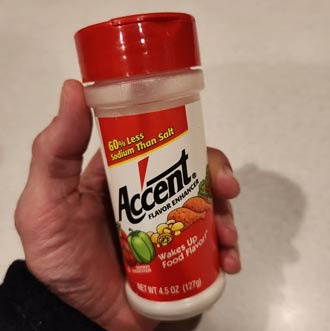
Just going to a local grocery store in the U.S., MSG products are very commonly sold. A representative product is Ac'cent, shown in the photo above.
It features a red cap and comes in a white bottle, easily found in the spice section of regular stores like Walmart, Target, and Kroger.
The ingredients are actually the same 100% MSG as Korean Miwon.
Interestingly, in the U.S., they emphasize the term "Flavor Enhancer" instead of MSG to grow the market.
In areas like Seattle, where Asian food culture is strong, Ajinomoto products are also very popular.
At H Mart or Asian markets, you can buy large quantities at a low price, making it a cost-effective product often recommended by American cooking YouTubers.
Koreans are still most familiar with using Miwon. Just a little bit added to stews or stir-fried dishes makes a noticeable difference in flavor.
It seems that the era of viewing MSG as inherently bad in the U.S. has largely passed.
Ultimately, I think balance is important. There's no need to have excessive fear, nor should we use it indiscriminately.
It's clear that the perception of MSG in the U.S. has changed quite a bit compared to the past.
 UdirTemper
 JackpotElec
 RegularChun






 hoosierdaddy |
 sun walker |
 Let's Be Like a Salt-like City Person |
 Springs Korea |
 US Legal Consultation on Trials |
 Seattle - Emerald City |
 PETRO Vatican Shrine |
 Bacon King Blog |
 Bald Eagle Brothers |
 USA Business News |
  churrotop |
  swiftlane |
  allstar realty |
  mystery |
  dermoon |
  UCLA Captain |
  lattecu |
  dynamite |
  frostingline |
  Hakuna Matata |
  Your Curiosity Resolved |
  Way to easy |
  Chino Min |
  nexabyte |
  moonshine 7 |
  Sunset Oregon |
  victoria 68 |
  golfmaster |
  Montgomery Mom |
  squidogame |