

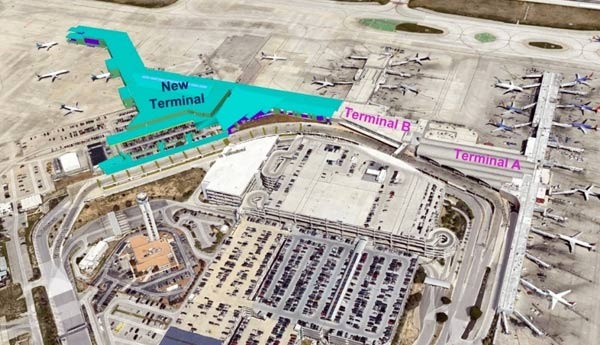
San Antonio Airport has only two terminals, A and B, which gave it a strong "just a quiet neighborhood airport" feel, but now it is transitioning to a completely different level. Recent expansion plans indicate that the airport is actively transforming into a major hub.
The most notable news is that the newly under-construction Terminal C will feature 18 gates. The original plan was for 17 gates, but due to the faster-than-expected increase in passenger numbers, the scale has been expanded from the start.
Terminal C, visible in the upper left of the photo, will cover an area of about 850,000 square feet, with a single security checkpoint, and 40,000 square feet allocated for shops and dining. This is a major construction project that is more than double the current size of San Antonio Airport.
Even more surprising is that the projected number of airport users in 2025 is estimated to be 11.41 million, which far exceeds the pre-pandemic record of 10.36 million in 2019. The reason the airport, which used to be relatively quiet except during holiday seasons, is now busy even on weekdays is due to this increase.
The number of flight routes is also continuously increasing, and by the end of 2025, the number of direct routes is expected to expand to 49. Before the pandemic, there were only about 34 to 35 routes, so it has almost become a different airport.
This change signifies more than just the convenience of flying. The economic impact generated by a single airport amounts to about $7.4 billion annually, and it currently supports 55,000 jobs, with an additional 16,000 permanent jobs expected to be created once Terminal C is completed.
Personally, the reason I feel this change more significantly is that San Antonio is completely transitioning from its image as a "livable military city" to a "growing city where people and money gather."
With corporate travel, tourism, medical, conventions, and military-related movements overlapping, a structure has been created where airport demand continues to increase. The growth of the airport signifies the growth of the city, which impacts real estate, employment, business districts, and overall living conditions.
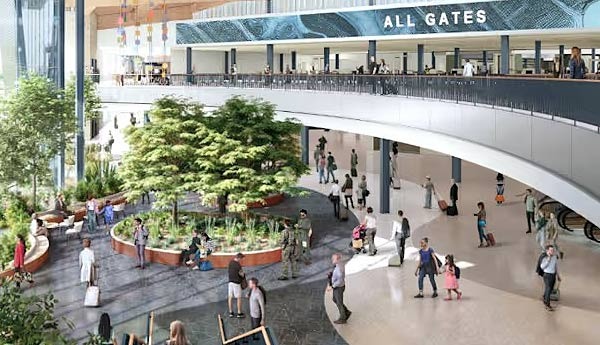
When Terminal C opens in 2028, a completely different airport landscape will unfold. The transfer process will become much more efficient, the selection of restaurants and shops will significantly increase, and the waiting time for security checks is likely to be structurally reduced.
In the past, there were frequent comments like, "I wish San Antonio's airport were a bit bigger," but now the time when that complaint will disappear is just around the corner.
San Antonio's growth has now entered a stage that can be confirmed with concrete numbers. The airport expansion is a symbolic project of that growth. A few years from now, when I board a plane from Terminal C, I might say, "I never expected this airport to change so much."
In fact, I have seen opinions from Koreans on Webpromo that they preferred the quieter atmosphere of San Antonio Airport. However, just as people praised Gimpo Airport until Incheon Airport was built, I believe this airport also needs to expand and increase direct flights. This way, the inconvenience of having to transfer at a layover when coming to San Antonio will be reduced.






 moo moo |
 ultron78 |
 garlic bread |
 Sugar Cream Door Bulletproof Noodles |
 urbanmint |
 Helpful Life Stories |
 American Man in a Mask |
 Hajiwon Blog Hair Salon |
 Make My Day |
 TEXAS Fishing Boat |
  laro90 |
  MEDBIO American Doctor Blog |
  SWAT TEAM BLK |
  DREAM BIG |
  frostbite |
  330 Forever My Love |
  El Dorado |
  dralix58 |
  Gorama Round |
  Skydiving |
  dreamport |
  Yellow Snowman |
  Toaster Pizza Magic Show |
  velvetnom |
  Anytime Journey |
  Mrs. Duluth |
  jaxter |
  Atlanta Mama |
  Baguette Blog |
  Tan Sol |