

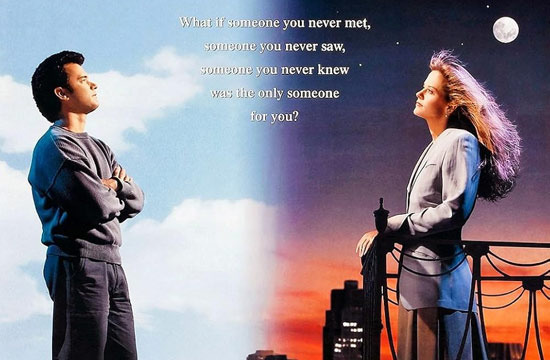
Why does 'Sleepless in Seattle' still automatically come to mind when thinking of Seattle?
It's not just because it's a well-made romantic comedy. This film doesn't just use the city as a backdrop; it solidifies the city as an emotion.
The story follows two people who communicate only through email without knowing each other's faces.
Unbeknownst to them, they are actually competitors in the bookstore business, yet they grow closer online.
As they share their daily struggles and feelings, a natural affection builds between them, leading to a decision to meet in person.
However, their relationship is complicated by existing conflicts and emotions in real life.
The process of discovering each other's identities and the evolving feelings are the core of the story.
But there's something clever about this film. It pretends to focus on people while continuously pushing the setting into the foreground.
Typically, in romance, the couple builds their feelings by being together, but here, Sam and Annie hardly meet.
Yet the audience feels a constant connection. Seattle serves as that link. The rain, fog, water, and floating houses.
In simple terms, it's not the people who are in love; it's the city that plays the role of a matchmaker.
Especially the houseboats on Lake Union. Realistically, they are uncomfortable. They're humid, shaky, and difficult to maintain.
But the film transforms this into something entirely different, romanticizing it as "a life that's okay being alone" or "a space for a wounded man."
When you add Pike Place Market and the Space Needle, it becomes more than just a tourist spot; it becomes an emotional backdrop.
Thus, Seattle starts to appear not just as a location but as a story itself.
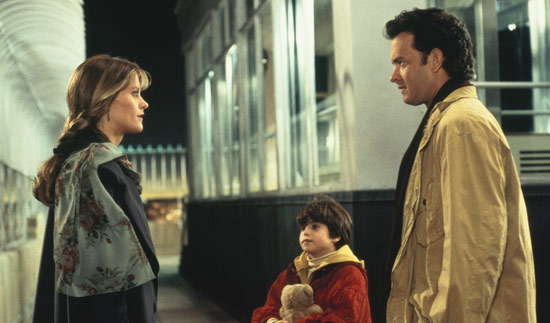
And the film achieves something significant: it makes you remember Seattle through its weather.
Yes, it is a rainy city. But after this film, that rain became not just a climate feature but a romantic code.
The cloudy skies become a time for reflection, the wet streets serve as a device for recalling the past, and the lights on the water transform into feelings of longing.
Does it match reality? That doesn't matter.
Movies aren't meant to explain reality; they create images that stick in your memory.
The story structure is also intriguingly crafted. The fact that they don't meet makes their connection even stronger.
This is because the focus of the film isn't on the people but on 'the streets' and 'waiting.' And the Seattle scenery fills that empty space.
In the end, they meet at the Empire State Building. The scene itself is powerful.
But strangely, the memory doesn't end there.
It starts in Seattle, the emotions are tied to Seattle, and the lingering feelings are also Seattle.
New York is just the place where the story concludes.
This film doesn't explain Seattle. Instead, it makes you feel it.
That's why it remains unforgettable over time.
When someone brings up Seattle, the first thing that comes to mind isn't its population or economy, but the atmosphere of this film, that damp ambiance.
At first glance, the film's premise might seem a bit forced, but once you watch it, that thought hardly crosses your mind.
The reason is simple. The perspective on people and love is warm from the start, and the performances of Tom Hanks and Meg Ryan play a significant role in naturally drawing out those emotions.
The film's success wasn't just average.
In the U.S., TriStar Pictures distributed it, and the combination of those two actors was already a box office guarantee at the time, so expectations were high even before its release.
It premiered perfectly timed at the end of June, just as the summer season began, and the results were explosive.
It grossed over $220 million worldwide, landing it among the top box office hits of that year. Considering it's a romantic film, that's quite an exceptional achievement.
In South Korea, the situation wasn't bad either. Although the genre itself doesn't typically draw massive audiences, it attracted over 200,000 viewers in Seoul. The fact that it maintained its position despite competition at the time is noteworthy.
Over time, its evaluation has only improved. It didn't just end as a box office hit; it became a staple in discussions about 90s romantic films.
It can be seen as a product of the perfect timing of the director's style and the actors' peak. Perhaps that's why it continues to resurface every season, and people keep revisiting it. It's not a film that fades with trends; its emotional structure is fundamentally universal, allowing it to endure.
Ultimately, this film has transcended being a representative romance of its time, establishing itself as a classic that people return to even years later.







 Tan Sol |
 Day by day |
 Kitchen Ideas |
 Iowa Egen Aunt |
 Beauty, Health, Lifestyle Blog |
  Bald Eagle Brothers |
 Bacon King Blog |
 PETRO Vatican Shrine |
 Seattle - Emerald City |
 Real Estate Agent USA |
  Tonky |
  viroma |
  cookie |
  Live and that's it |
  Alright Twain |
  eatontown blog |
  HAWAII Korean Church News |
  Amore |
  linex |
  Balancework |
  laro90 |
  MEDBIO American Doctor Blog |
  SWAT TEAM BLK |
  DREAM BIG |
  frostbite |
  330 Forever My Love |
  El Dorado |
  dralix58 |
  Gorama Round |
  Skydiving |