

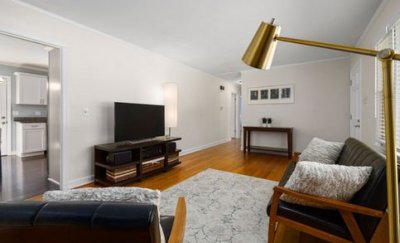
I've been hearing more inquiries about finding 2-bedroom rentals in Anchorage, Alaska's largest city, recently. Due to the area's long winters, rental contracts tend to peak in spring and summer, and this trend is evident again this year.
According to RentCafe data, the average rent for a 2-bedroom in Anchorage is reported to be $1,621. In the Northeast region, based on Zumper, the average is around $1,650, while Rent.com suggests it is about $1,550. The variations can be attributed to differences in sample sizes from each source. Overall, it seems realistic to consider the actual market price to be between $1,550 and $1,650.
Midtown is a steady area for demand due to its proximity to major shopping malls and key hospitals like Alaska Regional and Providence. Because of its accessibility, it's common to see listings for 2-bedrooms exceeding an average of $1,700.
Families tend to prefer South Anchorage and Eagle River. The school district ratings are relatively high, and there are many single-family rentals with yards, making it easier for families with children to find suitable homes. However, the commute to downtown is longer, so rents are generally slightly lower than in Midtown.
Areas with high demand for roommate shares include the UMED District and near Spenard. With the University of Alaska Anchorage and hospital complexes nearby, many students and young professionals share rooms, leading to a relatively fast turnover of 2-bedroom listings.
Korean households have traditionally favored the Spenard and Mountain View areas, where Korean markets and restaurants are clustered. However, in recent years, there has been an increase in Korean families moving to South Anchorage or Eagle River, considering school districts for their children. In this area, 2-bedrooms often range from $1,600 to $1,750.
Recent rental trends indicate that Anchorage's rate of increase is more moderate compared to the national average. With no significant increase in new supply, steady demand has led to a gradual rise rather than a sharp decline.
For Korean families, it is worth noting that aiming for contracts between May and August offers a wider selection of listings compared to moving in winter. It is practical to prioritize between South Anchorage and Midtown, considering school districts, commute distances, and market accessibility.
Room size and parking conditions also contribute to rental price differences. Anchorage experiences heavy snowfall in winter, so listings with indoor parking or electric heaters often cost around $100 more, even for the same 2-bedroom. It's essential to confirm whether winter parking and heating costs are included before signing a lease to accurately gauge actual expenses.
Newer listings are gradually increasing in areas like O'Hare Lake or Aviator Hill in South Anchorage rather than near downtown. However, Anchorage has a low rate of new construction, so the rental gap between newly built properties and older ones tends to be larger than in other areas. Midtown attracts tenants prioritizing hospital and shopping access, with rents ranging from $1,650 to $1,800, while South Anchorage and Eagle River, favored by families looking for good school districts and homes with yards, see rents from $1,500 to $1,650. The UMED and Spenard areas, where roommate sharing is common, typically have rents between $1,450 and $1,600.
Ultimately, when looking for a 2-bedroom in Anchorage, it's important to consider not just the rental price but also heating methods, parking, and school district assignments to reduce actual living costs.
When negotiating with landlords, it can be advantageous to leverage Anchorage's unique seasonality. Demand for moving decreases in winter, so many landlords offer conditions like rent reductions or first-month-free promotions. Some tenants even prepare for next year's contracts in winter rather than rushing to sign in the busy summer season.
Utility costs are also a crucial factor when assessing Anchorage rentals. Many listings require tenants to pay separately for electricity and heating, with winter heating costs often adding an extra $150 to $250 per month. If you only consider the rental price when budgeting, you may find a significant discrepancy between expected and actual expenses.
 OceanDream
 WisconDriver







 |
| 
 Premium Gas Camp |
 CA Real Estate |
 cheesepup |
 breezem |
 AL ALASKA |
 Sunny's Travel in America |

 Alaska Salmon Buyer |
 Information on Area Codes in the Americas |
  Taco Bell Candy Note Blog |
  MintO |
  My Town My Way Blog |
  New Mexico Friends MAX |
  Hajiwon Blog Hair Salon |
  Wicked - Fireyo |
  Seattle - Emerald City |
  new noah |
  xylora |
  Anjollinya Blog |
  total solution |
  Vacation on Hawaii |
  valtri |
  August Snowman |
  Way to easy |
  Pirate Ship Popcorn Maker |
  USA Business News |
  Samsung My My |
  bubblo |
  tartbear |