

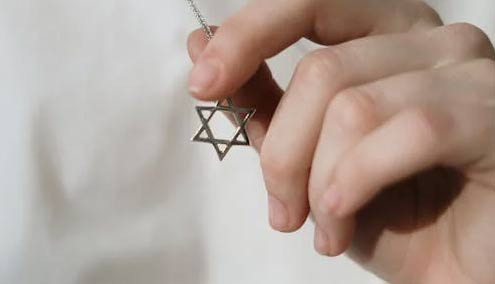
Judaism has several religious holidays observed only by Jews, most of which come with religious significance and strict rules. In particular, the Orthodox Jewish community often strictly prohibits work, the use of electronic devices, driving, and financial transactions. Holidays based on the Jewish calendar, like Shavuot in May and June, are religious holidays observed only by Jewish believers, unlike public holidays on the general calendar.
Many of the major Jewish holidays are designated as national holidays in Israel, but in the United States and other countries, they are often observed only within the Jewish community.
Major Jewish Holidays:
Shabbat
The Sabbath is observed from sunset on Friday to sunset on Saturday, a day dedicated to rest, prayer, and family-centered life. It is the most recurring holiday for Jews.
Shavuot
A holiday commemorating the day the Torah was received at Mount Sinai. It involves eating dairy foods, studying the Torah all night, and engaging in prayer and religious gatherings. It is an important holiday where work is prohibited.
Pesach (Passover)
An eight-day holiday commemorating the Exodus. Unleavened bread (matzah) is eaten, and work is prohibited on the first and last days.
Rosh Hashanah
The first day of the Jewish New Year, a time for repentance and self-reflection. There is a tradition of blowing the shofar (ram's horn), and all work is prohibited for two days.
Yom Kippur
Considered the holiest day, the Day of Atonement focuses on fasting, prayer, and self-reflection, prohibiting all work and food consumption for 25 hours.
Sukkot
A holiday commemorating the dwelling in booths during the wilderness. Meals are eaten in a sukkah (booth), and work is prohibited on the first and last days.
Hanukkah
A festival of lights where a candle is lit each day for eight days. There is no prohibition on work, but it is a religiously significant holiday.
Purim
A day commemorating the salvation of Jews in Persia, characterized by a festive atmosphere with plays and gift exchanges. There is no prohibition on work.
Tisha B'Av
The day the Jerusalem Temple was destroyed, centered on mourning and fasting. Work is not prohibited, but it is considered a very sad day.
Among these, Shabbat, Shavuot, the first and last days of Pesach, Rosh Hashanah, Yom Kippur, and the first and last days of Sukkot often see no work done, and shops or institutions may close. In early June 2025, there is an important religious event in Judaism called 'Shavuot.' This holiday begins at sunset on Sunday, June 1, and continues until sunset on Tuesday, June 3.
Shavuot commemorates the giving of the Torah (law) to the Jews at Mount Sinai, corresponding to the 6th and 7th days of the month of Sivan in the Jewish calendar. During this time, Jews refrain from creative activities and commemorate the holiday through special prayers and meals. Additionally, in some communities, there is a tradition of studying the Torah all night called 'Tikkun Leil Shavuot.'
Shavuot is one of the 'three pilgrimage festivals' and is a very important holiday for Jews. During this holiday, Jewish believers tend to avoid everyday work and focus on religious activities.
Therefore, in early June 2025, Shavuot will be the only major Jewish religious event, during which Jews will perform their religious duties and celebrate the holiday.





 El Dorado |
 lightyear |
 Moscow Kim |
 coloradoman |
 Montgomery Mom |
 Weekend Movie Blog |
 Beauty, Health, Lifestyle Blog |
 Superman Cat Blog |
 novapixel |
  DREAM BIG |
  frostbite |
  330 Forever My Love |
  dralix58 |
  Gorama Round |
  Skydiving |
  dreamport |
  Yellow Snowman |
  Toaster Pizza Magic Show |
  velvetnom |
  Anytime Journey |
  Mrs. Duluth |
  jaxter |
  Atlanta Mama |
  Baguette Blog |
  Tan Sol |
  US Embassy |
  Korean Mom |
  My NYC |