
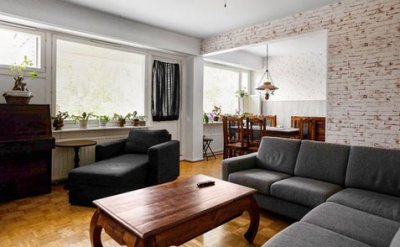
As of July 2026, the average 30-year fixed mortgage rate is hovering around 6.6%. This figure, confirmed by Freddie Mac, is a variable that affects both the monthly payment and the down payment amount for families looking for homes in Annandale.
If we follow a family with a budget based on the median home price in Annandale of $687,000, according to Zillow, the down payment amount can vary significantly. Applying an FHA rate of 3.5% requires $24,045, while a credit score below 580 necessitates 10%, or $68,700.
Using the minimum standard for conventional loans of 3% lowers the amount to $20,610, but PMI will apply. A 5% down payment of $34,350 also incurs PMI, while a 20% down payment of $137,400 allows starting without PMI. Whether this family chooses to save more for a larger down payment or enter with a lower down payment and accept PMI depends on their cash flow and timing for moving in.
With a 20% down payment of $137,400 and a 6.6% interest rate, the principal and interest would be calculated at around $3,510 per month. Depending on how long this family expects to live in the home, it might be better to enter with a lower down payment rather than waiting to save the full 20%.
The property tax rate for Fairfax County for the 2026 fiscal year is $1.1225 per $100 of assessed value, which translates to about 1.01% based on the effective tax rate. If this family is moving from another state, comparing this figure with their local tax rate can help in budgeting.
If this family cannot meet the full down payment, they can explore several assistance options. The Virginia Housing down payment assistance grant offers 2% to 2.5% of the purchase price with no repayment obligation, but it must be used in conjunction with Virginia Housing loan products. The HOMEownership DPA program from the Virginia Department of Housing and Community Development (DHCD) provides up to 10% of the purchase price, or 15% in designated areas, towards closing costs of up to $2,500, with the repayment obligation waived after 5 to 15 years of residency.
Fairfax County also has its own programs. For households earning 80% or less of the area median income, approximately $131,000 for a family of four, up to $50,000 in down payment loans are available, which can be used to lower the first mortgage principal or cover closing costs and PMI. Receiving such assistance can reduce both the down payment burden and the DTI.
If a family like this is considering multiple assistance options, it can be helpful to organize the income limits and residency requirements of each program in a table for easy comparison. Since the eligibility for overlapping applications varies by program, it's advisable to check with the lending institution in advance.
Improving approval rates starts with managing credit scores. As of July 2026, rates vary with scores: 6.59% for 780 and above, 6.66% for the 760s, 6.75% for the 740s, and 6.91% for the 700s. The Consumer Financial Protection Bureau guidelines suggest that a back-end DTI of 43% or less and a front-end DTI of 28% or less are ideal.
Getting pre-approved and providing stable income documentation through pay stubs and tax returns is the next step. Before closing, it's best to avoid new loans or job changes and to have reserves equivalent to a few months of payments, which can present stability during the review process.
Including a spouse as a co-applicant can lower the DTI with combined income, and it's also good to know that self-employed income is often assessed based on an average of two years of tax returns. Remember that PMI can be canceled once the loan balance falls below 80% of the home value.
This article is not investment or legal advice, and program conditions and tax rates may change over time, so consulting a professional before making any agreements is recommended.
 SausageJump
 RedCapeCha








 moo moo |
 ultron78 |
 garlic bread |
 Sugar Cream Door Bulletproof Noodles |
 urbanmint |
 nivex85 |
 U.S. Weather Bureau News |
 yentra |

 The Gelaton |
  Twist Kim |
  berlon93 |
  Physical Laws and Science |
  good thinking |
  Solo Yolo |
  Mr Oh |
  laro90 |
  San Diego TOP Idol |
  Round and Round Children's Song Kingdom |
  American Golf Course Travelogue |
  MEDBIO American Doctor Blog |
  Hot Seat Driver |
  bryvexi |
  koala organic farm |
  riverstone |
  My Antonio |
  California Information News |
  chilli chilli |
  Moon Su San |