

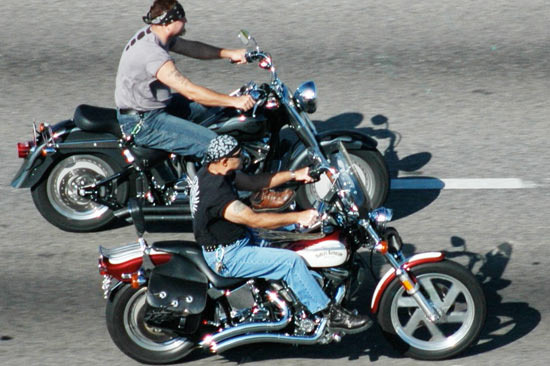
If you closely observe the motorcycles on the roads of Hawaii, you can often see drivers not wearing helmets.
According to Hawaii's traffic laws, the mandatory helmet requirement applies only to those under 18, meaning drivers or passengers aged 17 and below.
For adults, not wearing a helmet is not a violation of the law, and police cannot enforce it.
The law stipulates that drivers or passengers aged 17 and under must wear a DOT (Department of Transportation) certified helmet, and the chin strap must be fastened. The helmet must fully cover the head, and only products that meet safety standards are recognized.
In Hawaii, scooters and mopeds are subject to the same regulations as motorcycles. Therefore, if a minor is driving or riding as a passenger, they may face fines for violations. In contrast, those aged 18 and over have the choice. However, accident statistics show that the fatality rate for drivers who did not wear helmets is significantly higher, so many riders choose to wear them for their own safety, even if it is only recommended.
The background of this law reflects Hawaii's unique liberal culture. Due to the warm climate, many people ride motorcycles or scooters, and there are many opinions that wearing a helmet can be uncomfortable in hot weather.
Thus, the state government has established the principle of "giving adults the freedom of choice while strengthening protection for youth." Of course, that freedom comes with responsibility. Most of Hawaii's roads are open and have low traffic, but sudden rain, slippery asphalt, and unexpected situations caused by rental cars driven by tourists are common. In such environments, a helmet is not just an accessory but a protective gear that can save lives.
According to statistics from Hawaii's Road Safety Authority, motorcycle riders who do not wear helmets are more than three times more likely to suffer head injuries in accidents, and the mortality rate increases by over 40%. Particularly among tourists, there are many cases of accidents occurring while riding rented scooters without helmets.
Therefore, local rental shops in Hawaii provide helmets for free, even though it is not legally required. Some insurance companies also limit coverage for accidents involving riders without helmets. Ultimately, while there is no legal compulsion, in reality, it is closer to being a "necessity rather than a choice."
Hawaii's police also take a relatively flexible stance on this issue. They focus on safety campaigns rather than enforcement, and near beach roads or tourist areas, volunteers hold signs that say "Ride Smart, Wear a Helmet."
As you ride along the roads of Hawaii, especially on the North Shore or Waikiki coastal road, you can see locals riding without helmets alongside tourists wearing them. This reflects how the "culture of choice" has naturally taken root.
However, local media reports accidents caused by not wearing helmets every summer. Even under the hot sun, we must not forget that the spirit of Aloha ultimately comes from a heart that respects and protects one another.






 candytip |
 Gold Bar |
 Pirate Ship Popcorn Maker |
 Montgomery Mom |
 Anjollinya Blog |
 victoria 68 |
 Hawaii Tourist Information |

 TEX MEX STAR |
 HAWAII Korean Church News |
  laro90 |
  MEDBIO American Doctor Blog |
  SWAT TEAM BLK |
  DREAM BIG |
  frostbite |
  330 Forever My Love |
  El Dorado |
  dralix58 |
  Gorama Round |
  Skydiving |
  dreamport |
  Yellow Snowman |
  Toaster Pizza Magic Show |
  velvetnom |
  Anytime Journey |
  Mrs. Duluth |
  jaxter |
  Atlanta Mama |
  Baguette Blog |
  Tan Sol |