

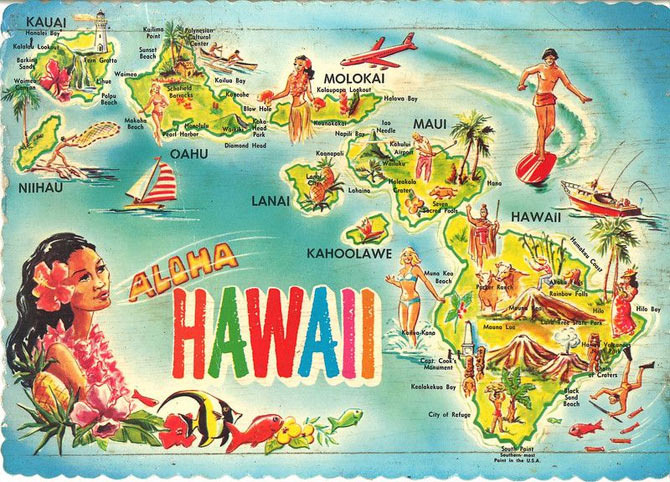
Oʻahu Island is not only home to the capital Honolulu but also the economic center of Hawaii.
More than two-thirds of the population lives on this island, where government agencies, financial institutions, educational facilities, and key tourism industry establishments are all concentrated. It is no exaggeration to say that most of the driving force behind Hawaii's economy comes from this island.
The economic structure of Oʻahu fundamentally revolves around three pillars: 'tourism, military, and service industries.' Millions of tourists visit Oʻahu every year, with Waikiki Beach at the center of it all.
Travelers arriving through Honolulu International Airport mostly choose Oʻahu as their first destination, and nearly all sectors of the local economy, including resorts, restaurants, shopping, and entertainment, are tailored to tourist spending. As a result, there are many workers in the service industries such as hotels, restaurants, and transportation, which account for a significant portion of local jobs.
Another essential economic foundation is the 'military-related industry.' Oʻahu is home to several U.S. military bases, including Pearl Harbor. The U.S. Navy, Air Force, Marine Corps, and National Guard facilities are located throughout Oʻahu, meaning military budgets and employment have a significant impact on the local economy.
However, even within this industry-centered structure, Oʻahu still retains its tradition as 'the island of agriculture.' Once the core of Hawaii's economy, sugar and pineapple plantations have significantly decreased, but traces of them remain.
In central Oʻahu, the Wahiawa and North Shore areas still have pineapple fields, and through the Del Monte and Dole farm museums, one can glimpse the history of Hawaii's agriculture. In particular, the Dole Plantation operates as both a tourist destination and an actual agricultural production site, symbolizing Hawaii's pineapples.
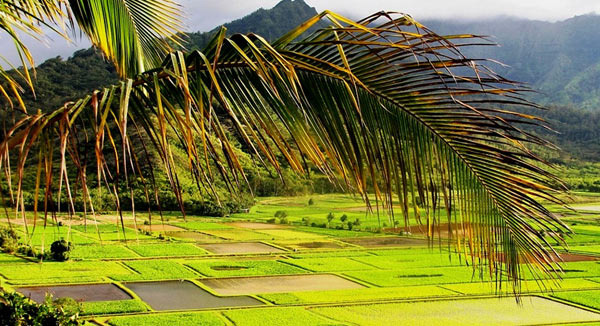
Recently, agriculture in Oʻahu is shifting towards 'small-scale organic' and 'local food' initiatives. In the Waiʻanae area, organic vegetables, tropical fruits, coffee, and cacao are cultivated, while in Kahuku and Kunia, fruit farms producing avocados, lychees, mangoes, and papayas are active.
Near the North Shore, there are also Hawaii macadamia nut farms producing nut and oil products, and the county is encouraging the consumption of local agricultural products. Restaurants are increasingly valuing local produce, making 'Farm to Table' menus easy to find.
Recently, Oʻahu farmers have been actively adopting advanced agricultural technologies such as solar power generation and hydroponics to efficiently utilize the island's limited resources. In particular, sustainable agricultural models that enhance productivity while preserving the environment are being experimented with in areas like Waiʻanae Valley and Kualoa.
Kualoa Ranch is a representative success story, combining livestock, agriculture, and tourism to create local jobs while maintaining the natural environment.
Ultimately, Oʻahu's economy exists in harmony between the dazzling lights of the city and the richness of nature. The income generated from tourism enriches the island, while agriculture supports its roots. And at the center of it all is Honolulu.






 candytip |
 Gold Bar |
 Pirate Ship Popcorn Maker |
 Montgomery Mom |
 Anjollinya Blog |
 victoria 68 |
 Hawaii Tourist Information |

 TEX MEX STAR |
 Vacation on Hawaii |
  Atlanta Mama |
  Baguette Blog |
  US Embassy |
  Korean Mom |
  My NYC |
  moo moo |
  Mr Oh |
  forevergee |
  festival |
  manchester |
  constant |
  Leapfrog Move |
  vibranto |
  Tora Tora |
  yellowbutter |
  Dolly |
  NYC saladbar |
  Finding Superfoods |
  lightyear |
  song bang |