

I've seen quite a few cases where people moved to D.C. without proper information and struggled during the first six months.
This city has a high entry barrier, but knowing what to expect can lower that barrier significantly. Based on the most common questions from newcomers, I've created a checklist.
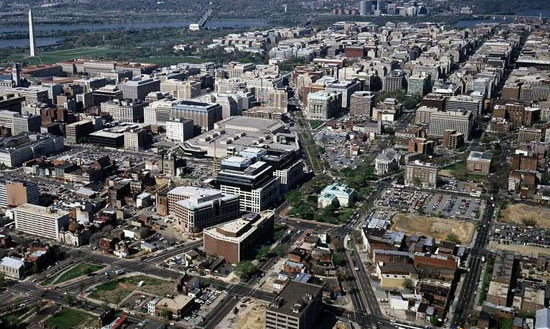
First is choosing a place to live. D.C. is divided into three administrative areas: D.C. (downtown Washington), Maryland (mainly Montgomery County and Prince George's County), and Virginia (Fairfax County, Arlington, Alexandria). Although they are all part of the D.C. metro area, income tax, property tax, and public school districts vary by state. If education for children is a priority, it's best to consider Fairfax County or Montgomery County first. If your job is in downtown D.C., living in D.C. or Arlington is advantageous for commuting. If your rental budget is tight, looking at the outskirts like Springfield, Virginia, Centreville, or Gaithersburg, Maryland is more realistic.
You need to handle your driver's license and vehicle registration within 60 days after moving. In D.C., Maryland, and Virginia, if you move from another state, you must convert your license to the respective state. If you have a Korean license, you may need to go through the entire process without an exemption from the written test, so it's important to check each state's DMV website in advance. Vehicle registration costs and procedures also differ by state. Virginia has a Personal Property Tax for vehicles, which often surprises newcomers.
It's a good idea to register your SmarTrip card right after arriving. It can be used at the airport, metro stations, and buses, and if you register it online, you can recharge your balance and protect it in case of loss. If you plan to live in downtown D.C. without a car, considering a Capital Bikeshare membership for public biking is also a viable transportation option.
Health insurance should be your top priority right after moving. If you have employer-provided insurance, that's great, but if you're self-employed or have a gap in coverage, you can enroll through state-specific Obamacare marketplaces like Covered Maryland (Maryland), DC Health Link (D.C.), or Virginia's Health Exchange (Virginia). Moving is recognized as a life event that opens a Special Enrollment Period, so you don't have to wait for the annual open enrollment.
Connecting with the Korean community as soon as possible is advisable. Even if you don't attend a Korean church, getting initial settlement information through the Korean Chamber of Commerce, Korean professional organizations, or KakaoTalk local communities is much faster. Good recommendations for Korean pediatricians, dentists, insurance agents, and tax advisors circulate through the community, so the sooner you connect with the network, the better. And remember, no question is too silly. Everyone here was new at some point.
 MeadowVision
 GomtangPooh
 skyhightraveler1963







 moo moo |
 ultron78 |
 garlic bread |
 Sugar Cream Door Bulletproof Noodles |
 urbanmint |
 El Dorado |
 washington mom |
 Another Eden Channel BLOG |
 American Travel Cruise Information |
 Eldorado 88 |
  bryvexi |
  koala organic farm |
  riverstone |
  My Antonio |
  California Information News |
  chilli chilli |
  Moon Su San |
  vanilla |
  norvexi |
  Lunch and Dinner Mexican Taco |
  skykong |
  My Circle |
  novapixel |
  urban legend |
  coolriver |
  Good Neighborhood, Wealthy District Information |
  Ro Ro Car |
  Amber H |
  new sugar |
  Palm 1000 |