

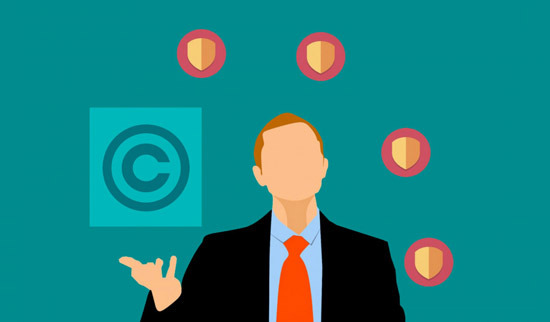
Our company works in IT while also managing online marketing for clients, and the most common question we hear from clients is, "This is a free image, right? Can I use it?"
About 3 to 4 years ago, the answer was usually, "Yes, just check the CC0 (Public Domain) license and go ahead."
However, with the rapid development of AI technology, the situation has changed quite a bit.
In the U.S., so-called copyright trolls are still rampant, and ironically, as AI images and free stock images flood the market, these firms have found new prey.
Statistics show that companies like Strike 3 account for half of federal copyright lawsuits as of 2025.
Copyright trolls led by law firms... this is no joke; it has become a real business model.
People now think, "Since it's made by AI, there are no copyright issues." To put it bluntly, that's not true.The key point from the Copyright and Artificial Intelligence Part 2: Copyrightability report released by the U.S. Copyright Office (USCO) in January 2025 is this:
Images generated by simply inputting prompts are not protected by copyright. To quote the Copyright Office, "The gap between the prompt and the output shows a lack of user control over expression." In other words, the images generated from prompts are not yours.
However, the problem is that not having copyright means you are not protected, but it does not mean you haven't infringed on someone else's copyright.
If the output is similar to the original photo that the AI was trained on, the original copyright holder can claim infringement. In fact, the Congressional Research Service (CRS) report states, "If the output of an AI program is similar to other works used in training, copyright infringement may occur."
If accessibility and substantial similarity are proven, a lawsuit can be established.
The Trap of Emerging Free Stock ImagesUnsplash, Pixabay, Pexels. Everyone uses them. Because they are free.
However, the word "free" does not mean "legally free."
When used commercially, if a person's likeness, brand logo, or specific building or product is depicted, a separate model release or property release is required. Free sites do not guarantee this. How many people have actually read the Unsplash license page? It clearly states limitations there.
What's even scarier is the change in licenses. Some photographers upload images for free and later change the license or even retract the images, tracking down past users.
They then hand over rights to enforcement firms like CopyCat Legal or Higbee & Associates, which leads to a structure of extracting settlement fees in bulk.
One blogger received a $15,000 bill for using three images sourced from Behance under a CC license.
Fortunately, they had evidence of the CC license, so they got out of it, but what if they didn't have evidence? They would just be stuck.
The Business Model of Copyright Trolls is SimpleThey scan the internet using image-matching AI. Websites, blogs, shopping sites, advertising landing pages, all of it. When unauthorized use is detected, they send a demand letter. Some send thousands of them each month.
The amounts they demand are larger than you might think. The original post mentioned amounts ranging from $1,000 to $5,000, but under U.S. copyright law, statutory damages range from $750 to $30,000 per work.
The actual amounts listed in demand letters usually range from $2,000 to $5,000. If the copyright infringement is severe, it can exceed $7,000. If you created a promotional image for a product using a photo model in Photoshop? You might receive a $30,000 demand letter.
However, what these people are after is not a lawsuit. It's a settlement.
In the U.S., just defending against a copyright lawsuit can cost tens of thousands of dollars in attorney fees. So, from a business perspective, a settlement of $2,000 to $5,000 becomes a "cheaper option." This structure is their revenue model, and it's a volume game.
Sometimes people say, "A letter from a U.S. law firm? Just ignore it."If you are a company, you should never do that. Ignoring it means they will file a lawsuit, and if you don't respond, a default judgment will be issued, meaning the court will almost entirely accept the other party's claims. In fact, some copyright trolls have a history of obtaining inflated damages through default judgments.
On the other hand, if you respond properly, many of them crumble. If you accurately demand to know whether the problematic photo was registered for copyright beforehand, they may not be able to answer, and often, jurisdiction issues prevent the lawsuit from being valid. The key is not to ignore it but to respond strategically.
So, practically speaking, when using AI images, edit them directly after generation, change colors or add elements, and keep a record of that process. This is not for copyright claims but to prove, "I did not copy the original."
When using free images, always capture the license page at the time of download and keep it. A timestamped screenshot is even better. If the license conditions change later, you can prove, "This was the condition at the time I received it."
For stock photo companies like Dreamstime.com or Adobe Stock that I always use, the paid licenses include IP indemnification. In simple terms, if you are sued for copyright infringement using an image you legitimately purchased a license for from Adobe Stock, Adobe will provide legal defense and cover damages.
I hope everyone develops the habit of double-checking the license before using an image and keeping a screenshot as a record.



 lightyear |
 Moscow Kim |
 coloradoman |
 Montgomery Mom |
 GOGO SING |
 Cherokee Rose |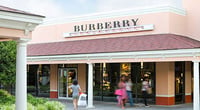
 Dingho and USA News |
 moonshine 7 |
 Gimmi207 Blog |
  US Embassy |
  Korean Mom |
  My NYC |
  moo moo |
  Mr Oh |
  forevergee |
  festival |
  manchester |
  constant |
  Leapfrog Move |
  vibranto |
  Tora Tora |
  yellowbutter |
  Dolly |
  NYC saladbar |
  Finding Superfoods |
  song bang |
  vexomo |
  Indiana Jones |