

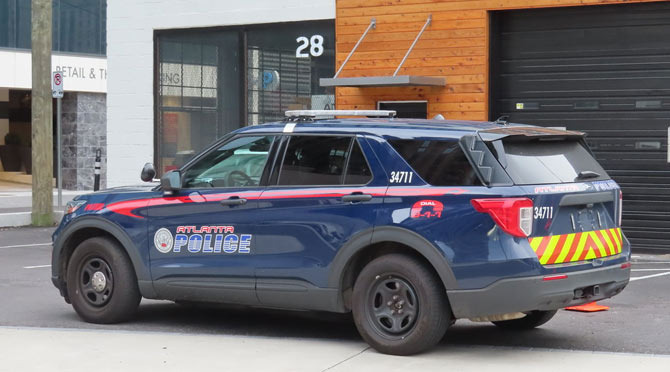
Becoming a police officer in Atlanta is not just about getting a job; it is a choice of a kind of mission.
As I entered my 30s, I considered a more stable job than working as a mid-level manager in a restaurant, and the Atlanta police caught my eye.
To become a police officer in Atlanta, you must be a U.S. citizen and at least 21 years old. A high school diploma (including GED) is required, and majoring in criminal justice or criminology in college increases your competitiveness.
If you become an applicant, you must first pass a document review and a written test, followed by a physical fitness test (running, sit-ups, push-ups, etc.). The physical fitness test is tougher than expected. I realized firsthand that being a police officer is definitely not just a "desk job."
After passing this process, you will undergo a background check, drug test, and polygraph test. If any criminal record or lie is revealed, you will be immediately disqualified. Finally, after an interview, if you pass, you will enter the Atlanta Police Academy.
At the police academy, you will receive about six months of training, learning legal knowledge, firearm usage, crisis management, and traffic enforcement procedures. After completing this training, you will finally be appointed as a police officer and assigned to the field.
Many people are curious about police salaries. In Atlanta, the starting salary is approximately $50,000 per year.
As years of service and rank increase, it can rise to $60,000 to $80,000, and if assigned to a special unit, you can receive additional allowances. There are also additional compensations for weekend, night shifts, and overtime. Benefits such as health insurance, retirement plans, and paid leave are provided, allowing for consideration of long-term stability beyond just a monthly salary.
However, the reality of being a police officer is by no means easy. Atlanta is a large city, and the crime rate is not low. You can face dangerous situations at any time. The tension when encountering an armed criminal or responding to a domestic violence scene is indescribable. In fact, a significant number of police officer deaths are due to shootings or traffic accidents, indicating clear risks.
Especially during night patrols, it is common to encounter armed robbery incidents. Statistically, frontline police officers respond to armed robbery calls several times a month. Of course, not every incident leads to a shootout, but the tension of "this response could become dangerous" is always present. Every time I respond, I wear my vest tightly and keep my firearm within reach. In those moments, anyone's heart races.
That said, not every day involves movie-like dangerous situations. Much of the time is filled with relatively routine tasks such as traffic enforcement, handling citizen reports, and community patrols. However, even in these daily routines, a small mistake can escalate into a major incident, so maintaining vigilance is essential.
Many people think that issuing traffic tickets is a simple task, but there is actually quite a bit of stress involved. It is fortunate if a driver caught for speeding or running a red light cooperates calmly, but many react with anger or insults. Some drivers may provoke for no reason, and in extreme cases, situations where a gun is drawn from inside the car are trained for. Even when issuing a simple speeding ticket, you must be prepared for any unexpected actions as you approach the car window.
Atlanta is a city in the southern United States where many Korean immigrants gather. As a result, I often encounter Korean immigrants on the job. The fulfillment I feel when helping elderly individuals who are flustered due to their limited English after a traffic accident or assisting fellow Koreans reporting theft is hard to express in words. Just hearing a simple "thank you" in Korean can wash away the fatigue of the day. The meaning of working as a police officer in Atlanta deepens as I can help as a member of the same community, rather than just as an enforcer of public authority.
Ultimately, becoming a police officer in Atlanta is a special path that involves enduring constant training and tension while positively impacting both the local community and the Korean community. The salary is stable, but the risks are clearly present. However, someone has to do this job, and if you have the courage and will to be that someone, I believe there is no more meaningful profession than this.





 Cherokee Rose |
 Dingho and USA News |
 moonshine 7 |

 Gimmi207 Blog |
  US Embassy |
  Korean Mom |
  My NYC |
  moo moo |
  Mr Oh |
  forevergee |
  festival |
  manchester |
  constant |
  Leapfrog Move |
  vibranto |
  Tora Tora |
  yellowbutter |
  Dolly |
  NYC saladbar |
  Finding Superfoods |
  lightyear |
  song bang |
  vexomo |
  Indiana Jones |