
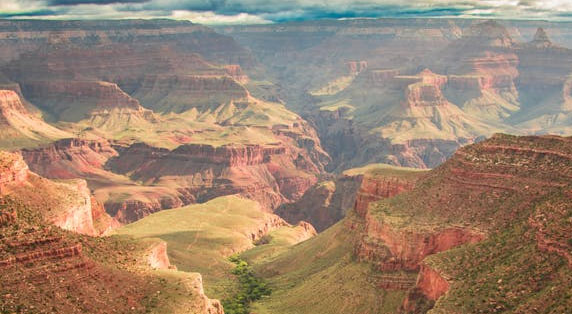
The Grand Canyon is one of the most famous and magnificent natural landscapes in the world, located in the state of Arizona, USA. This canyon holds millions of years of geological history and captivates visitors with its size and beauty. The Grand Canyon stretches approximately 446 km, reaches a depth of up to 1,800 meters, and is a massive work of nature that is 29 km wide. It was designated as a national park in 1919 and is protected, attracting millions of tourists each year. The wonder of the Grand Canyon holds great significance not only for its size but also for its geological, ecological, and cultural importance.
The Grand Canyon is not located in Nevada. It is a natural wonder in the state of Arizona, situated in the northern part of Arizona. However, it is relatively close to Nevada. The West Rim, the western entrance of the Grand Canyon, is near the border with Nevada, making it possible to travel a relatively short distance from Nevada to visit the Grand Canyon. The West Rim is a popular spot for tourists and includes unique attractions such as the famous Grand Canyon Skywalk.
The Geological Formation of the Grand Canyon
The Grand Canyon began to form about 7 billion years ago. The canyon was primarily created by the erosive action of the Colorado River, which over a long period carved away the surrounding rocks, resulting in the unique topography we see today. The layers of the canyon showcase rocks from different eras, allowing us to understand how the Earth's geological history and time have changed.
In particular, the bottom of the Grand Canyon contains rocks that are about 2 billion years old, with several layers of sedimentary rocks stacked above them. These rocks generally have a reddish hue, which is the result of iron-rich rocks oxidizing. The various rocks found in the Grand Canyon reflect different geological events and environments from various eras, making this area highly significant for scientific research.
The Ecosystem of the Grand Canyon
The Grand Canyon has a highly diverse ecosystem due to its size and topography. The edges of the canyon exhibit a highland climate, with significant temperature variations, strong winds, and frequent rainfall. In contrast, the canyon floor is characterized by a hot climate, with summer temperatures rising above 40 degrees Celsius. These extreme climatic differences create a unique environment where various plants and animals can thrive.
The flora of the Grand Canyon is primarily a mix of alpine and desert plants. At the canyon's edge, you can find Ponderosa pine, juniper, and various types of cacti. The canyon floor is often home to a variety of colorful plants that grow alongside oaks and grassland plants from Mesoamerica.
Animals also adapt and thrive in the diverse environments of the Grand Canyon. This area is home to North American deer, mountain goats, coyotes, foxes, and various bird species. Notably, the Grand Canyon is well-known as a habitat for various eagles, including the golden eagle and the bald eagle, which are frequently spotted.
The Cultural Significance of the Grand Canyon
The Grand Canyon is deeply connected to thousands of years of human history, beyond just its natural scenery. This area has been considered sacred by indigenous peoples, particularly the Hopi, Navajo, and Zuni tribes, who have lived here and continued their cultures and traditions. They respected the Grand Canyon as a sacred place where nature and humanity are interconnected while utilizing the area's rich natural resources.
The historical value and cultural significance of the Grand Canyon continue to influence many people today. Visitors to the Grand Canyon are often awestruck by its beauty and reflect on the deep history and cultural meaning it holds. The Grand Canyon is not just a work of nature but an important place intertwined with people's lives and beliefs.
Tourism and Activities
Thanks to its size and beauty, the Grand Canyon offers a variety of tourism activities. Several viewpoints are set up along the canyon's edge, allowing visitors to enjoy stunning views. Among these, the South Rim is the most popular spot, open for most of the year and attracting many tourists. At the South Rim, visitors can enjoy hiking trails while overlooking the canyon from the viewpoints or participate in various educational programs.
Additionally, the North Rim, another area of the Grand Canyon, has relatively fewer visitors, providing a more tranquil atmosphere. This area is located in a highland region, making it cooler even in summer, allowing visitors to enjoy beautiful natural scenery.
One of the most impressive activities at the Grand Canyon is rafting on the Colorado River. Rafting down the river through the canyon offers a chance to experience the Grand Canyon from a completely different perspective. Additionally, helicopter tours or airplane tours provide another unique experience to view the Grand Canyon from the air.
The Grand Canyon is a special place where you can experience not just a natural landscape but also the history of the Earth, culture, and the beauty of nature. Overwhelmed by its size and grandeur, the thousands of years of geological, ecological, and cultural stories contained within leave a deep impression on visitors. Feel the wonders of nature fully and create special moments that can only be experienced here.
Is any part of the Grand Canyon in Nevada?
No, the Grand Canyon is not in Nevada, but it is close to the state's border: The Grand Canyon is located in the northwest corner of Arizona, within Grand Canyon National Park. It's close to the borders of Utah and Nevada.
West Rim
The West Rim of the Grand Canyon is located on Hualapai Tribal land, which is in Arizona but near the Nevada border. The Grand Canyon Skywalk is located on the West Rim.
Distance from Las Vegas
The closest entry point to the Grand Canyon from Las Vegas is the West Rim, which is about a two-and-a-half-hour drive away. The drive takes you through parts of Arizona and past the Hoover Dam, Lake Mead, and Boulder City.
Size
The Grand Canyon is larger than Rhode Island and is one of the most remarkable natural wonders in the world. It's 1 mile deep, 277 river miles long, and up to 18 miles wide.







 Weekend Movie Blog |
 Beauty, Health, Lifestyle Blog |
 coloradoman |
 Superman Cat Blog |
 novapixel |
  Korean Mom |
  My NYC |
  moo moo |
  Mr Oh |
  forevergee |
  festival |
  manchester |
  constant |
  Leapfrog Move |
  vibranto |
  Tora Tora |
  yellowbutter |
  Dolly |
  US Embassy |
  NYC saladbar |
  Finding Superfoods |
  lightyear |
  song bang |
  vexomo |
  Indiana Jones |