

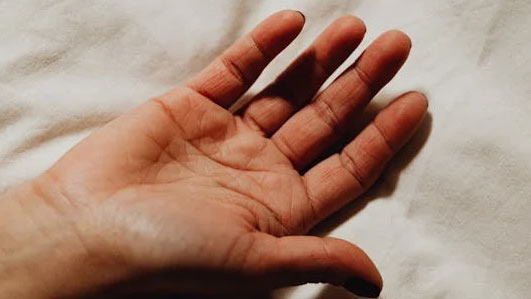
In the United States, there are three main types of people who practice palmistry.
-
Full-time 'Psychics' and Fortune Tellers • In major cities like New York, Los Angeles, and Chicago, small shops with signs for 'Psychic Readings' are quite common.
• They offer various services including palm reading, tarot, astrology, and aura reading.
• In some states (like Florida and Nevada), they need to register as fortune tellers or obtain a business license, and in places like Washington D.C. or St. Louis, a separate 'fortune telling license' is required. -
Event and Festival Specialists • Palmists set up booths at local fairs, craft markets, Comic-Cons, and even wine festivals.
• They often use palm scanners or portable palm reading kits to provide quick readings for fun, making it popular among young people for 'friend experiences.' -
Spiritual and Alternative Healing Communities • In New Age hotspots like the San Francisco Bay Area, Sedona, and Asheville, palm reading workshops are held in meditation and yoga studios.
• Courses that combine Western palmistry with Indian Vedic palmistry or Chinese palmistry are also popular.
How many are there, you ask? The U.S. Bureau of Labor Statistics does not classify 'Palm Reader,' so there are no exact numbers.
However, it is reported that around 20,000 to 30,000 people are registered under the category 'Psychic, Medium, Other Spiritual Advisor.' Even just looking at palm readers registered on online platforms (like Thumbtack and GigSalad), there are thousands, so the chances of encountering one in daily life are quite high.
Interesting Points • Clientele: People in their 20s and 30s often consume palmistry as 'light entertainment' along with tarot and astrology apps, while those over 40 tend to seek serious consultations.
• Fees: Street booths charge around $10, personal sessions range from $40 to $75 for 30 minutes, and well-known readers may charge over $100.
• Regulatory Debates: Some cities (like St. Louis and Boston) require fortune tellers to register with the police or undergo fingerprinting under the guise of "fraud prevention," leading to debates over freedom of expression.
Palmistry originated in India thousands of years ago and spread to East Asia and ancient Greece, and then to Europe, developing uniquely in each region. In East Asia, it was based on Yin-Yang and the Five Elements, while in Europe, it evolved from astrology. Today, the European version is more widely known.
In the U.S., the culture of palm reading is surprisingly active, especially with a strong element of 'fun and experience,' making it widely enjoyed even among younger generations.
If you see a 'Psychic' sign at a travel destination or event, it might be worth experiencing it with an open mind.




 novapixel |
 Peter Pan Pet |
 horse |
 Sunset Oregon |
 daisypat |
 U.S. Supreme Court Judge Kim |
 Egg Steamed Pot |
 Learn English Accurately |
 Magic Cabbage School of Martial Arts |
 Peach Jam Eating Laughter |
  Korean Mom |
  My NYC |
  moo moo |
  Mr Oh |
  forevergee |
  festival |
  manchester |
  constant |
  Leapfrog Move |
  vibranto |
  Tora Tora |
  yellowbutter |
  Dolly |
  US Embassy |
  NYC saladbar |
  Finding Superfoods |
  lightyear |
  song bang |
  vexomo |
  Indiana Jones |