
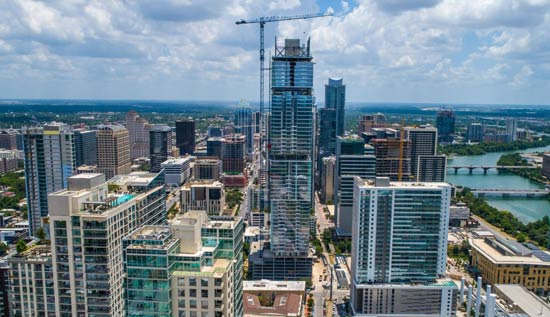
Austin is currently one of the fastest-growing and continuously changing cities in Texas.
In recent years, the population has increased significantly, and housing prices have risen accordingly, making it a city where local residents can feel the changes quite acutely.
First, let's talk about the population. Austin has been a city that has steadily attracted people over the last decade.
The biggest reason is job opportunities. With a surge of tech companies moving in, many young professionals from areas like California, Washington, and New York have relocated here. Notably, there has been a rapid increase in high-income professionals in their late 20s to early 40s.
Another important trend is family relocation. While it used to be primarily single professionals, there has been a noticeable increase in families moving to Austin for marriage and child-rearing. The relatively low tax burden, warm weather, and decent educational environment seem to influence this trend. As a result, not only the urban population but also suburban areas like Round Rock, Cedar Park, and Leander are experiencing rapid growth.
When the population increases, the first thing to respond is housing prices. Since 2020, the Austin housing market has been one of the areas with the most rapid price increases in the country. The spread of remote work and low interest rates have led to a surge in demand, causing prices to rise significantly in a short period. In some areas, prices have increased by nearly 40-60% in just 2-3 years.
However, recent trends have changed slightly. Due to interest rate hikes and economic uncertainty, the pace of price increases has definitely slowed. In some areas, prices have slightly adjusted or transaction volumes have decreased. Still, in the long term, prices remain at a high level.
Currently, the median home price in Austin is around $450,000 to $550,000. In popular urban areas or good school districts, prices often exceed $700,000. Conversely, first-time homebuyers are increasingly being pushed to the outskirts. As a result, there has been a significant increase in new housing supply focused on suburban areas.
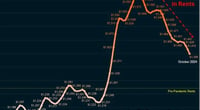
The rental market has shown a similar trend. It surged during the pandemic, but recently, with an increase in new apartment supply, rents have stabilized or slightly decreased in some areas. However, demand remains high in popular areas, leading to significant price pressures.
A characteristic of the Austin housing market is its volatility. In rapidly growing cities, price movements tend to be more pronounced. However, in the long run, it seems unlikely that housing demand will decrease significantly, as the city continues to attract new residents.
Ultimately, Austin currently exemplifies a typical growth city. The population continues to increase, and while housing prices are not skyrocketing as they once did, they remain high. Among those living in this city, a common sentiment is expressed.
Austin is still a growing city, which brings opportunities but also increases the cost of living.







 ultron78 |
 garlic bread |
 Sugar Cream Door Bulletproof Noodles |
 urbanmint |
 |
| 
 |
| 
 U.S. Weather Bureau News |
 Living with a Consistent Heart |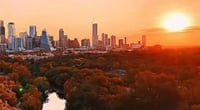
 quanta7 |
 Dallas Fort Worth DFW |
  Korean Mom |
  My NYC |
  moo moo |
  Mr Oh |
  forevergee |
  festival |
  manchester |
  constant |
  Leapfrog Move |
  vibranto |
  Tora Tora |
  yellowbutter |
  Dolly |
  US Embassy |
  NYC saladbar |
  Finding Superfoods |
  lightyear |
  song bang |
  vexomo |
  Indiana Jones |