
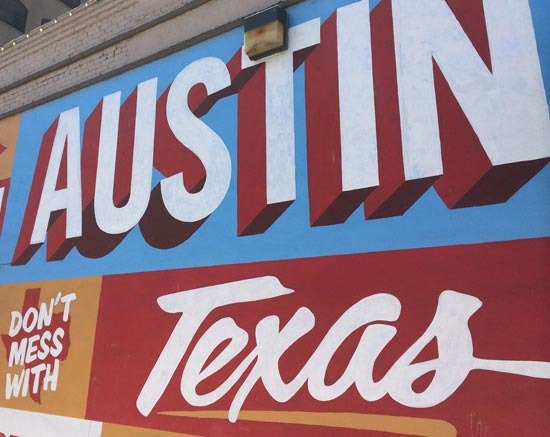
These days, living in Austin, I definitely feel that things are not the same as before. Just a few years ago, it was a city bustling with tech companies, known as "Silicon Hills," but now it seems that momentum has slowed down. Although I haven't lived in Texas for long, I've been observing the local real estate market and business trends, and I can't help but think that 'this city has entered a period of adjustment.' The explosive growth has cooled down, and realistic concerns have begun.
The first thing that stands out is the cost issue. Austin was once praised as a city that was "cheaper than California and had plenty of tech talent." However, as companies and people flocked here, housing prices and rents skyrocketed. The cost of living has also increased accordingly. Now, from a business perspective, labor and operational costs are no longer as low as they used to be. In fact, some tech companies are saying that "Austin's appeal is not what it used to be," and are reducing new hires or relocating some departments to other cities. With remote work becoming commonplace after the pandemic, the question of "Is it necessary to have headquarters in Austin?" has also grown.
The second issue is the intensification of competition. When Austin was rising as a tech industry hub, there weren't many competitors. But now, the situation is different. Cities like Dallas, San Antonio, Phoenix, and Denver are all vying to attract businesses under similar conditions. Moreover, places like San Francisco and Seattle on the West Coast, and Boston on the East Coast, continue to show strength in the tech sector. Industries centered around new technologies like AI, semiconductors, and cleantech are still dominated by existing major cities. Ultimately, Austin has shifted from being a 'rising powerhouse' to 'one of many competitors.'
The third change is in work culture. During the pandemic, remote work became possible, leading many to flock to Austin for its lower taxes and pleasant weather instead of Silicon Valley. However, these days, companies are demanding a return to the office, causing those who moved here during that time to leave again. Especially in the IT industry, the culture of wanting to "work from home" remains strong, so the demand for office space in Austin is not what it used to be. Consequently, it has become less attractive for companies to use Austin as an expansion base, as managing personnel under flexible work conditions has become more challenging.
Finally, there is the burden of urban infrastructure. While the influx of companies creates good jobs, it also exacerbates issues like traffic congestion, housing shortages, and lack of public infrastructure. Austin was originally a relatively laid-back city, but in just a few years, traffic jams have increased, and rent prices have surged. If this situation continues long-term, both companies and citizens will inevitably feel the burden. Some companies have even postponed new investments citing "employee satisfaction" or "quality of life" as reasons.
Of course, Austin is by no means finished. This city is still young, vibrant, and has a thriving startup ecosystem. The talent pool produced by universities like the University of Texas at Austin remains strong, and the creative atmosphere blending music, art, and technology is still alive. However, it seems that we are no longer in a 'growth phase' but rather in a 'maintenance phase.'
Ultimately, it is accurate to say that Austin is currently in a 'period of adjustment.' The atmosphere has shifted from shouting "Austin is the answer!" to carefully questioning, "Is Austin right for our company?" However, this change is not necessarily a bad thing. It could be a process of slowing down the pace of growth and solidifying the foundation.
Whether Austin will leap back to being a tech hub or transform into a new type of balanced city now depends on how intelligently the city responds. I still believe in Austin's potential. However, it is now time for it to become a "smartly growing city" rather than just a "city that is guaranteed to rise."




 quanta7 |
 Living with a Consistent Heart |
 |
| 
 U.S. Weather Bureau News |
 Dallas Fort Worth DFW |
  Korean Mom |
  My NYC |
  moo moo |
  Mr Oh |
  forevergee |
  festival |
  manchester |
  constant |
  Leapfrog Move |
  vibranto |
  Tora Tora |
  yellowbutter |
  Dolly |
  US Embassy |
  NYC saladbar |
  Finding Superfoods |
  lightyear |
  song bang |
  vexomo |
  Indiana Jones |