

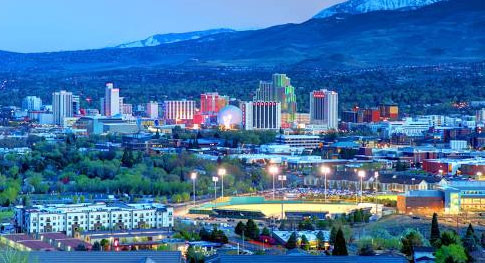
Reno began to develop after the discovery of silver in the Comstock Lode in 1859. The area grew rapidly with the influx of miners and settlers, particularly developing as a center for agriculture and transportation along the Truckee River.
In 1868, the establishment of a station for the Central Pacific Railroad solidified Reno as an important transportation hub. The name was derived from Union General Jesse Reno, who served during the Civil War.
With the legalization of gambling in Nevada in 1931, Reno transformed into a city of casinos and entertainment. It was once nicknamed "The Biggest Little City in the World" and served as a major gambling center in the U.S. until the rise of Las Vegas.
Today, Reno is diversifying its economy through not only casinos and the leisure industry but also technology companies and education, particularly the University of Nevada, Reno.
As of 2023, the population is approximately 275,000.
- Reno is the second-largest city in Nevada, following Las Vegas.
- The metropolitan area population (Reno-Sparks metropolitan area) is estimated to be around 500,000.
- In recent years, the population has steadily increased due to economic development and the influx of technology companies.
Population Characteristics:
- The city has a diverse racial composition, with about 20% of the population being Hispanic.
- There is a significant presence of young people and families, with suburban areas featuring a mix of upscale housing and rural regions.
Median Income
Household median income: approximately $63,000 (as of 2023).
- This is close to the Nevada average ($65,000) and slightly lower than Las Vegas.
- Tourism, casinos, technology, logistics, and the public sector are the main sources of employment.
Economic Diversification:
- Traditionally reliant on the casino and gambling industry, Reno has seen growth in technology and logistics due to the influx of major companies like Amazon and Tesla's Gigafactory.
- Reno's accessibility to Silicon Valley has attracted some startups and IT companies to open offices.
Key Features
- Tourism and Recreation
Reno is famous as a hub for outdoor recreational activities such as skiing, hiking, and Lake Tahoe. In addition to casinos and hotels, there are various natural attractions to enjoy. - Education and Research
The University of Nevada, Reno (UNR) serves as a major educational institution in the region, playing a central role in research and community activities. - Living Environment
Reno is considered an attractive city for many migrants due to its livable climate, low tax rates, and relatively affordable cost of living.
Reno has historically evolved from a mining and gambling industry to a modern city with technology and leisure industries, showcasing a variety of attractions.






 ultron78 |
 garlic bread |
 Sugar Cream Door Bulletproof Noodles |
 urbanmint |
 |
| 
 Nevada Teppanyaki |
 Marisol |
 Nevada Vegas UNLV |

 zoryan |
  Finding Superfoods |
  lightyear |
  song bang |
  vexomo |
  Indiana Jones |
  meloncat |
  novapixel |
  mortrix |
  Esther 1983 |
  fortbliss |
  Moscow Kim |
  My Two Way |
  toastyfox |
  FLORIDA Acus |
  tracker |
  TONTON COFFEE |
  sunrise |
  uplifted |
  Folding Instructions |