
If many people thought of Cheyenne as just a quiet state capital in Wyoming, it's time to take a closer look at the current situation.
Cheyenne is a city with a much more diverse and interesting industrial structure than one might expect.
As the capital and largest city of Wyoming, its economic diversity is much broader than anticipated, making changes visible no matter where you live.
Understanding the economic foundation of a city is crucial when making decisions about where to live in the U.S.
First and foremost, we cannot overlook F.E. Warren Air Force Base. It is the foundation of Cheyenne's economy and a piece of history itself.
One of the oldest military bases in the U.S., it is also a strategic nuclear missile base. It oversees more than 150 missile sites across Wyoming, Colorado, and Nebraska.
The presence of this base means not just a large military population, but also that defense contractors and government service-related companies are concentrated in Cheyenne. Stable federal government jobs provide a solid foundation for the city's economy. Cities near military bases tend to be relatively stable even during economic downturns, and Cheyenne is no exception.
One of the most noticeable changes in recent years is the data center industry. Microsoft began operating a data center in Cheyenne in 2012 and announced a large-scale expansion plan of 3,200 acres in April 2026. Currently, about 220 people work at the Cheyenne Microsoft facility, and the expansion is expected to create hundreds of new full-time jobs.
Meta has also decided to build a data center in Cheyenne with an investment of $800 million, which is expected to create around 1,100 jobs during the construction period. As of 2021, Cheyenne's data centers contributed a total production of $82 million annually. Since 2012, over $1.5 billion has been invested, a significant amount relative to the city's size.
Why Cheyenne? The relatively low cost of electricity in Wyoming, the absence of corporate and income taxes, and its location at the intersection of Interstates 25 and 80 are major factors. The energy industry remains important as well. Wyoming ranks among the top states in oil, natural gas, and coal production, and Cheyenne serves as a hub for energy services and related companies.
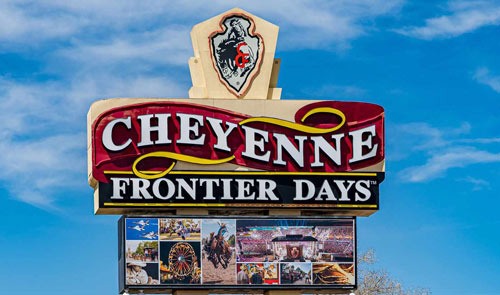
Livestock farming cannot be overlooked either. As evidenced by the annual Cheyenne Frontier Days, cattle and sheep farming is integral to the region's cultural identity and economy. The manufacturing sector includes electronics, precision instruments, and restaurant equipment, along with fertilizer processing plants.
The intersection of Interstates 25 and 80, just a two-hour drive to Denver, and proximity to the Colorado Front Range all strengthen its position as a logistics and commercial center. From a real estate investment perspective, there are not many cities that combine a stable federal government employment base with a booming data center industry. With no income tax in Wyoming, it is also attractive from a corporate standpoint.
As new businesses and jobs come in, residential demand increases, and property values are affected in the long term. The economy of this city operates in a much more complex manner than one might think. The four pillars of military, data, energy, and livestock each follow different cycles, supporting the city's economy. Such a complex structure in a small city is quite rare.
 CrispyDetect
 MilkThugBots







 novapixel |
 NEXT ROUND |
 Encyclopedia of New York and Surrounding Areas |
 washington mom |
 California Dreamer |
 FROM Wyoming |
 Real Estate |

 MAX009 BLOG |
 logger |
 yenne |
  ceporta |
  H Leader |
  My tracks |
  Yes Dorian |
  novent |
  calviro |
  Enjoying Samba at Home |
  Once in a Lifetime |
  Korea Tiger News |
  Banana |
  rouge88 |
  toffee |
  King County |
  DREAM BIG |
  Good News Good Thoughts |
  peelynew |
  Helpful Life Stories |
  chicpo |
  monorama tone |