
For various errands, visiting H Mart, or just feeling bored, I find myself making the trip on weekends. It turns out I go back and forth more often than I expected.
I've traveled this route quite a bit, and the fastest way to get to Austin is simply to drive. No matter what else I consider, I always end up grabbing my car keys.
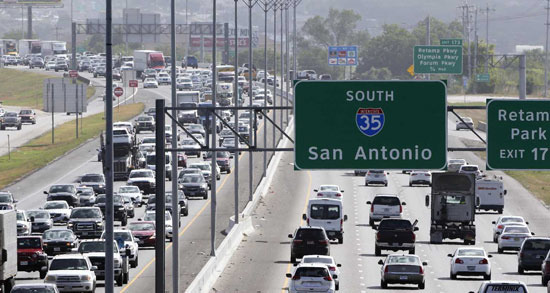
The basic route is to take I-35 north from San Antonio, and you'll hit Austin directly.
The distance is about 80 miles, so if traffic is clear, it takes around 1 hour and 20 to 30 minutes.
But here's the important point: "if traffic is clear."
This one condition is why this route gets a bad reputation. I-35 has no schedule; it's all about luck.
When it's clear, it's clear as day, and when it's congested, it's congested for no reason. Especially as you approach Austin, there can be sudden slowdowns.
That's why locals often use SH 130.
It's a toll road, so you pay a fee in exchange for less stress. The speed limit is higher, and the traffic is lighter.
Especially during rush hour or on Friday afternoons, it's better to take this route without hesitation.
The reason locals use SH 130 is simple: it's a way to buy time by paying a fee.
SH 130 has tolls that vary by segment, and if you drive straight from San Antonio to Austin, it typically costs around $6 to $15.
It can vary slightly depending on the time of day, type of vehicle, and the segment used, but it generally feels like "paying a little to avoid stress."
Especially after experiencing over an hour of traffic on I-35, you hardly feel like the toll is a waste. In fact, it feels like a bargain.
The tolls can be automatically charged if you have a TollTag or TxTag, which are commonly used in Texas. If you don't have one, you'll receive a bill based on your license plate, which is a bit more expensive. So, frequent travelers usually have at least one tag.
Additionally, SH 130 is continuously being improved. As traffic increases, some segments are undergoing expansion, and plans to add more lanes are ongoing. With Austin continuing to grow, the demand for this road is only going to increase. Especially since it serves as an eastern bypass, it helps distribute overall traffic flow by accommodating trucks and long-distance vehicles.
I tend to avoid toll roads because I think it's common sense to not pay if I can avoid it, so I try to move during times I think will be less congested.
Whether I go early or late, just following this one rule reduces stress.
What about other methods? There are buses like Greyhound or FlixBus. They're relatively cheap, but the travel time is between 1.5 to 2 hours.
And then you have to move again once you arrive. In the end, it's a hassle. It's cheap, but there's no freedom.
There's also the train, Amtrak Texas Eagle. But honestly, if you're looking to get there quickly, it's best to skip this option.
Ultimately, while San Antonio and Austin may look close on a map, driving them feels like a distance that's not as easy as it seems.







 Anjollinya Blog |
 Taco Seattle |
 Mr Song Song |
 Living Economy Information Blog |
 Blog Korea |
 Coding Elf |
 solvix18 |
 action blog 101 |
 Hajiwon Blog Hair Salon |
 Shinbaram Dr. Blog |
  Min's blog |
  Tora Tora |
  pixel77 |
  cuteasducks |
  Lemon Kim |
  What can make money? |
  An ant castle |
  Haha and Bomi Blog |
  glenview 89 |
  Valley Hong |
  novapixel |
  Idaho's Sumi's House |
  Mr. Midwest America |
  wildfire |
  legalway |
  postcard |
  cheesecake07 |
  My Miami Stories |
  windylotus |
  Mia Flori |