

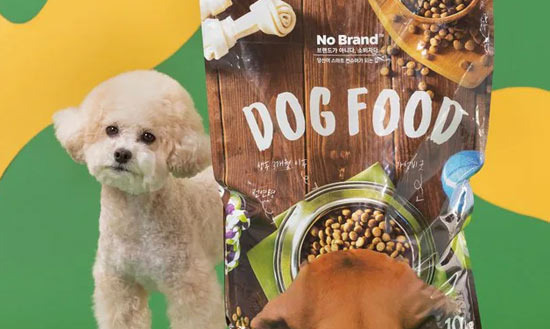
I have a memory from my childhood. A yellow dog tied up in my grandmother's yard in Uijeongbu, Gyeonggi Province.
When it was mealtime, we mixed leftover doenjang stew with its food. That was just the way it was.
But those dogs didn't live long. We just thought, "Dogs are supposed to live like that," but it turns out that wasn't the case.
When I came to the U.S., I noticed that dogs here are different.
Large breeds typically live around 10 to 12 years, and smaller dogs often live over 15 years.
I wondered what the difference was between Korean dogs and American ones, and the answer was in the food bowl.
Just 20 to 30 years ago, dogs in Korea were considered animals for guarding the home.They were tied up in front of the gate, and they were fed leftovers from the human table. Mixing rice with doenjang stew or fish stew was common.
The problem was how salty that food was for the dogs.
Korean food typically includes doenjang, soy sauce, and gochujang — sodium bombs that are standard ingredients. It's food made for humans. A dog's kidneys are much smaller and weaker than a human's.
If they had to process that sodium every day, their kidneys and cardiovascular systems couldn't handle it.
While there aren't exact statistics, it's already a well-established fact in veterinary medicine that a diet based on human food is bad for dog health.
It wasn't just that "dogs naturally don't live long." The problem was what they were being fed.
When Did the U.S. Start Feeding Dogs Kibble?The first commercial dog food in the U.S. appeared in the 1860s. It started with 'Spratt's Dog Cake,' created by British businessman James Spratt. It was a dry biscuit made from flour, vegetables, and meat by-products, and as it crossed over to America, the pet food industry began to take shape.
After the 1950s, the dry dog food we know today, kibble, entered mass production. Products were scientifically formulated to provide a balance of protein, fat, carbohydrates, vitamins, and minerals.
Why did it establish itself so quickly? It was due to urbanization. Living in the city, people didn't have the luxury to prepare leftovers for their dogs.
It was much easier to buy dog food and pour it into a bowl. Convenience changed the culture. With nutritional research backing it up, it became common knowledge that "dog food is better."
Currently, the average lifespan of medium-sized dogs in the U.S. is 12 to 15 years. In the past, there was a strong perception that large dogs lived only 7 to 8 years.It's said that lifespan hasn't increased solely because of dog food. Many factors have improved together, such as vaccinations, parasite control, spaying/neutering, and living conditions. However, it's hard to deny that a balanced diet is a key foundation. No matter how good the medical care, if what they eat daily is garbage, there are limits.
Nowadays, dog food has become more specialized. There are different types of food based on age, weight, breed, and activity level.
There are also prescription diets for kidney disease, allergies, and obesity. It has developed to a level almost on par with human nutrition.
These days, the culture of pet ownership in Korea has definitely changed. Very few people mix doenjang stew for their dogs.Now, dog food has completely shifted to being kibble-based, and treats are also specifically made for dogs.
The perception that "dogs are family" has spread, leading to increased interest in health management and nutrition.
This is also a result of society becoming wealthier and more urbanized. When people are busy just trying to make a living, they don't have the luxury to buy separate food for their dogs.
As living standards rise, people have become able to invest in their pets. It's as if Korea is now experiencing the changes that the U.S. went through 50 to 60 years ago, all at once.
So, I think mixing doenjang stew for dogs wasn't an act of negligence. It was just a way of expressing love.Those people weren't bad; they just lacked information. If they had known what we know now, things would have been different.
Ultimately, the lifespan of pets is a battle of information. The knowledge of what to feed and how to care for them has accumulated, allowing today's dogs to live longer.
As I talk about this, I remember that in 2007, there was a series of sudden deaths among dogs and cats in the U.S.
Investigations revealed that the cause was pet food made with ingredients sourced from China.
At that time, the food made with imported ingredients from China contained a chemical called melamine. Melamine is a substance used in plastics and industrial products, and when mixed with food, it could cause severe kidney damage.
Dogs and cats that ate food containing this ingredient experienced rapid kidney failure, leading to numerous deaths. The U.S. Food and Drug Administration began an investigation, and the incident became widely known, resulting in a massive recall of dozens of pet food brands.
At that time, in a society where pets were considered family, there was widespread anger and anxiety across the U.S. This incident led to much stricter standards for tracking ingredients and inspecting imports for pet food.
Thinking about my dog who suddenly stopped functioning and died back then still makes me furious. I feel like if I had just taken better care of the food, he would have lived a few more years.







 choi family |
 What can make money? |
 road98 |
 Baguette Blog |
 Khan Film Blog Production |
 Weekend Movie Blog |
 Beauty, Health, Lifestyle Blog |
 Victory 1988 |
 coloradoman |
 Superman Cat Blog |
  Augusta Univ |
  B.I.G. Victor |
  Swift Falcon |
  venture |
  SPAM 101 |
  zoryan |
  cloud0 |
  SKy Face |
  wonder |
  Dragon Lee |
  productionblog |
  Oklahoma Hoya OK |
  prixon74 |
  Roman Pan |
  USALATU BLOG |
  Sunshine Blog |
  Minnesota Small Business |