

Living in LA, it's common to travel by plane frequently. Whether for business trips or weekend getaways to nearby cities like Las Vegas, it's a regular occurrence.
I also tend to fly domestically quite often, and every time I go to the airport, I feel the completely changed scenery compared to before.
The check-in counters are less crowded than before the pandemic, but the security checkpoints are always bustling with people pulling carry-on luggage.
There was a time when arriving at the airport meant naturally checking in my bags first and leisurely boarding the plane with a coffee in hand.
But now, the entire airport feels filled with the notion that everything can be managed with this one small carry-on.
The symbolic event of this change is Southwest Airlines. For a long time, they held onto the slogan of two free bags, firmly capturing the hearts of American travelers. Even as other airlines began charging for checked luggage, it seemed like Southwest would hold out until the end.
However, eventually, even Southwest joined the ranks of airlines charging for checked bags. This decision felt like a signal that the entire U.S. airline industry had entered a completely different phase. Now, free checked luggage has become a memory of the past rather than a special benefit.
On top of that, there are practical cost issues. When searching for domestic flight tickets in the U.S., the prices often seem quite cheap at first glance. But once you reach the payment stage, the situation changes. Adding just one bag can significantly increase the fare.
When calculated for a round trip, the price of a ticket can feel nearly doubled because of one bag. This discrepancy is even more pronounced on shorter routes. At this point, many people start to think the same way: maybe it's better to reduce a few clothes and leave out a pair of shoes to just carry on.
Time is also a major reason for choosing a carry-on. Anyone who has stood in front of a baggage claim at an American airport knows the emptiness of waiting 20 to 40 minutes for their bag. Especially for short trips like business trips or weekend getaways, this time feels even more wasted. If you only have a carry-on, you can call an Uber as soon as you get off the plane, and the speed of exiting the airport changes entirely. This small difference significantly reduces travel fatigue.
Concerns about lost or delayed luggage still exist. When variables like weather issues, transfer problems, or airport staffing shortages come into play, it's not uncommon for bags to arrive late. If the bag contains important clothes or work materials, the stress can be unimaginable. Therefore, nowadays, travelers tend to take important items on board. Naturally, the role of the carry-on becomes even more crucial.
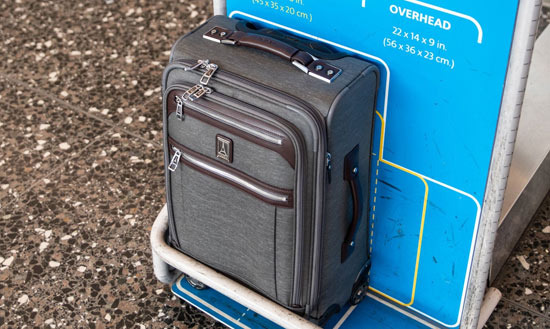
In this trend, domestic travel in the U.S. has now become a carry-on game. Travelers carefully check the carry-on size requirements for each airline and organize their bags like a game of Tetris. They consider how smoothly the wheels roll and whether the bag fits well in the overhead bin. The process of choosing a carry-on has become the core of travel preparation.
From the airlines' perspective, this structure is unlikely to change easily. Once established, baggage fees become a stable source of revenue. Ultimately, for U.S. domestic travelers, a carry-on is not just a bag; it has become an essential tool for reducing costs, saving time, and taking control of their travel experience.
Nowadays, flying in the U.S. feels like it's more about how to pack your bags than where you're going. Whether to check a bag or carry it on is becoming less of a personal choice and more of a strategy for saving money.







 candytip |
 Gold Bar |
 Pirate Ship Popcorn Maker |
 Montgomery Mom |
 Anjollinya Blog |
 Weekend Movie Blog |
 Beauty, Health, Lifestyle Blog |
 coloradoman |
 Superman Cat Blog |
 Awesome Blog |
  manchester |
  constant |
  Leapfrog Move |
  vibranto |
  Tora Tora |
  yellowbutter |
  Dolly |
  US Embassy |
  NYC saladbar |
  Finding Superfoods |
  lightyear |
  song bang |
  vexomo |
  Indiana Jones |
  meloncat |
  novapixel |
  mortrix |
  Esther 1983 |
  fortbliss |
  Moscow Kim |