

This work is a Canadian-Irish co-production series that aired from 2007 to 2010, spanning a total of 4 seasons and gaining significant attention for a cable channel at the time.
In particular, it maintained stable viewership ratings in North America and Europe, and received nominations for the Emmy and Golden Globe awards, achieving a certain level of acclaim.
At first glance, the title suggests a historical drama. However, upon further viewing, it closely resembles a scandal drama.
While this work claims to depict the life of the Tudor dynasty and Henry VIII, it is, in fact, a product overly fixated on the provocative themes of "power and desire."
The Tudor dynasty, Henry VIII, and the Reformation. Just by mentioning these terms, one might expect a traditional historical drama.
The Tudor dynasty began with Henry VII, who ascended to the throne after ending the Wars of the Roses in 1485, representing a transitional period from the medieval to the modern era in England.
This dynasty organized the unstable aristocratic political structure through strong centralization and the enhancement of royal power, laying the groundwork for England's rise as a European power.
At the center of this is Henry VIII. He ascended the throne in 1509 and ruled for about 38 years, regarded as a figure who shook the foundations of religion and political order beyond that of a mere monarch.
The most significant event was his break with the Roman Catholic Church and the establishment of the Church of England. This was not merely a religious issue but a political choice to place royal authority above that of the Pope.
Henry VIII's multiple marriages and divorces were largely driven by the practical need to secure an heir.
His obsession with a male heir was a matter directly linked to the stability of the dynasty, making it a crucial political decision at the time.
His reign was a period marked by the Reformation, the strengthening of royal power, and changes in international diplomacy, serving as a pivotal turning point leading to the golden age of England during the reign of Elizabeth I.
However, this drama is more interested in capturing the moments of conflict between power and desire than in explaining history.
At least the lavish court sets, intricate costumes, and the unique mise-en-scène of period dramas are advantages of this work.
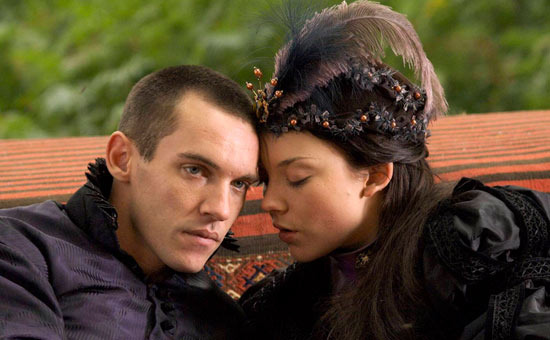
In short, the "entertainment value" is definitely there.
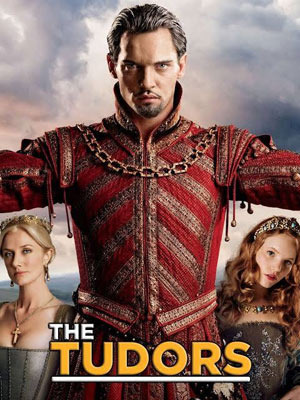
The cast is also intriguing. Jonathan Rhys Meyers, who plays Henry VIII, presents a young and sharp king rather than the traditional image of a heavy monarch.
This is an intentional casting choice but also becomes a point of controversy. The physical and political weight that the historical Henry VIII displayed in his later years is significantly diminished.
Instead, the early charisma and emotional intensity are emphasized.
Natalie Dormer, who plays Anne Boleyn, also firmly established her presence through this role.
This role became a stepping stone for her to shine in various works afterward.
Veteran actors like Sam Neill (Thomas Wolsey) and Jeremy Northam (Thomas More) provide stability, but the overall tone ultimately flows around young and stylish characters.
At this point, the core limitation of this work becomes evident. The character interpretations are overly simplistic.
Henry VIII's marriages and divorces are not merely personal desires but decisions made within the complex context of succession issues, European political order, and the reconfiguration of religious power.
However, the drama boldly strips away this complex structure. Instead, it focuses on the tensions of emotions, desires, and relationships.
This choice undoubtedly creates popular appeal. However, it simultaneously deprives the audience of the opportunity to understand the characters in a multidimensional way.
The narrative style also repeats the same issues.
The compressed structure of 10 episodes per season allows for a fast and lively flow of the story.
However, this speed often undermines the weight of historical time.
The massive currents of the Reformation, the formation of the Church of England, and the diplomatic tensions with France and Spain merely pass by as background.
Decades of change are compressed into a few scenes, loosening the causal relationships between characters and events.
In particular, the portrayal of characters aging is hardly reflected until a sudden transition to an aged appearance at the end, which seems to indicate a failure to naturally design the passage of time.
Nevertheless, this work is not entirely superficial. There are certainly interesting points. It attempts to break away from the simplistic religious conflict structure that has been repeated in existing popular historical works. It shows traces of approaching the conflict between Catholicism and Protestantism not as a good versus evil structure but as a matter of political interests and power reconfiguration.
This reflects a perspective of history that emerged after the 20th century, creating a different texture from traditional historical dramas. However, this attempt does not fully integrate with the overall direction of the drama. The serious historical approach and sensational direction clash within the same work, shaking its consistency.
The history of its airing in Korea also reflects the nature of this work well. Both uncut and edited versions existed simultaneously, and it was even restructured under the name "The Pure Tudors."
Some seasons were delayed or omitted in airing. This is not merely a scheduling issue but stems from the ambiguous position of the content itself. It is too provocative to be considered a historical drama, yet too heavy in background to be seen as a simple drama.
Ultimately, this work leads to one question. How far can a drama based on historical facts be free?
This work boldly chooses one side at that boundary. It opts for appeal over accuracy, sensation over interpretation.
In my view, this work is closer to a show program borrowing the stage of history rather than a well-made historical drama.
 ParisBag
 SunFullJoy
 GreenBulgogi






 Anjollinya Blog |
 vegas mom |
 Coco and Lulu |
 There Are Such Things in the World |

 Study Abroad Life Know-How Tips |

 coloradoman |
 Victory 1988 |
 Sunny's Travel in America |
  Granola |
  joyfull yang |
  Olivia's Blog |
  Living in America and Writing Essays |
  Piano Teacher Blog |
  bearcup |
  explorer |
  dictionary |
  Mr Bull Jung |
  radiant |
  Georgia 88 |
  Great TOWN NEWS |
  Open Flex Mind |
  Hartford Blog |
  unified |
  Generation X |
  ringwinds |
  American Food Information & Calories |
  Hawaii Maui Kahului |
  calvorn |