

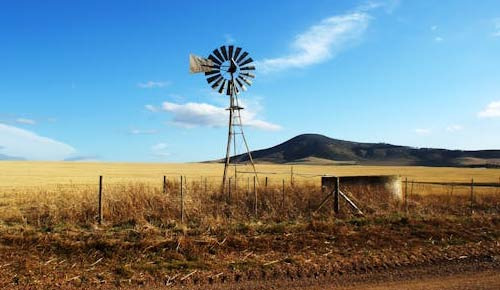
When you visit farms in Texas and Oklahoma, the weather vanes you often see are not just simple decorations.
In regions like Texas, where the weather frequently changes and extreme conditions can occur, such as heavy rain or sudden cold spells within a single day, the direction of the wind has become an important sensory tool for reading the natural flow.
"Oh, the weather vane is pointing south this morning? It looks like it's going to rain, so we need to get the cattle into the barn quickly," is not just a casual remark.
The reason farmers in Texas can predict the weather using a weather vane is that the wind direction is a precursor to weather changes. Combined with local characteristics and decades of experience, Texas farmers have learned to interpret the wind direction to conclude, "It's going to rain," or "A cold wind is coming from the north."
Statistically, Texas also has distinct wind patterns, allowing for weather predictions based on wind direction.
South Wind (from south to north)
Warm, humid air from the Gulf of Mexico >> Rain expected, possibility of thunderstorms
North Wind (from north to south)
Cold air from Canada >> Chilly or cold weather, clear skies
East Wind
Humid air from the Gulf of Mexico, sometimes influenced by low pressure >> Possibility of rain
West Wind
Influence of dry high pressure, inland winds >> Clear and dry weather, heat in summer
On Texas farms, the weather vane plays a crucial role in determining tasks such as planting, harvesting, pest control, and livestock management based on the weather:
A sudden north wind blows → "Cold air is coming; I need to be careful of frost tonight."
A southeast wind begins to blow → "It's humid; there's a chance of rain soon."
If the wind stays in one place all day → "We must be under high pressure. The weather should be stable."
Weather vanes have been used since ancient Greece, and in the United States, early European settlers introduced them for agricultural activities. In Texas, they have been widely used on farms and ranches since the 19th century, particularly in areas prone to drought and storms, to monitor wind direction for crop protection and livestock management.
For example, in 1847, the Bettina community established by German immigrants installed a weather vane made by August Strauss on a building to measure wind direction.
Weather vanes on Texas farms have also served as decorative items that express local identity and pride. Animal shapes like horses, cattle, pigs, and chickens are common, reflecting the main livestock or regional characteristics of the farm.Ultimately, the weather vane on Texas farms has become a symbol deeply rooted in the region's history, culture, and agricultural environment, transcending its role as a simple weather tool. Today, its beauty and significance continue to inspire many.




 lightyear |
 Moscow Kim |
 coloradoman |
 Montgomery Mom |
 GOGO SING |
 horse |
 MBTI Detective Agency |
 kevin Kim |
 Dala Dala |
 jaxter |
  Anytime Journey |
  Mrs. Duluth |
  Atlanta Mama |
  Baguette Blog |
  US Embassy |
  Korean Mom |
  My NYC |
  moo moo |
  Mr Oh |
  forevergee |
  festival |
  manchester |
  constant |
  Leapfrog Move |
  vibranto |
  Tora Tora |
  yellowbutter |
  Dolly |
  NYC saladbar |