

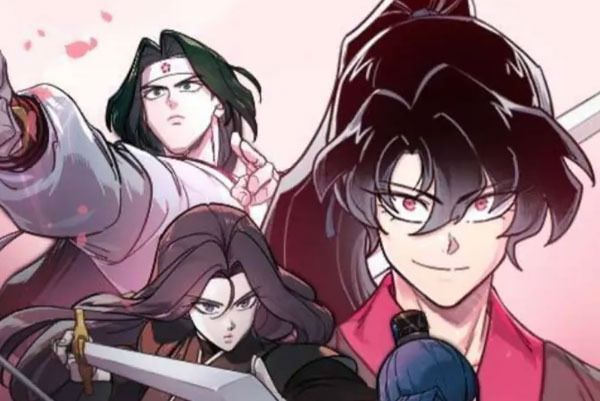
It was a fantasy close to a man's instinct.
When Hong Kong martial arts movies aired on TV, and actors shot energy blasts with both hands, flying through the air on wires, I ran around with a broom shouting, "I am a disciple of the Wudang sect!"
Back then, terms like internal energy and peak masters were common, and just hearing about the 'martial arts supreme' from "The Legend of the Condor Heroes" or "The Invincible East" would fill my heart with grandeur.
But that feeling has returned now. Under the name 'martial arts webtoons.'
Korean martial arts are now gaining popularity among readers worldwide through platforms like Naver Webtoon and KakaoPage.
When compared to the original martial arts from China, the differences are clear. Chinese martial arts are built on traditional values like Taoist philosophy, authenticity, and loyalty, forming the backbone of the 'jianghu' worldview.
Masters like Jin Yong, Gu Long, and Yang Yu Sheng define the order of the martial world, and the protagonists fight to uphold righteousness while cultivating their skills.
In contrast, Korean martial arts feel more gritty. Martial arts novels from the 80s and 90s were based on a survivalist mentality of "the winner is the best."
Renowned authors like Hwang Seong, Ya Seol Lok, and Sa Ma Dal depicted a realistic martial world where survival came before justice.
It felt less like a jianghu and more like a 'survival market where the goal is simply to survive.'
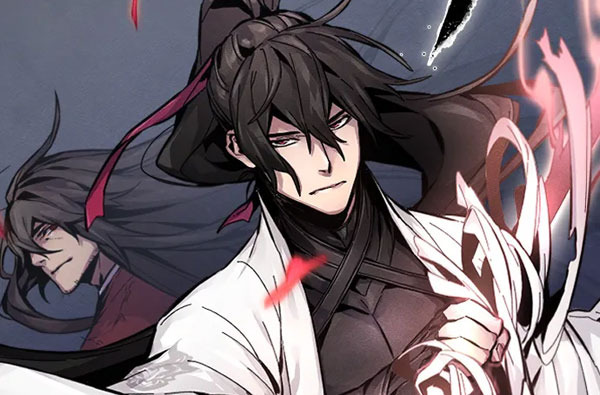
And nowadays, martial arts webtoons do not just swing swords.
They have evolved into hybrid content that incorporates regression, growth, revenge, game systems, and cinematic direction.
Protagonists who die and are reborn return to the past with memories to enact revenge, level up by completing quests, and captivate readers with explosive action sequences. Especially the cliché of 'the regressed loser turns out to be a genius' makes viewers want to reset their own lives. Thanks to this, the genre has become more than mere entertainment; it has turned into a stress-relief content for modern people.
At the center of this is the work 'Return of the Mount Hua Sect.'
Starting serialization in 2019 on Naver, the web novel 'Return of the Mount Hua Sect' has a staggering 1,449 episodes!
It has set incredible records with a cumulative download of 490 million views and sales of 40 billion won.
The 'Return of the Mount Hua Sect' novel has also been reborn as a webtoon, securing a fanbase overseas.
Originally, it tells the story of a protagonist who regresses just before the destruction of the martial world and revives the closed sect 'Mount Hua,' but it is not just about rebuilding the martial world; its charm lies in its humorous, touching, and refreshing developments. After being adapted into a webtoon, it has received a hot response not only domestically but also internationally.
Besides 'Return of the Mount Hua Sect,' works like 'Solo Leveling,' 'Return of the Disaster-Class Hero,' 'Abysmally Strong,' 'The Great Mage Returns After 4000 Years,' 'Nano Machine,' and 'Heavenly Demon Cultivation Manual' are also active in the global market.
In particular, 'Solo Leveling' has been adapted into an anime and aired in Japan, with discussions about entering Netflix as well.
Translated martial arts webtoons are gradually gaining recognition in the U.S., Europe, and Southeast Asia, establishing themselves as a new genre called K-martial arts.
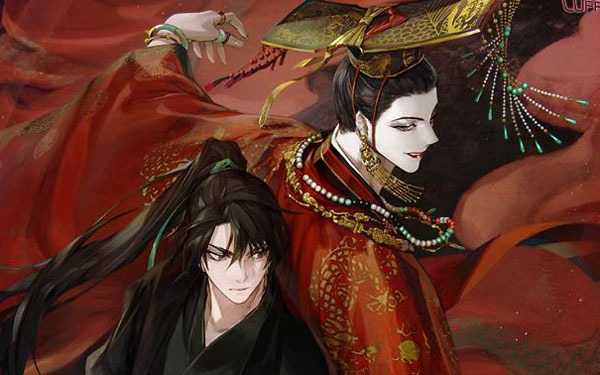
At this point, one might wonder how China, the stronghold of martial arts, views Korean martial arts.
Initially, there was certainly a critical perspective. However, the atmosphere has changed significantly. More and more people are acknowledging that the Korean webtoon industry excels in creativity, direction, serialization speed, and reader engagement, and in fact, there are cases where Korean martial arts are categorized separately on platforms within China. This means that they recognize that Korean martial arts have evolved 'differently' and 'more elegantly' in terms of content quality, emotion, and character narratives.
However, Japan is a bit different.
Japan has firmly established its own traditional genres like ninjas, samurais, and yokai. And above all, there is the super-strong genre of 'shonen manga.' With IPs like 'Dragon Ball,' 'Naruto,' and 'One Piece' already dominating the global market, there is no reason to bring in the foreign genre of martial arts. Additionally, Japanese readers tend to prioritize personal growth and psychology over the 'organization-centered narratives' typical of martial arts, which differs somewhat from the refreshing developments of Korean martial arts.
Ultimately, Korean martial arts have taken the form of Chinese martial arts but reinterpreted it with a Korean sensibility and narrative, while referencing Japanese directorial techniques, evolving into content that is faster and more straightforward. As a result, today we are accompanied by millions of readers enjoying Korean martial arts webtoons worldwide. And at the center of it all, the jianghu still exists. There are regressed disaster-class heroes, revenge seekers, and former losers returning with dual swords.
Martial arts have not died. They have simply put on a new outfit called webtoons and re-entered our smartphones.
And today, I had to pay for the next episode again.
Why? Because webtoon authors always end the content at the most thrilling moments...
Waiting a week will make it free, but in the end, I can't wait until next week and end up paying.
What can I do? If I'm curious, I have to solve it with money, haha.
I hope Korean webtoons continue to grow and establish themselves as global animation content.



 Egg Steamed Pot |
 novapixel |
 xylora |
 vegas mom |
 Coco and Lulu |
 Weekend Movie Blog |
 Beauty, Health, Lifestyle Blog |
 coloradoman |
 Superman Cat Blog |
  Korean Mom |
  My NYC |
  moo moo |
  Mr Oh |
  forevergee |
  festival |
  manchester |
  constant |
  Leapfrog Move |
  vibranto |
  Tora Tora |
  yellowbutter |
  Dolly |
  US Embassy |
  NYC saladbar |
  Finding Superfoods |
  lightyear |
  song bang |
  vexomo |
  Indiana Jones |