

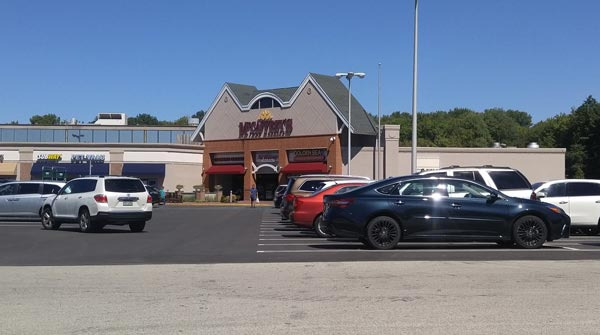
Blue Bell is a peaceful and pleasant neighborhood. The roads are quiet, and there is almost no concern about crime. The schools are of high quality, and with parks and golf courses nearby, it is a great place to enjoy a relaxed life. On the surface, this seems like the ideal 'good place to live in America,' but in reality, it is not as easy for young Koreans to settle down here as one might think.
Blue Bell has a high percentage of white residents, and the Asian population, including Koreans, is not large. There are almost no Korean restaurants or markets, and community activities for Koreans are limited. It is an environment where one can easily feel lonely. Especially for international students or young professionals, there is a lack of people with whom to share cultural understanding. Compared to areas like downtown Philadelphia, which have many Korean churches, gatherings, and restaurants, Blue Bell feels too quiet, amplifying the sense of loneliness.
The housing prices in Blue Bell are among the highest in Montgomery County. The median price for a typical single-family home exceeds $800,000, and rent for a one-bedroom apartment is over $2,000 per month. For young people just starting their careers or looking for jobs after studying abroad, it is difficult to afford such housing costs.
Without parental support, it is tough to live solely on a salary. Therefore, most young Koreans move to relatively affordable areas with convenient transportation, such as downtown Philadelphia, King of Prussia, or Ambler.
Blue Bell is primarily a suburban residential area, with few headquarters of large corporations, startups, or IT companies. Most residents are already established professionals or middle-class families commuting to downtown Philadelphia. This means it is challenging to build a new career locally, and opportunities for young people are limited. Commuting to places with job opportunities incurs significant transportation costs and time burdens, and without a car, mobility itself is inconvenient. Ultimately, Blue Bell is perceived by the younger generation more as a 'place to live' than as a 'community for their generation.'
Blue Bell is a calm and slow-paced neighborhood. Neighbors generally lead family-centered lives, taking their children to golf courses or parks on weekends. In contrast, the younger generation desires active social interactions and the stimulating rhythm of urban life. However, Blue Bell has almost no cafes open late, pubs with music, or spaces to spontaneously meet friends. In this regard, the area can feel 'boring' to young people.
In the end, Blue Bell is a 'city for stable people.' It is an ideal place for established middle-aged individuals or retirees, but for young people just starting their lives, it feels too slow, expensive, and socially limited. Thus, it is a natural flow for young Koreans to live here temporarily before moving to downtown Philadelphia, New York, or New Jersey.
Ironically, many young people return to such suburban areas after they grow older, get married, and have children. As they enter a life stage that values stability, education, and environment, neighborhoods like Blue Bell become attractive again. Ultimately, this place is closer to a 'space for mature living' than a 'city of youth.'
Here, there is the daily life of those who have already settled rather than a stage for challenges. Therefore, many young people say, "I want to live in a place like Blue Bell someday." But for now, it seems that is not the case yet.





 ultron78 |
 garlic bread |
 Sugar Cream Door Bulletproof Noodles |
 urbanmint |
 |
| 
 DelphiaMo |
 blueman |
 positive x |

 bubblo |
  Korean Mom |
  My NYC |
  moo moo |
  Mr Oh |
  forevergee |
  festival |
  manchester |
  constant |
  Leapfrog Move |
  vibranto |
  Tora Tora |
  yellowbutter |
  Dolly |
  US Embassy |
  NYC saladbar |
  Finding Superfoods |
  lightyear |
  song bang |
  vexomo |
  Indiana Jones |