

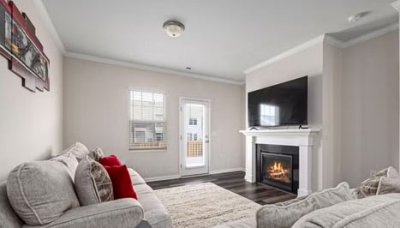
Located in the heart of the Dallas-Fort Worth Metroplex, Arlington is a city known for large sports facilities like AT&T Stadium and Globe Life Field, but it has also shown noticeable changes in its housing market over the past five years. In early 2021, the median home price in Arlington was around $270,000, but it has now risen to about $370,000. This represents an increase of approximately 35% based on simple calculations.
Looking at the yearly trends, the flow is clear. From 2021 to the first half of 2022, the combination of low interest rates and the rise of remote work led to a surge in buyer demand, resulting in double-digit increases across the DFW area, including Arlington. However, from the second half of 2022 to 2023, the Federal Reserve's interest rate hikes caused mortgage rates to soar to around 7%, significantly slowing the upward trend, with slight adjustments occurring in some periods. From 2024 to the present, the market has shown a stable phase with modest increases rather than sharp rises or falls.
Compared to the national average, Arlington's five-year cumulative increase is generally similar or slightly lower. During the same period, the median home prices across the U.S. are reported to have risen by about 35% to 45%, with Arlington moving closer to the lower end of this range. While it did not experience the sharp spikes seen in some areas of Austin or downtown Dallas, it also did not undergo significant corrections.
Several factors have driven this increase. First, job growth in the entire DFW area has been steady. With companies like Toyota North America relocating their headquarters or operations to this area, the influx of people from states like California and New York has continued. Additionally, Arlington has been relatively undervalued compared to Dallas or Fort Worth, with lower home prices, and the new supply has not fully kept up with demand, contributing to the price increase.
- Corporate relocations and job growth in the DFW area
- Relatively low cost of living and home prices compared to other states
- Insufficient new housing supply to meet demand
- Changes in buyer sentiment due to mortgage rate fluctuations
It is cautious to predict future trends. However, recent market observations show signs of mortgage rates stabilizing gradually, along with a slight increase in inventory, suggesting that rather than a sharp rise like in the past, the market is likely to move within a range of modest increases or stability. As long as the unique influx of population into the DFW area does not diminish, the likelihood of a significant drop appears low.
For Korean households, Arlington is considered a region where one can simultaneously consider school districts, living infrastructure, and relatively reasonable price ranges. If you are already contemplating a purchase due to school districts, it may be beneficial to monitor interest rate trends and inventory levels to adjust your timing. Conversely, if you are considering selling, taking into account the recent moderate upward trend may help maintain a realistic sense of market value rather than overly high expectations, which could aid in negotiations.
Ultimately, Arlington's five-year trajectory can be summarized as having experienced both sharp increases and adjustments while maintaining a stable path that does not deviate significantly from the national average. Given that there can be considerable variation depending on the condition and location of individual properties, it is advisable to check recent nearby transaction cases if you are about to engage in actual transactions.
 Sleazy60Min
 CupRamenArmy




 garlic bread |
 Sugar Cream Door Bulletproof Noodles |
 urbanmint |
 |
| 
 Premium Gas Camp |
 August Snowman |
 US 210 Kim Sangsa |
 Gupabal MissKorea |
 nexaro |
 Texas Migration Story |
  Round and Round Children's Song Kingdom |
  Mia Flori |
  nova nova |
  healthy |
  leaves |
  sparkling |
  maryland park |
  persiste |
  conte |
  blueman |
  Going Once |
  Eldorado 88 |
  cherrydino |
  middlekick |
  Moscow Kim |
  nivex85 |
  quanta7 |
  Tomato Health Club blog |
  horse |