
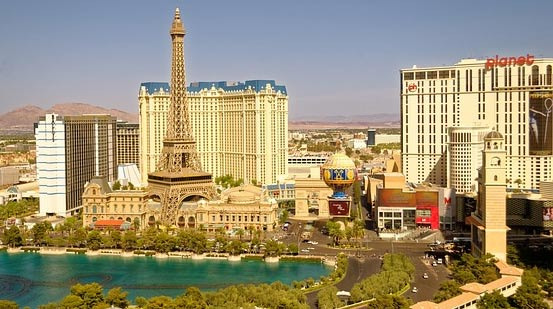
Many people tend to understand Las Vegas's economy solely through its casinos and tourism, but the actual economic structure of Las Vegas is much more diverse. While tourism, hotels, and the casino industry are undoubtedly the backbone of Las Vegas's economy, in recent decades, Las Vegas has been promoting industrial diversification in various fields such as logistics, manufacturing, high technology, and healthcare. The state of Nevada has no personal income tax or corporate tax, creating a favorable environment for attracting businesses.
The core of the Las Vegas economy remains the tourism, hotel, and casino industries. According to data from the Las Vegas Convention and Visitors Authority, the number of tourists visiting Las Vegas reached approximately 42 million in 2019, before the COVID-19 pandemic, with their spending exceeding about $34 billion. Major casino companies like MGM Resorts, Caesars Entertainment, Wynn Resorts, and Sands Corporation have their headquarters or major operational bases in Las Vegas, and these companies hold a significant share of local employment. The large hotel-casino facilities around the Strip employ thousands of people, with some employing over 10,000 staff.
The convention and MICE (Meetings, Incentives, Conferences, Exhibitions) industries also play an important role in the Las Vegas economy. The Las Vegas Convention Center boasts over 3.3 million square feet of exhibition space, and the world's largest electronics trade show, CES (Consumer Electronics Show), is held annually in Las Vegas. In addition to CES, large conventions related to healthcare, construction, auto shows, fashion, and food are held throughout the year, attracting hundreds of thousands of business visitors. According to the Las Vegas Convention and Visitors Authority, convention visitors spend more than twice as much per person compared to regular tourists.
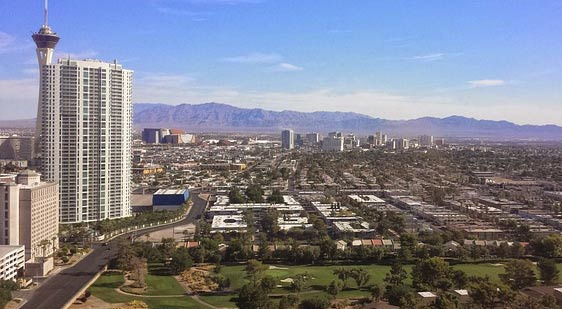
The logistics and distribution industries are also a crucial economic foundation for Las Vegas and the nearby Henderson area. Las Vegas is strategically located at a transportation hub connecting Los Angeles, Salt Lake City, and Phoenix, functioning as a logistics center for the western region. Major logistics companies like Amazon, FedEx, and UPS operate large logistics centers and delivery facilities in the Las Vegas metropolitan area, providing a significant number of jobs for local residents.
The high technology and data center industries are also growing rapidly. Major IT companies like Google and Switch have established large data centers in Las Vegas and Nevada, thanks to the state's low tax rates, affordable land costs, and relatively low risk of natural disasters. Notably, the data center company Switch is headquartered in Las Vegas and operates one of the world's largest data centers, the 'Pyramid Campus,' near Las Vegas. Tesla's Gigafactory is located near Reno, which has led to the establishment of related supply chains and partners in the Las Vegas metropolitan area.
The healthcare industry is also becoming increasingly significant in the Las Vegas economy. With population growth and an aging population leading to increased healthcare demand, hospitals, clinics, and medical device companies are expanding their investments in Las Vegas. The establishment of the UNLV School of Medicine in 2017 was aimed at strengthening the training of medical personnel and the foundation for medical research in the Las Vegas area. The health services sector and senior healthcare facilities are rapidly growing fields alongside the increase in the senior population in Las Vegas.
The construction and real estate development industries are also vital pillars of the Las Vegas economy. Las Vegas is one of the fastest-growing cities in the U.S., leading to a continuous demand for housing, commercial real estate, and infrastructure construction. According to data from the U.S. Census Bureau, Clark County recorded an increase of over 15% in population between 2010 and 2020. The steady growth of the Las Vegas metropolitan area provides stable demand for construction and real estate-related industries.
 DesertSoulman
 redcitybuilder2005
 BellGrayCall
 GoodKarma
 SmileLuck





 Hajiwon Blog Hair Salon |
 tartbear |
 novapixel |
 NEXT ROUND |
 Encyclopedia of New York and Surrounding Areas |
 Anova US Beauty Information |
 US Legal Consultation on Trials |

 vegas mom |
 celion78 |
  saffronroute |
  korvex93 |
  Mini Mee |
  Darnignac |
  vanilla |
  selvon |
  brownie |
  Star Blog |
  The Day the Sun Rises |
  sweetpop |
  California Kangaroo |
  zanero |
  station |
  Static |
  Star Way |
  American Blog Forge |
  MMORPG Games |
  Then you must be spring |
  Spicy Immigration Life |
  zenvor16 |