

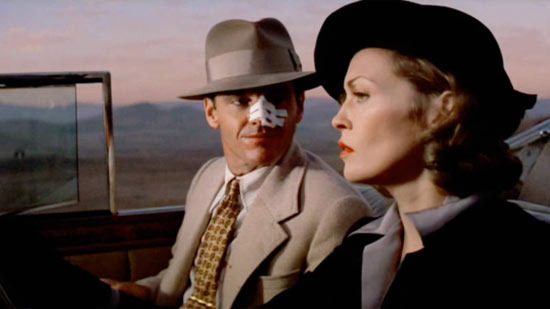
Chinatown is not just a "well-made film"; it is considered a benchmark for interpreting the city of LA itself.
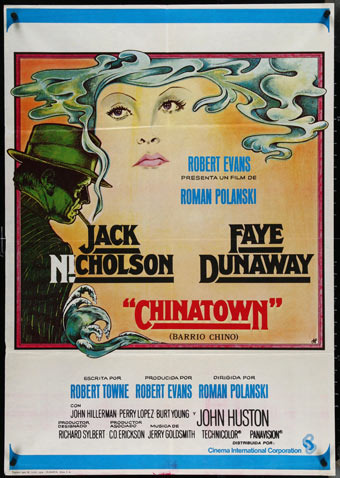
Directed by Roman Polanski and starring Jack Nicholson, Faye Dunaway, and John Huston, this film is acclaimed as a pinnacle of the film noir genre. It was nominated for 11 Academy Awards, and particularly, Robert Towne's screenplay is still regarded as "almost a perfect script." There is a reason it is used as a textbook example among film students.
The true core of this film is not just a simple detective story, but rather a narrative about "how the city was built."
Set in 1930s LA, it appears to be a city bathed in sunlight, where wealthy people live leisurely. However, beneath the surface lies a fierce struggle over water and power. The events in the film are inspired by the real historical event known as the Owens Valley water conflict.
The film delves deeply into the fact that the process of bringing water from outside areas to expand the city during LA's rapid growth was essentially a result of collusion between politics, capital, and power.
The protagonist, Jake Gittes, initially takes on a simple infidelity investigation. However, as the story progresses, he gets drawn deeper into a more complex situation.
The journey from a personal issue to the broader structure of corruption in the city is the real charm of this film. And what emerges from this process is the harsh reality that "the individual cannot overcome the system." Gittes is a smart and capable detective, but ultimately remains powerless in the face of greater authority.
The film is special because of its perspective on LA. Typically, when one thinks of LA, images of sunshine, beaches, and a free-spirited atmosphere come to mind.
However, this film goes in the opposite direction. It uses the same sunlight but creates an entirely different emotion. Even in bright daytime scenes, there is an oddly unsettling feeling, and peaceful landscapes seem somehow twisted. This is largely due to John Alonzo's cinematography, which perfectly creates the image of "a city that appears bright on the outside but is dark on the inside" by utilizing light and shadow.
The locations are also intriguing. The mansions, lakes, and streets featured in the film offer a different kind of enjoyment when compared to present-day LA.
In particular, areas around Echo Park and Hollywood Hills feel remarkably unchanged, yet retain the essence of the time.
Watching this film gives you the sensation of not just following a story, but of walking through 1930s LA.
And one cannot overlook the ending of this film. In typical Hollywood films, justice usually prevails and the issues are resolved.
However, this work is the opposite. The problems remain unresolved, leaving only greater despair.
The line "Forget it, Jake. It's Chinatown." encapsulates the entire message of the film.
It suggests that there are realms in the world that are incomprehensible, and structures that cannot be changed no matter how hard one tries.
This line is powerful because it symbolizes not just a specific area, but the very essence of "inexplicable absurdity."
Thus, the title of the film, 'Chinatown,' serves as both a real place and a concept.
A world that is uncontrollable, incomprehensible, and ultimately must be accepted.
In the end, Chinatown is not just a simple crime film.
It is an interpretation of how the city of LA was built and the sacrifices and corruption that occurred in that process.
It makes one reflect on the stories that lie beneath the glamour of the LA we know today.
Therefore, for those who love LA or are interested in the city, this film is not just a "worthwhile movie" but is almost a must-see.
It is not a film to watch once and forget; it is a movie that makes you see the city in a new light after watching it.




 Day by day |
 Kitchen Ideas |
 Iowa Egen Aunt |
 Beauty, Health, Lifestyle Blog |
 Always Atlanta |
  Weekend Movie Blog |
 coloradoman |
 Victory 1988 |
 Superman Cat Blog |
  CA Real Estate |
  yolanda78 |
  Round and Round Children's Song Kingdom |
  Mia Flori |
  nova nova |
  healthy |
  leaves |
  sparkling |
  maryland park |
  persiste |
  conte |
  blueman |
  Going Once |
  Eldorado 88 |
  cherrydino |
  garlic bread |
  middlekick |
  Moscow Kim |
  nivex85 |
  quanta7 |