

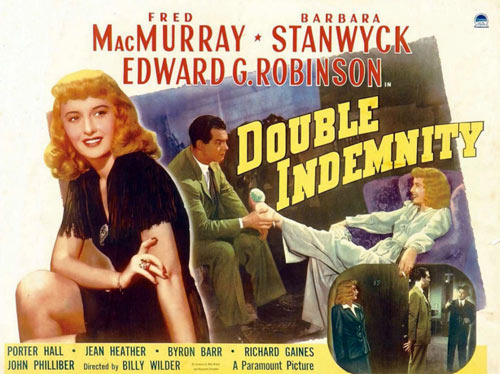
It's practically impossible to discuss Hollywood's golden age without mentioning film noir.
And at the center of it all is the 1944 film Double Indemnity.
Even upon rewatching, this movie has a rather strange atmosphere. There are no heroic figures, and no justice saving the world.
Instead, it chillingly and realistically portrays how dangerous human desire can be.
Walking on what seems like solid ice, only to suddenly hear a crack beneath your feet and feel yourself falling through, captures the mood of the film perfectly.
The story itself is simple. It begins when insurance salesman Walter Neff meets a client's wife, Phyllis.
They decide to kill her husband and collect the insurance money. The end.
Just writing down the plot might make you think, "Haven't I seen this story somewhere before?"
But remember, this came out in 1944. At that time, for American audiences who were quite religious, it was a shocking film.
The real horror of this movie isn't the crime scenes. It's the very realistic portrayal of an ordinary man being drawn into desire and taking one wrong step after another.
It all starts with just a small lie.
But that lie snowballs and eventually consumes everything. It ends with a stammering, "Uh, uh, uh."
Every time I watch the LA depicted in the film, I feel a strange sensation. It's not the sunny, palm tree-filled LA we know today.
The black-and-white LA feels like a street lit only by fluorescent lights at two in the morning. Cold, empty, and eerily quiet.
Even when a large mansion appears, it feels gloomy rather than warm. It feels like an empty house, even though people live there.
The neighborhood near Lafayette Park shown in the film was, at the time, a middle-class white area, which is now near Koreatown.
Cities, like people, completely change their faces over time. Watching the film, I thought about this.
I can't talk about this film without mentioning director Billy Wilder. Especially the opening scene.
The moment Walter, wounded by a gunshot, sits in front of a tape recorder and begins to tell his story.
Today, flashback structures may seem common and unremarkable, but in 1944, it was almost like inventing a new cinematic grammar.
Just as an old jazz tune can change the course of music for decades, this film left a deep mark on many crime films that followed.
It would probably take a lifetime for later directors to repay the debt they owe to this film.
When discussing this film, it's a must to mention Barbara Stanwyck's portrayal of Phyllis. She is one of the most famous femme fatales in film history.
Phyllis isn't a character who screams or threatens. It's not that kind of one-dimensional danger.
She slowly, very slowly, shakes and dismantles people's hearts.
Even the bracelet on her ankle and the sunglasses she wears seem meticulously calculated.
You could say she is a character who has poison hidden in a beautiful perfume bottle.
From a distance, she looks beautiful, but up close, she is dangerous. Yet, you want to get closer. That's the problem.
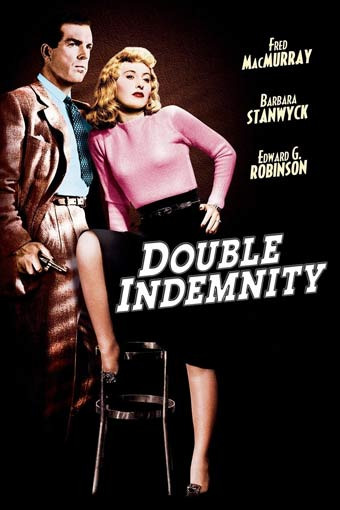
People's Stories Remain the Same After 80 Years
The reason this film continues to be discussed even 80 years later is simple.
Human nature hasn't changed much since then.
Desire, money, love, betrayal. These emotions shake us in almost the same way, regardless of the era.
So when watching Double Indemnity, it doesn't feel like watching an old black-and-white film; it feels like watching a story about people.
Only the clothing and cars have changed, but the desires within feel as familiar as yesterday.
Living in LA for a long time, you realize that with glamour comes shadows, and behind every success story, there are desires and loneliness.
Noir was the genre that most accurately captured the dark face of LA. And at its center is Double Indemnity.
Don't put off watching this old film. It is a timeless classic.
 Gimmi207
 dream79




 Iowa Egen Aunt |
 Beauty, Health, Lifestyle Blog |
 Always Atlanta |
 RV Samuel's Dad |
 Ham and Cheese |
 Victory 1988 |
 Investment Campus Home Ownership |
 California Dreamer |

 Lightning Sikhye Cooking Method |
  Yavrix 92 |
  cherry cherry |
  moonlight |
  Coastal city |
  There Are Such Things in the World |
  Mazinger Z Rocket Punch |
  celtics |
  shinee cho |
  Kondae Garusong Blog |
  quiet river |
  alamo |
  Lol Life |
  Waiting for Godot |
  parlon |
  Say Yes in English |
  Sayonara H |
  rigid |
  Ohio Ohayoung Hello |
  U.S. Military Recruitment Information |
  You Turn Me On |