

AI news and robot news have been popping up a lot lately.
However, this news honestly feels like a step further, haha.
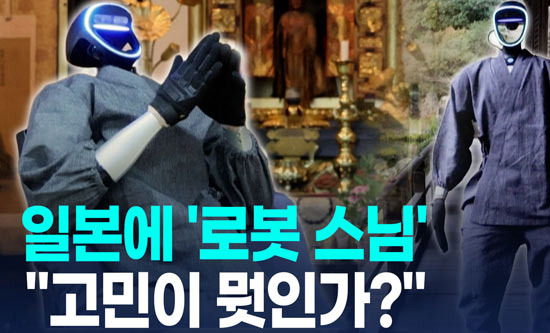
It's reported that an AI robot monk has been unveiled at a temple in Kyoto, Japan. Its name is Buddharoid.
It seems to be a combination of Buddha and Android. The name definitely captures the Japanese essence. It has a bit of a quirky feel.
Back in the 90s, while watching Ghost in the Shell, I wondered if such a world would really come, and now it's just a reality news story, which feels a bit strange.
This robot is said to be equipped with generative AI that has learned ancient Buddhist scriptures. The AI itself was developed in 2023, and it has now been combined with a robot body for its actual appearance. When users express their concerns, it quotes scripture and adds interpretations.
The demonstration took place at an actual temple. It was unveiled at Shoren-in in Higashiyama, Kyoto.
When asked about difficulties in human relationships, it reportedly advised to reflect on the distance with others and maintain balance in the heart. It even performed a gesture of prayer. Its walking and worship movements were also said to be quite natural, so the technical quality seems commendable.
Technologically, it's really impressive. Training it on specific scripture texts and generating context-appropriate responses is no easy feat. Plus, implementing robot gestures to match adds a different dimension to the user experience. Seeing it in person while it performs a prayer gesture feels different from just reading it in text.
However, on the other hand, I also feel a bit conflicted. Religious teachings are not just simple information delivery. Many people feel that they contain practice, experience, and authenticity. It's often said that the weight of a sentence changes depending on who says it.
No matter how accurately AI quotes, it's still a data-driven response. It feels like it exists on a different level from enlightenment.
Still, I understand the background of such attempts. In Japan, visits to temples by younger generations have significantly decreased, and there's a serious shortage of monks in rural temples. This can be seen as an attempt to create a connection through technology in a situation where religion is distancing itself from the public.
Just look at California; many people use meditation apps. Services like Headspace and Calm are already familiar. There's a perspective that technology has been somewhat proven to be a tool for mental well-being. From that standpoint, Buddharoid could serve as a first step for those who find temples daunting.
AI has already started painting and coding, and now it's reading scriptures and performing prayers; the speed of technology feels incredibly fast. However, discussions will need to continue about how far this can go in the realms of religion and spirituality and what is appropriate.
Personally, I hope Buddharoid serves more as an entry point rather than replacing real monks. Just like starting meditation with an app and eventually finding a real center.
Still, it seems that artificial intelligence can open the door to the heart. Ultimately, it's up to people to walk through that door.





 Baguette Blog |
 Khan Film Blog Production |
 dermoon |
 hoosierdaddy |
 sun walker |
 garlic bread |
  Popular Song Exciting Song |
 Yo Lock Me Up |
 Burbank Lee |
 California Information News |
  Tonky |
  viroma |
  cookie |
  Live and that's it |
  Alright Twain |
  eatontown blog |
  HAWAII Korean Church News |
  Amore |
  linex |
  Balancework |
  laro90 |
  MEDBIO American Doctor Blog |
  SWAT TEAM BLK |
  DREAM BIG |
  frostbite |
  330 Forever My Love |
  El Dorado |
  dralix58 |
  Gorama Round |
  Skydiving |