

According to Taiwanese media ETtoday and EBC, it has been reported that Hsu Shi-yuan, the wife of Korean singer Goo Jun-yeop and a Taiwanese actress, died from pneumonia in Japan. On the 29th of last month, she showed symptoms of coughing and asthma while traveling in Japan with her family, and on the 31st, she was transported by ambulance for emergency treatment. It is said that she had shown cold symptoms even before the family trip but decided to go along to avoid disrupting the travel schedule.
As Hsu's condition worsened, her family took her to a small hospital for treatment on the 1st, where she was diagnosed with type A influenza and prescribed medication. However, that night her condition rapidly deteriorated, and she was transported back to the hospital, where she passed away around 7 AM on the 2nd.
ET News reported, "The small hospital recommended a larger hospital, stating that they could not provide proper treatment, and prescribed medication for simple influenza," adding that Hsu's condition unexpectedly worsened the night she returned from the hospital. There has been a sad reaction locally in Taiwan regarding the fact that Hsu was unable to receive inpatient treatment despite visiting the hospital multiple times.
How is pneumonia transmitted?
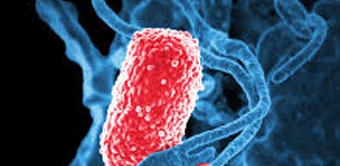
Pneumonia is categorized as a single condition, but it actually divides into several types, including viral, bacterial, and fungal, with different treatments depending on the cause. Symptoms may appear similar, but it is crucial to thoroughly identify the cause for accurate diagnosis and appropriate treatment.
Initial pneumonia symptoms are often similar to those of a cold, leading many to neglect seeking medical attention. Patients who mistake it for a cold may delay treatment due to concerns about medical costs or inconvenience, resulting in a worsening condition and ultimately receiving a pneumonia diagnosis. Sometimes, pneumonia can develop from initial cold symptoms.
Young and healthy individuals typically only exhibit mild cold-like symptoms when they contract pneumonia and recover quickly, but those with weakened physical strength may experience rapid progression of pneumonia, leading to impaired lung function and systemic inflammation that can result in sepsis. Even individuals with good immune function can suffer for a long time if they are unlucky enough to be infected by a very strong pathogen or fungus.
Even today, acute pneumonia remains a dangerous disease. For vulnerable populations such as the elderly or postpartum women, pneumonia can suddenly worsen and lead to death before treatment can be administered. In the past, pneumonia was often seen as a direct path to death due to its high mortality rate, and its risks should not be underestimated even now.
Is vaccination possible?
There are two types of vaccines: the 13-valent and the 23-valent vaccines. Here, '13' and '23' refer to the number of types of pneumococci that each vaccine can prevent. While it may seem that the 23-valent vaccine covers more strains, in reality, the 13-valent vaccine, which induces an immune memory response and requires only a single lifetime dose, is much more effective.






 Korean Mom |
 novapixel |
 Peter Pan Pet |
 horse |
 Sunset Oregon |
 Weekend Movie Blog |
 Beauty, Health, Lifestyle Blog |
 coloradoman |
 Superman Cat Blog |
 Tonky |
  viroma |
  cookie |
  Live and that's it |
  Alright Twain |
  eatontown blog |
  HAWAII Korean Church News |
  Amore |
  linex |
  Balancework |
  laro90 |
  MEDBIO American Doctor Blog |
  SWAT TEAM BLK |
  DREAM BIG |
  frostbite |
  330 Forever My Love |
  El Dorado |
  dralix58 |
  Gorama Round |
  Skydiving |