

A few days ago, I watched an old American movie.
The setting was Los Angeles in the 1940s, and there was a scene where ordinary people gathered along Wilshire Boulevard, excitedly discussing horse racing.
Some were holding betting slips and picking horses, some were checking odds, and others were blushing as they chose which horse to bet their money on.
The background clearly looked like it was near Wilshire and Vermont. At first, I thought it was just a cinematic exaggeration. But after looking into it a bit, I found out it wasn't entirely untrue.
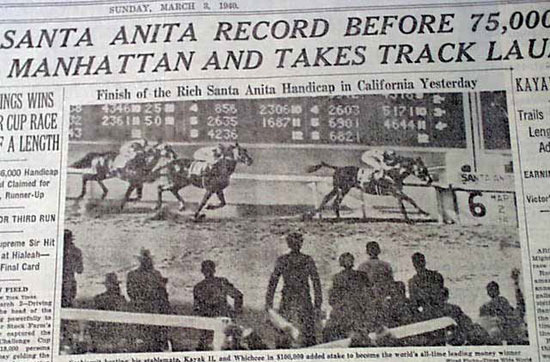
To get straight to the point, the peak period of street horse racing betting in the U.S. was roughly from the late 1930s to the early 1950s, especially the 1940s.
This was during the Great Depression. As the economy collapsed in the 1930s, people were looking for opportunities to turn their lives around with small amounts of money. Many turned their eyes to horse racing. In 1933, California legalized horse racing betting, leading to the establishment of large racetracks around LA. The most notable one is Santa Anita Park, which is still famous today.
The problem was that people didn't necessarily have to go to the racetracks. They could place bets right in the city.
This is where bookmakers came into play. They accepted horse racing bets in places like bars, pool halls, back rooms of restaurants, and small offices.
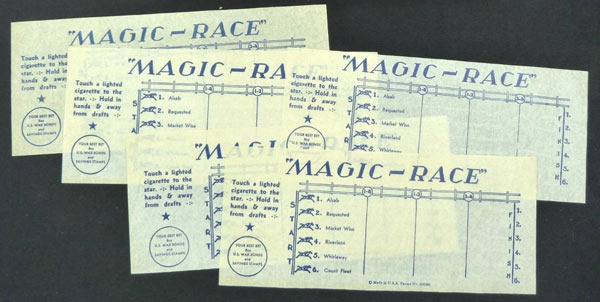
So, just like the scene on Wilshire Boulevard in the movie, it was common for ordinary people to gather and say things like, "I heard horse number X is coming in today" or "The odds are this much." Research from that time shows that a network of bookmakers spread throughout the city, and organized crime got involved, making it quite large.
LA was no exception. In the 1930s and 40s, there were quite a few bookmaker organizations, and some even catered to movie stars and wealthy clients. There was even a figure known as the "bookie king" in LA at that time.
Some bars and clubs were effectively known as betting venues, similar to screen racing establishments, and they frequently appeared in police investigations and news articles.
As a result, this issue became quite a significant social problem. The three main concerns were:
First, the involvement of organized crime. Because large sums of money were involved, the Mafia and criminal organizations often managed the bookmaker businesses.
Second, police corruption. There were news reports of police officers accepting bribes and turning a blind eye to the illegal activities.
Third, the spread of urban gambling culture. With betting taking place in bars, pubs, and pool halls, there were many criticisms about how easily ordinary people could fall into gambling.
At that time, there was also a telephone line system called "race wire." When horse racing results were quickly transmitted through dedicated phone lines, bets could be settled immediately within the city. It was similar to today's real-time sports betting systems.
Because of this, in the late 1940s, California even implemented a crackdown policy to cut off these phone lines. They pressured communication companies to prevent bookmakers from receiving information.
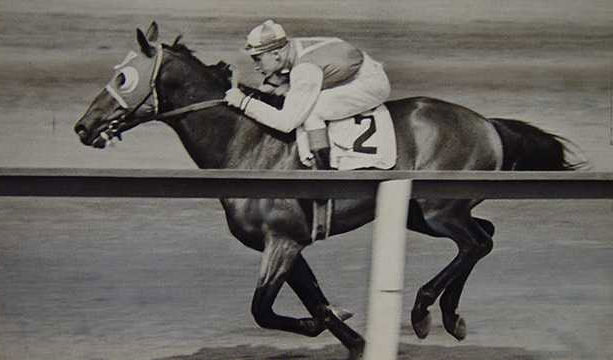
The problem didn't end there.
By the early 1950s, the U.S. Senate held organized crime hearings (Kefauver hearings). The illegal betting networks that had spread throughout the city became the subject of investigation.
Some studies suggest that the accessibility of gambling was even higher than it is today.
Records indicate that it was common for regular workers to place bets during their lunch breaks and spend part of their paychecks on horse racing.
As a result, newspapers at the time even used expressions like, "The entire city moves like a small racetrack."
So, the scene on Wilshire Boulevard that surprised me in the movie was not entirely fictional. The people waiting for horse racing results in bars, those placing bets with bookmakers, and scenes of checking odds over the phone were all part of the actual urban culture.
Today, there are various forms of gambling like online sports betting and casinos, but back then, the focus of gambling was almost entirely on horse racing. Thus, horse racing had a much larger social impact.
Perhaps that day on Wilshire Boulevard really was like that. People who stepped outside briefly during their lunch breaks, ordinary folks waiting for the results after placing small bets, and those who rejoiced over one race and sighed over another.
So, even though that scene is from a movie, it felt like I had accidentally glimpsed an old street scene.
The excited expressions of those people discussing horse racing on Wilshire Boulevard still linger in my memory.
 OkCafeCat



 Twist Kim |
 U.S. Weather Bureau News |
 Community Cross |
 Conflite Teacher |
 SEVEN SEVEN |
 Nanana Nanana Nanana |
 United States National Administrative Organization Stories |
 Forever Tiger Teacher |
 cathywhite |
 hot chocolate |
  SODA MAKER |
  james kim |
  All About Cars |
  lomira98 |
  calmbridge |
  oneonly |
  Brighto |
  racuse |
  Total Beauty |
  crystal |
  Good Hotels |
  raspberry7 |
  Que que |
  Well Done Sir |
  dance dance |
  sweetpepe |
  vegas mom |
  Olivia's Blog |