

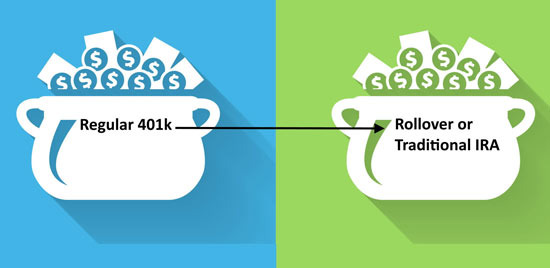
When changing jobs or retiring, many people first consider what to do with their 401(k). Leaving it as is can be inconvenient to manage, while moving it can feel risky and uncertain. Therefore, many choose to rollover their 401(k) to an IRA or transfer it to a traditional IRA structure. This choice has clear reasons and advantages, but there are also important considerations to be aware of.
The primary reason for rolling over a 401(k) or moving to a traditional IRA is the simplification of management. A 401(k) tied to a job often requires operating within the investment options set by the company. The types of funds may be limited, and the fee structure can be opaque. In contrast, moving to an IRA greatly expands the range of investment choices. You can utilize individual stocks, ETFs, bonds, various funds, and even annuities depending on the situation. As retirement approaches, this flexibility becomes a significant advantage.
The second reason is the consistency of management strategy. When changing jobs multiple times, 401(k) accounts can become scattered. If you have accounts from previous employers, your current employer, and a separate IRA, it can be difficult to see the overall flow of your assets. By rolling over to a traditional IRA, you can organize your assets more systematically, making asset allocation and withdrawal strategies much clearer. As retirement nears, this organization can make a bigger difference than expected.
The third reason is the cost structure. Some 401(k) plans, especially those from smaller companies or older plans, may have higher management fees. These costs, which may not be immediately visible, can gradually impact your returns over the long term. By moving to an IRA, you can directly compare and choose the cost structure, allowing for the possibility of reducing unnecessary expenses.
Another important advantage is the freedom in designing retirement income. It is relatively easier to plan withdrawal strategies after retirement with an IRA. While withdrawals are possible from a 401(k), the rules can vary by plan, and options are often limited. Especially when considering partial withdrawals, regular withdrawals, or combinations with other accounts, the IRA offers much more flexibility. This is why many people choose to move their 401(k) to an IRA just before or after retirement.
However, there are clear points to be cautious about. The first consideration should be taxes. Rolling over a 401(k) to a traditional IRA is generally not a taxable event, as it is a transfer from one pre-tax account to another. However, if you accidentally receive a check made out to you personally or fail to deposit it within the specified period, tax and penalty issues may arise. A direct transfer between trustees is much safer than a direct rollover.
The second point of caution is protection regulations. 401(k) plans have strong creditor protection under federal law. In contrast, the creditor protection for IRAs is influenced by state law. In most cases, the difference is not significant, but for individuals with business risks or potential lawsuits, it may be worth checking this difference.
The third point is the relationship with future Roth strategies. As assets grow in a traditional IRA, the tax burden may increase when converting to a Roth later. This is especially true for those considering a backdoor Roth strategy, as existing IRA balances can become a hindrance. In this case, it may be more advantageous to leave some assets in the 401(k).
The fourth point is that the freedom of investment options is not always a benefit. As choices increase, the burden of decision-making also grows. A 401(k) can, in a way, force you to make simpler choices. In contrast, an IRA requires you to make many decisions on your own. If you move without a proper strategy, managing investments can become even more challenging.
In summary, the reasons for rolling over a 401(k) or moving to a traditional IRA are clear. Management becomes easier, options expand, and retirement planning becomes more flexible. However, one must also consider tax treatment, protection regulations, future Roth strategies, and personal investment management abilities. Simply moving is not always the right answer; the key is when, how much, and in what structure to move. As retirement approaches, this one choice can significantly impact your financial stability for decades to come.
 USAToday







 vibranto |
 sparkling |
 oh my salami |
 saffronroute |
 You Only Live Once |
 Nanana Nanana Nanana |
 cathywhite |
 dictionary |
 West Kong |
 DREAM BIG |
  frostbite |
  330 Forever My Love |
  El Dorado |
  dralix58 |
  Gorama Round |
  Skydiving |
  dreamport |
  Yellow Snowman |
  Toaster Pizza Magic Show |
  velvetnom |
  Anytime Journey |
  Mrs. Duluth |
  jaxter |
  Atlanta Mama |
  Baguette Blog |
  Tan Sol |
  US Embassy |
  Korean Mom |
  My NYC |