

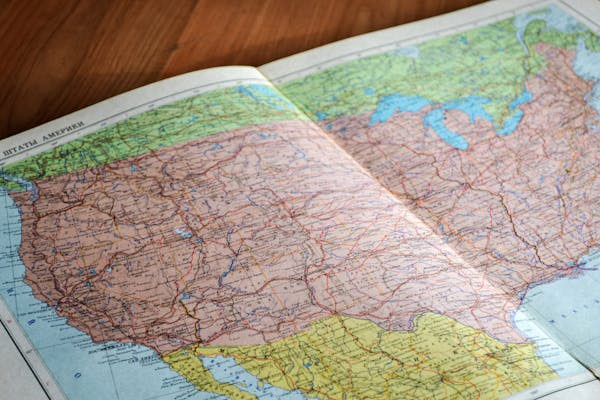
To explore the history of the United States Executive Branch, it originates from the establishment of the federal constitution at the end of the 18th century. The president was established as the de facto head of state, with key departments such as the Department of State and the Department of the Treasury forming the initial cabinet, indicating that a solid framework was already in place during the presidency of George Washington.
The U.S. federal constitution, enacted in 1787, distinguished the legislative, judicial, and executive branches based on the principle of separation of powers. The president was defined as the highest authority responsible for the administration of the state, representing the people, but was also designed to be checked by the powers of Congress (such as budget approval and impeachment). Since George Washington took office as the first president in 1789, the president has established a position as both the symbolic and practical head of the federal government and the head of state.
In the early days, the executive branch was not large due to the small size of the nation, so only a few departments such as the Department of State, the Department of the Treasury, and the Department of War (now the Department of Defense) existed, with each secretary serving as an advisor to the president. This formed a kind of 'cabinet' function, and famous figures such as the first Secretary of State Thomas Jefferson and the first Secretary of the Treasury Alexander Hamilton participated in this cabinet, laying the foundation for today's U.S. administration.
As the 19th century progressed, with the expansion of U.S. territory westward and the advancement of industrialization, the role of the executive branch gradually increased. With the rise of new issues such as railroads, postal services, tariffs, and Indian protection, the number of departments within the cabinet also expanded, for example, the establishment of the Department of the Interior in 1849 to manage public lands, Native American issues, and natural resource management. The need for strengthened administrative power became more pronounced during the Civil War (1861-1865), positioning the executive branch as the central axis for promoting national policy.
Early to mid-20th century: The era of the New Deal and war mobilization
During the Great Depression of the 1930s and World War II, expectations and powers of the president and the executive branch significantly increased. Various administrative agencies were established to implement Franklin D. Roosevelt's New Deal policies, and the federal government's involvement in the economy and society expanded. The mobilization for World War II also served as a catalyst for the expansion of the organization and power of the executive branch, and during the post-war Cold War period, the scale of defense, diplomacy, and intelligence agencies grew even larger.
In 1947, the National Security Act formally established the Department of Defense, and with the establishment of intelligence agencies such as the CIA, the structure for security and foreign policy decision-making centered around the president was solidified. Subsequently, new departments such as the Department of Health and Human Services (1953), the Department of Transportation (1966), the Department of Energy (1977), the Department of Veterans Affairs (1989), and the Department of Homeland Security (2002) were created in response to contemporary challenges and social demands, further subdividing the executive branch's domain.
The growth of presidential power and checks from Congress and the judiciary
As the late 20th century approached, demands for the president to respond quickly to various crises (wars, economic downturns, terrorism, etc.) increased, leading to a rise in the exercise of presidential power through executive orders and administrative directives. However, at the same time, Congress maintains oversight through hearings and budget reviews, and the judiciary checks through constitutional judgments, upholding the principle of separation of powers. Even today, political deadlocks between the president and Congress or conflicts surrounding judicial rulings frequently occur, but this can be seen as a natural phenomenon as long as the U.S. constitutional system is functioning.
Following the September 11 attacks in 2001, the establishment of the Department of Homeland Security significantly strengthened the executive branch's role in handling terrorism and security issues. Additionally, to promote large-scale policies such as economic stimulus, healthcare reform, and climate change response, the president and the executive branch are functioning more actively. With the advent of the digital age, the executive branch is also exerting influence in new areas such as cybersecurity and personal data protection. Today, a network of various administrative agencies, including numerous departments and independent agencies, operates under the president to address a wide range of domestic and international issues.
Although the power of the presidency is considered to have strengthened, it still operates within the framework of checks and balances from Congress and the judiciary, continuing its historical development within the constitutional principle of separation of powers.






 lightyear |
 Moscow Kim |
 coloradoman |
 Montgomery Mom |
 GOGO SING |
 Nanana Nanana Nanana |
 cathywhite |
 dictionary |
 West Kong |
 US Embassy |
  Korean Mom |
  My NYC |
  moo moo |
  Mr Oh |
  forevergee |
  festival |
  manchester |
  constant |
  Leapfrog Move |
  vibranto |
  Tora Tora |
  yellowbutter |
  Dolly |
  NYC saladbar |
  Finding Superfoods |
  song bang |
  vexomo |
  Indiana Jones |