

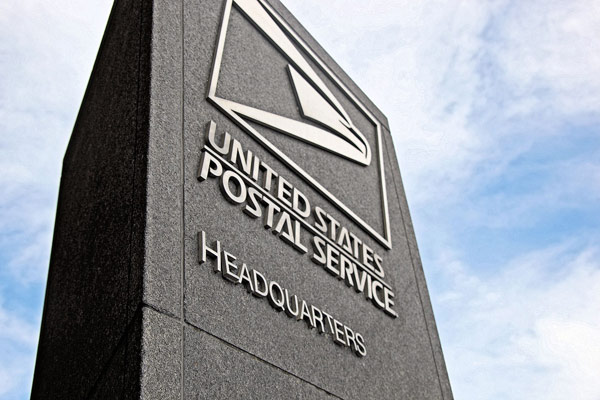
The United States Postal Service (USPS) is not just an agency that delivers mail, but an important public service institution deeply rooted in American society. It operates independently under the government and is responsible for delivering mail and packages nationwide. Let's take a step-by-step look at its history and current challenges.
The roots of USPS trace back to the founding of the United States. After the Constitution was established in 1789, postal services were initially operated as a department under the executive branch, but were restructured in 1971 into the independent government agency we know today. This restructuring aimed to establish mail as a public service for all citizens, rather than just a commercial service. In the 1980s, automation and computer systems were introduced to enhance the speed and accuracy of mail processing, and in the 2000s, the explosive growth of e-commerce led to a significant increase in demand for package delivery, marking another major turning point.
The head of USPS is the Postmaster General, who, along with the Deputy Postmaster General, is responsible for overall management. There are various departments within USPS, including operations, finance, human resources, technology, and customer service, each handling mail processing, financial management, employee recruitment, IT system operations, and customer inquiries. Thanks to this systematic structure, over 300,000 mailboxes and thousands of post offices across the country can operate organically.
USPS plays a broad role, from traditional letters and postcards to package services delivered worldwide. In addition to selling stamps, post offices also provide remittance and simple financial services. Furthermore, in line with the online era, electronic services such as mail tracking systems and digital mailboxes are being enhanced. Especially in the e-commerce era, package tracking services are one of the key tools for USPS to maintain its competitiveness.
The main sources of revenue for USPS are postage fees and service charges. Retail sales and financial service fees within post offices also contribute to some extent. However, looking at the expenditure structure, the labor costs of over 600,000 employees and the costs of operating a nationwide network are significant. For this reason, financial pressure has increased, and since 2006, efforts for restructuring and cost reduction to cover deficits have continued. Accumulated debt and federal government loan obligations are also hindering progress, making revenue diversification and efficiency improvement important long-term challenges.
Current Challenges
-
Increased demand for e-commerce and packages: While the volume of packages has increased, there is a lack of infrastructure and personnel to handle them. To gain an advantage over FedEx and UPS, improvements in speed and accuracy are necessary.
-
Financial pressure: There is an urgent need for debt management and diversification of revenue sources. Relying solely on stamp sales is not sustainable for the future.
-
Workforce management: To address high labor costs and personnel shortages, the introduction of automation systems must be pursued concurrently.
-
Service quality: Improving customer service and digital transformation is no longer optional but essential.
In the future, USPS will continue to function as a core logistics infrastructure in the United States.
As the e-commerce market grows, the demand for package delivery will increase, so USPS must focus more on technological innovation and service quality improvement. At the same time, government-level policy support will also be an important variable for the future of USPS.
In summary, the United States Postal Service is an institution with over 200 years of history, symbolizing a public service that connects the daily lives and economy of Americans beyond merely delivering mail. If it continues to innovate in line with the changing times, USPS will remain an indispensable and important entity in American society.







 lightyear |
 Moscow Kim |
 coloradoman |
 Montgomery Mom |
 GOGO SING |
 Nanana Nanana Nanana |
 cathywhite |
 dictionary |
 West Kong |
 dralix58 |
  Gorama Round |
  Skydiving |
  dreamport |
  Yellow Snowman |
  Toaster Pizza Magic Show |
  velvetnom |
  Anytime Journey |
  Mrs. Duluth |
  jaxter |
  Atlanta Mama |
  Baguette Blog |
  US Embassy |
  Korean Mom |
  My NYC |
  moo moo |
  Mr Oh |
  forevergee |
  festival |
  manchester |