

When NASA makes an announcement, it feels like we're at the level of Pavlov's dog.
As soon as I see breaking news about Mars, I think, "Oh, here we go again..."
Before I even click the link, I can guess the conclusion. It could be evidence of life, or it might not be, but either way, it's important.
It's the same song for the past ten years. If the boy who cried wolf keeps shouting, "The wolf is here!" too often, when the real wolf shows up, no one will believe it.
NASA is at that stage now. The media keeps reporting because headlines sell, and the general public is increasingly saying, "So what?"
Only the scientists are left feeling wronged. They clearly say "possibility," but the headlines turn it into "discovery."
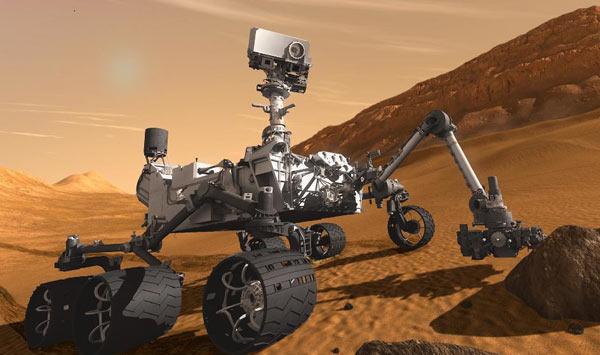
So let's take a proper look at what they found this time.We're talking about the Curiosity rover, which has been working on Mars since 2012.
This time, it operated in an area called Glen Torridon inside Gale Crater, a place where evidence of past water is strongly present.
After scraping clay minerals for analysis, they found over 20 different chemical substances.
Among them were molecules containing nitrogen and structures similar to primitive DNA. Since it was published in Nature Communications, it's hard to doubt it.
Reading this far honestly makes my heart race. "Wait, is this for real this time?"
But then the next paragraph deflates that excitement. They say they don't know if this is from life, from a meteorite, or just a geological reaction.The same refrain from the past ten years comes up again. "There is a possibility. But it is not confirmed."
This phrase is clearly embedded in NASA's press release template.
Among the findings is a sulfur compound called benzothiophene.
The name is complicated, but the problem is that this is a substance commonly found in meteorites. It's present on Earth, Mars, and asteroids. Saying it "could be the building blocks of life" is true. But if we follow that logic, the entire universe is a candidate for life.
To put it another way, just because you have flour, sugar, and eggs in the kitchen doesn't mean you have a cake. Having the ingredients is one thing, but someone actually mixing them and putting them in the oven is a completely different story.
What NASA is announcing now is mostly at the level of "We found flour in the kitchen."
Of course, flour is important. You can't make a cake without it. But if you headline it as "Piece of bread discovered!" that would be misleading.
Scientists are honest, but the media stirs things up?
To be honest, if you read the paper directly, the researchers are very cautious. They openly state, "We can't draw conclusions until we bring back samples ourselves." They are doing everything they can as scientists.
In my view, the real problem lies with the media outlets that report on this. They need clicks, so they change "possibility" to "evidence," and "hint" to "clue," ultimately leading the average reader to think, "NASA found life on Mars."
When the phrase "innovative potential" comes up at a tech presentation, it means "not yet done." Sentences starting with "In the future..." are mostly translated as "We can't do it now." NASA's announcements are similar. "It could be evidence of life" is just a wrapper for "We still don't know."
Nevertheless, there is significance
Let's be clear about one thing. This research does not mean it's useless. In fact, scientifically, it's quite an important advancement. It has been confirmed that complex organic molecules can be preserved even in the shallow layers of Mars. This is important because it provides a basis for where to dig and what to look for in the future.
Fortunately, NASA and ESA are aware of this issue. That's why more proactive missions are lined up.
The European Space Agency's (ESA) Rosalind Franklin rover will dig down to 2 meters. Until now, they have only scraped the surface, but now they plan to dig properly. And the Dragonfly mission to Saturn's moon Titan will fly around like a drone, exploring various locations. This level of effort is necessary for the real possibility of finding something.
Until then? We will probably continue to see headlines like "Important clues found on Mars" once every year or two. Each time, you and I will click, read, feel disappointed, and then forget. This has been the pattern for the past ten years, and it will likely continue for a few more years.
Science is fundamentally a process of building knowledge. It's not a field where answers come in one shot.
However, the pattern of raising public expectations with every "groundbreaking discovery" while the content remains at the "possibility stage" erodes trust in the long run. I understand that NASA needs to promote to secure funding. But it seems the shelf life of the boy who cried wolf strategy is coming to an end.
On the day a real discovery is made, if people still scroll down saying, "Oh, it's that again?" it will be a loss for the scientific community.
So, reducing exaggeration and returning to honest language will be beneficial in the long run. Just say, "We found materials." There's no need to add, "It could be evidence of life." Readers are smarter than you think. If you speak honestly, they will actually be more interested.
If you saw this news, there's no need to get too excited or too cynical.
Real big news will come someday. Just not today.







 Conflite Teacher |
 SEVEN SEVEN |
 Korean Mom |
 novapixel |
 Peter Pan Pet |
 Things to know |
 U.S. Weather Bureau News |
 Shintongbangtong Shin Naerin James Park |
 Texas Real Estate Blog |
  Augusta Univ |
  B.I.G. Victor |
  Victory 1988 |
  Swift Falcon |
  venture |
  SPAM 101 |
  choi family |
  zoryan |
  cloud0 |
  SKy Face |
  wonder |
  Dragon Lee |
  productionblog |
  What can make money? |
  Oklahoma Hoya OK |
  prixon74 |
  Roman Pan |
  USALATU BLOG |
  Sunshine Blog |
  Minnesota Small Business |