
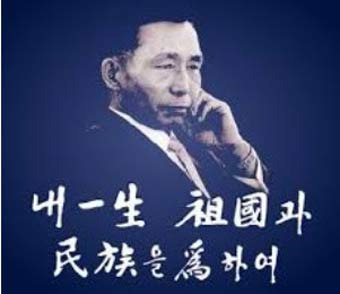
To me, President Park Chung-hee exists in the historical shadow that comes from the information available from the adults around me or on the internet.
In fact, my generation was born in the 1980s after President Park's death, so while I have heard his name, I do not fully understand the weight or complex context surrounding it.
However, the generation of those over 60, like the church elder, still remembers him as a symbol of Korea's modernization. One evening, while having dinner and tea, the elder's words still echo in my ears: "If it weren't for President Park Chung-hee, there would have been no economic development in Korea, nor growth of the church." Those words sparked both doubt and curiosity in me.
The only Park Chung-hee I know is the image from textbooks and news. I heard he seized power through the May 16 military coup and swept away the corruption of the Liberal Party era. There are stories of him cleaning up gangsters, laying down highways to establish the foundation for industrialization, and planting trees in the mountains.
There are also evaluations that he grew the country by securing economic benefits through diplomacy and negotiations between the U.S. and Japan during the Cold War. However, behind that, heavy shadows loom with media censorship, suppression of democracy, and oppression of opposing forces.
Even his personal life seems like a drama. His wife, First Lady Yuk Young-soo, fell victim to gunfire in public, and he himself met his end after being shot by a close aide during a drinking session. The fact that both the president and his wife were shot to death leaves a unique mark in history. Perhaps that is why there has always been a distance between the elder's respectful evaluation and the fragmented facts I know.
Looking back, the Park Chung-hee era seems to be a collection of contradictions that cannot be overlooked in modern Korean history. On one side, there is the myth of economic growth, and on the other, the suppression of democracy. Since everyone remembers different faces, evaluations vary sharply.
For people like the elder, it is ingrained as the Saemaul Undong (New Village Movement), factory chimneys, and a time of hope overcoming hunger, while for others, it remains a memory of an era when freedom was lost, and fear and surveillance were part of daily life.
What I felt was simple. Historical figures cannot be summarized into a single answer. As the elder said, it is true that he changed Korea, but not everything was light, nor was everything darkness.
We live in an era of economic abundance today, alongside the democratic values lost in the shadows, both of which coexisted. Perhaps that is why people continue to debate between love and hate in front of the name Park Chung-hee.
Thanks to the elder's story, I wanted to look deeper into the light and shadow he left behind, beyond the simplified image known as the "Park Chung-hee myth."
Perhaps Park Chung-hee is also a person standing on that border.








 Your Curiosity Resolved |
 LIZ Legal Information Blog |
 coloradoman |
 Jean Claude Bundang Blog |
  DREAM BIG |
  frostbite |
  330 Forever My Love |
  El Dorado |
  dralix58 |
  Gorama Round |
  Skydiving |
  dreamport |
  Yellow Snowman |
  Toaster Pizza Magic Show |
  velvetnom |
  Anytime Journey |
  Mrs. Duluth |
  jaxter |
  Atlanta Mama |
  Baguette Blog |
  Tan Sol |
  US Embassy |
  Korean Mom |
  My NYC |