

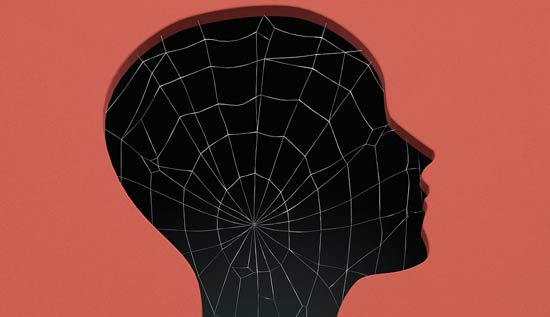
When observing people, you may have noticed that while age clearly increases, their personalities often remain unchanged.
On the surface, they may appear more refined and speak more gently, but in certain situations, the same old behaviors resurface.
Why do people not change much as they grow older? As a psychological counselor, I often hear this question.
In psychology, personality is viewed as a habit formed by long-repeated behaviors and thoughts.
From a young age, individuals learn how to view the world and manage anxiety.
As these methods are repeated over decades, they solidify into a pattern.
As people age, they tend to rely more on familiar methods rather than learning new ones.
For example, someone who has always been overly cautious will maintain a similar attitude as they grow older.
They may appear polite and humble on the outside, but internally, they struggle with a desire for recognition and anxiety.
Depending on the situation, they may excessively lower themselves while harboring resentment or judging others.
This can be seen not as a flaw in personality but as a survival mechanism ingrained over time.
Psychologically, personality is mostly formed before the age of 30, after which it undergoes a phase of 'reinforcement.'
Especially, those with hypocritical attitudes are often brilliant at justifying their wrongdoings rather than reflecting on them.
"The world is just like this." "I'm not the only one." "This is just business."
This kind of self-justification becomes a powerful fertilizer for repeating unethical behavior.
Ultimately, age does not symbolize 'maturity' but rather becomes a fortress that fiercely defends the way one has lived their life.
Thus, human nature does not easily change. This is especially true if that nature is built on greed, pleasure, and deception.
People often say, "Acting your age," but many learn to hide their bad habits more skillfully as they grow older.
Discrepancies between one's public and private selves also arise for similar reasons.
The greater the desire to appear as a good person socially, the more different the public persona becomes from the private one.
There are instances where individuals engage in more immoral or impulsive behavior when alone.
This is because suppressed desires break free from control.
When this situation repeats, guilt and self-justification follow, and this process itself becomes another personality pattern.
People who deceive others or repeat lies for personal gain often have a similar structure.Initially, they may have avoided situations with small lies.
However, if that behavior proves helpful or allows them to evade problems, it becomes stored as an effective strategy. From then on, they judge based on convenience and speed rather than moral considerations. Thus, they do not easily change as they age.
Another important reason is a lack of self-awareness. People are more accustomed to justifying themselves than objectively viewing their problems. The moment they think, "I am just this kind of person," they fail to recognize the need for change. Change begins with acknowledging discomfort, but many do not reach that stage.
In counseling, I feel that there is a specific reason why personalities become more rigid as people age.
Individuals feel a sense of stability within familiar patterns. Even if those patterns are problematic, they feel comfortable and safe. Thus, while it may seem like they are repeating the same issues, for the individual, it may be the most familiar choice.
However, this does not mean that personality cannot change at all. Change requires certain conditions.
One must feel that the old ways no longer work due to repeated problems. And it takes courage to acknowledge one's behavioral patterns. Finally, one must practice new behaviors over a long time. When this process accumulates, a person gradually changes.
Ultimately, the reason humans do not easily change is not simply due to stubbornness. Their personality is a method they have used to protect themselves for a long time.
Behind someone's stubborn and seemingly problematic demeanor lies a long history of habits, anxieties, and repeated choices.
 ShinRamen
 CheolYoungmi




 novapixel |
 Peter Pan Pet |
 horse |
 Sunset Oregon |
 daisypat |
 Weekend Movie Blog |

 coloradoman |
 Superman Cat Blog |
 Awesome Blog |
  Tora Tora |
  yellowbutter |
  Dolly |
  US Embassy |
  NYC saladbar |
  Finding Superfoods |
  lightyear |
  song bang |
  vexomo |
  Indiana Jones |
  meloncat |
  mortrix |
  Esther 1983 |
  fortbliss |
  Moscow Kim |
  My Two Way |
  toastyfox |
  FLORIDA Acus |
  tracker |