

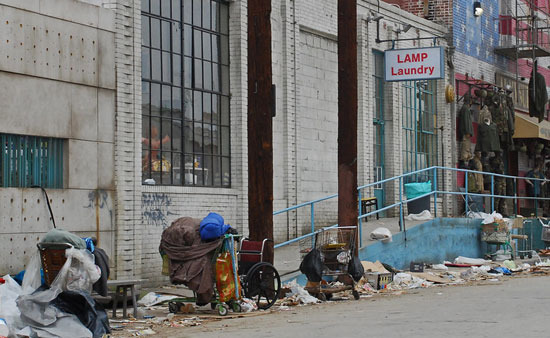
Looking at the current state of the Korean community in LA, I can't help but think that the "as long as it's not me" mentality is very much alive.
This seems to have spread beyond just the general public to the city officials in downtown LA and Koreatown, which is astonishing.
In America, things should be changing for the better, but here it feels like "just collecting a paycheck and passing the problems onto others" has become a refined survival strategy.
There are countless issues like complaints related to Koreatown, local development, homelessness, and road management, yet the relevant officials or community organization staff don't seem to bat an eye. They just repeat, "It's not my job," "There's no budget," or "Please contact the responsible department." This structure ends the day with just these three sentences.
Even when issues like overflowing street trash and safety concerns are raised, or when the skyrocketing rent is discussed, they seem to care about only one thing: their own salaries. And later, the pensions they will receive upon retirement.
Because of this atmosphere, nothing changes in Koreatown even when people want to make a difference. They just hold endless meetings, public hearings, and create reports, but there are no actual results. Why? Because when responsibility arises, work follows.
If work is created, someone will voice complaints, the number of grievances will increase, and political responsibility will emerge. Therefore, the safest option is to "do nothing." The culture has spread where those who try to solve problems are made to look foolish, and those who remain quiet endure the longest.
What's even funnier is that those working in this structure don't realize what they are doing wrong. They are the best at saying, "I work according to the regulations," "I handled it within the budget," and "We do our best for the community."
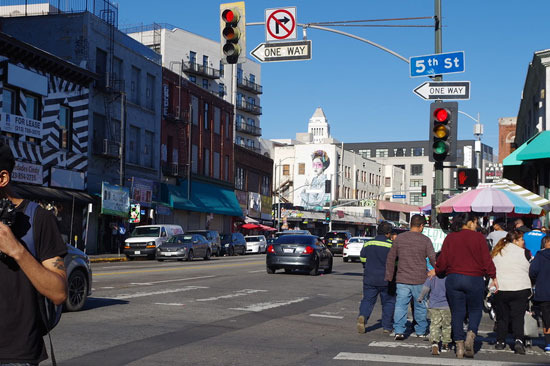
However, residents are living with unresolved trash issues, rising rents, struggling small businesses, and Korean seniors enduring inconveniences, while the officials are satisfied saying, "We followed the necessary procedures."
This is essentially the bureaucratic mindset often seen in Korea. "It's not my responsibility, I followed the regulations, what's the problem?"
Why does this persist in America? It's simple. Koreatown is relatively small, the interests are complex, oversight is weak, and many residents are busy and have limited English skills. As a result, officials maintain their positions, and no one strictly questions them even if they just pass the time.
From what I see, they don't really want change or innovation. If someone makes a fuss, they just need to stall until it quiets down.
In reality, it's not these people who are revitalizing the community, but the ordinary Korean residents who open restaurants, run laundries, operate law offices, manage hospitals, and raise children.
Yet, their voices are hardly reflected in community meetings. If you attend public hearings at city council meetings, half of the attendees are representatives from organizations that only exist in name, and they just greet each other, take photos, and leave. Residents may not even know that the meeting is happening. In such a showy structure, how can there be any "change"?
Ultimately, the root of this problem is not "as long as it's not me" but rather "as long as I take care of my position, my money, and my safety." Officials only need to protect their salaries and pensions. No matter what work they don't do, how much residents suffer, or how the neighborhood deteriorates, they have only one thing to protect: the continuation of their positions. Therefore, change is seen as a risk, responsibility is minimal, and complaints are just a nuisance.
For the Korean community to truly progress, this structure must be broken. Residents need to adopt the mindset that "since this is our neighborhood, we must take care of it," and officials need to do the same.
If they are receiving salaries from taxes, they should at least explain, act, and make decisions for the local residents. It's not the time to replicate Korean-style bureaucracy even after immigrating. Koreatown is at a crossroads where it can either grow larger or deteriorate further.
At that crossroads, the moment officials continue to think "as long as I'm safe," it's the neighborhood that will deteriorate, not them.
Ultimately, this struggle will only end when we, the residents of Koreatown, wake up and push the officials to act.






 eatontown blog |
 Toaster Pizza Magic Show |
 US Embassy |
 fortbliss |
 Folding Instructions |
 Weekend Movie Blog |
 Beauty, Health, Lifestyle Blog |
 coloradoman |
 Superman Cat Blog |
 Noodle Noodle |
  Tonky |
  viroma |
  cookie |
  Live and that's it |
  Alright Twain |
  HAWAII Korean Church News |
  Amore |
  linex |
  Balancework |
  laro90 |
  MEDBIO American Doctor Blog |
  SWAT TEAM BLK |
  DREAM BIG |
  frostbite |
  330 Forever My Love |
  El Dorado |
  dralix58 |
  Gorama Round |
  Skydiving |