

Not long ago, while I was at work during the week, I received a call from my cousin in Korea.
We talked briefly during lunch, and the conversation went like this: "Hey, Bitcoin has dropped again. It's a good opportunity, so invest now."
I told him that I've been spending a lot on living expenses lately, so I'd think about it and hung up.
This cousin has been buying and selling Bitcoin since its early days and has made quite a bit of money.
He buys when it drops, sells when it rises, and waits to get back in.
To me, it seems almost like gambling, but looking at the results, he has made enough to buy an apartment in Gangnam, so I can't really say anything.
After the call, I returned to the office and casually asked an American colleague.
"Do you own any Bitcoin?" Do you know what the response was? "Nah, I just do index funds." That was it. There's no interest at all.
In Korea, every group chat has real-time updates on coin prices, and when people gather, the conversation shifts to coins right after real estate.
In the US, bringing up coins is met with the same look as if you were suggesting gambling.
Even though it's the same asset, the perception changes drastically across the Pacific. This isn't just a cultural difference; there are structural reasons behind it.
In Korea, investment channels are limited. Real estate has a sky-high entry barrier, and all you hear about the stock market are stories of retail investors getting burned.
So, money inevitably flows into markets like coins, which have high volatility and low entry barriers.
When there's a lack of investment options, demand will concentrate in one area; that's Economics 101.
On the other hand, the situation is different in the US. The long-term average return of the S&P 500 is around 10%.
Tax-advantaged structures like 401(k), IRA, and Roth IRA are well established.
There's no need to stress over charts all night.
The core of American investment culture is "boring is beautiful." It's the unexciting investments that make money.
Even among the Korean community, it's the same. People perk up at discussions about business, real estate, and taxes, but coins are surprisingly quiet.
Given the nature of immigrant communities, they already carry significant risks. Moving to a new country is the biggest bet of their lives.
Moreover, not many have the guts to go all-in on coins.
Before discussing Bitcoin, let's touch on Dogecoin first. This is a perfect counter-example.
Around 2021, there wasn't anyone who hadn't heard of Dogecoin. When Elon Musk tweeted, the price would jump by 50%.
There was a vibe around that said, "If you don't buy Doge, you're a fool."
Now? If you open the chart, it's indistinguishable from a penny stock. It just repeats small fluctuations, and trading volume has shrunk.
Once a hot topic, now if you mention it, the response is often, "Oh, is that still around?"
There's a lesson to be learned here. The coin market has the same structure as the startup market.
Thousands of projects emerge, most fail, and only a tiny fraction survive.
Just like VCs say that if 9 out of 10 in their portfolio fail, they only need one to hit big,
the same goes for coins. The problem is that individual investors don't have that kind of diversification.
Coins that rise due to trends will end when the trend ends.
Bitcoin has been declared "dead" several times. The Mt. Gox hack in 2014, the crypto winter in 2018, the FTX explosion in 2022. Each time, there were claims that "this time it's really over," and yet it has survived every time. At this point, it could be called anti-fragile.
That doesn't mean I'm saying, "So, buy it without question."
Just because it has survived in the past doesn't guarantee it will survive in the future.
However, the fact that it has a track record cannot be ignored. An asset that has endured in the market for over ten years has been somewhat validated.
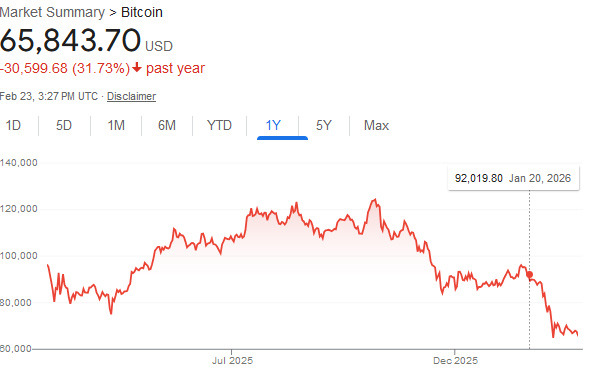
As Bitcoin halves, the question arises: "Should I buy now?" ... But I believe this question is wrong.The right question is, "What amount can I invest now that won't impact my life if it goes to zero?"
Once you shift to this frame, everything becomes simpler. If that amount is $1,000, then just invest $1,000.
If it's $5,000, then invest $5,000. If it's zero, then don't buy. No one is forcing you.
Whether Bitcoin is a good opportunity now or not, I don't know. Honestly, no one does.If someone claims to know, that's the person you should be most wary of.
However, the coin market is unforgiving. What rises due to trends will disappear when the trend ends, and only a few will survive.
Dogecoin proved that. And Bitcoin has, at least until now, been on the side of survival.
If you're looking at the halved price now and wondering, "Should I buy?" change the question.
How much money can you afford to lose? If you operate within that range, you'll be able to sleep well at night, no matter the outcome.







 fortbliss |
 Folding Instructions |
 yentra |
 Cali M Law Group |
 quanta7 |
 Illinois Mom |
 Rice Shop Uncle BLOG |
 Khan Film Blog Production |
 Nanana Nanana Nanana |
 Enjoyable American Life Diary |
  manchester |
  constant |
  Leapfrog Move |
  vibranto |
  Tora Tora |
  yellowbutter |
  Dolly |
  US Embassy |
  NYC saladbar |
  Finding Superfoods |
  lightyear |
  song bang |
  vexomo |
  Indiana Jones |
  meloncat |
  novapixel |
  mortrix |
  Esther 1983 |
  Moscow Kim |