

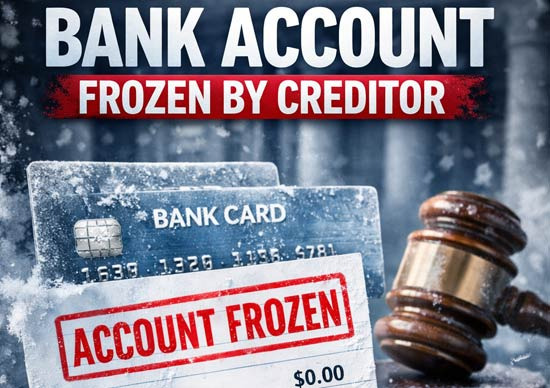
You try to buy coffee as usual, but your card is declined.
At first, you think it's just a simple error, but when you call the bank, you hear, "Your account has been frozen."
In that moment, your mind goes blank. You wonder what on earth has happened and how you will manage rent and living expenses.
Account freezes usually start with 'debt.' Common examples include overdue credit card payments, unpaid medical bills, or personal loans. It may begin as a simple delinquency, but over time, creditors may file a lawsuit in court.
If the court rules in favor of the creditor, it becomes a 'legally confirmed debt' rather than just a simple delinquency. At this stage, the creditor gains the authority to seize funds from your bank account.
The money taken due to an account freeze is referred to differently in English depending on the situation.
Most commonly, it is called a "bank levy" or "account levy." This refers to the process where a creditor takes money directly from a bank account based on a court ruling. The amount that has already been taken is referred to as "levied funds" or "seized funds."
The term "garnishment" is also used, which refers to the general concept of forcibly deducting money from wages or accounts.
Many people say, "I didn't receive any notice!" but in reality, it's often due to missed notifications because of address changes or unreceived mail. Then one day, they suddenly find their account frozen.
So while an account freeze may feel sudden, it is usually the result of a process that has taken place over several months.
However, this doesn't mean you have to give up completely. Even if your account is frozen, you still have clear rights.
The most basic right is 'prior notice.' Under normal procedures, you should receive notifications during the lawsuit and judgment process. If this process was not properly followed, you can contest it on procedural grounds.
Another important aspect is 'exempt funds.' Not all money is subject to seizure.
Some funds, such as Social Security benefits, disability payments, and veterans' benefits, are legally protected.
The problem arises when these funds mix with regular deposits, as banks may not automatically distinguish between them.
In such cases, you must personally file for an 'exemption' to have those funds released. If you do nothing, your funds may remain frozen.
And just because your account is frozen doesn't mean it's the end. You also have the right to contest the debt itself.
If the debt isn't yours, the amount is incorrect, or the statute of limitations has expired, you can file a dispute in court. However, timing is crucial. Most of the time, you need to respond within a short period, so if you delay, you may lose the opportunity altogether.
Realistically, the quickest solution is 'negotiation.' In many cases, creditors prefer to recover at least some amount quickly.
So, if you propose a lump-sum payment or a payment plan, they may agree to lift the account freeze. Approaching the situation realistically rather than emotionally is often much more effective.
Ultimately, an account freeze is not just about money being tied up.It's a matter of halting your entire life. But at the same time, it's not a completely blocked path.
If you understand the process, know your rights, and act quickly, you can change the situation significantly.
The biggest difference in such situations is whether you have the 'information.' The more you know, the better you can respond, and the more you respond, the more you can minimize your losses, so it's always good to gather information in advance and consult with professionals like lawyers.







 American Hardcore Band |
 Rice Shop Uncle BLOG |
 Baguette Blog |
 solvix18 |
 novapixel |

 Illinois Mom |
 Electricity Field Certification Collector |
 Love Joy Blog |
  Silent Sea |
  West Kong |
  Franco Family |
  coloradoman |
  lumora |
  Valley Bang |
  pravix22 |
  Cohesive Kong |
  werehere |
  problemo |
  galaxy88 |
  breezelove |
  Minnesota Sonata N |
  hazelnut |
  Korean News American Blog |
  AH LALA |
  Savion |
  pintos |
  Good Good |