
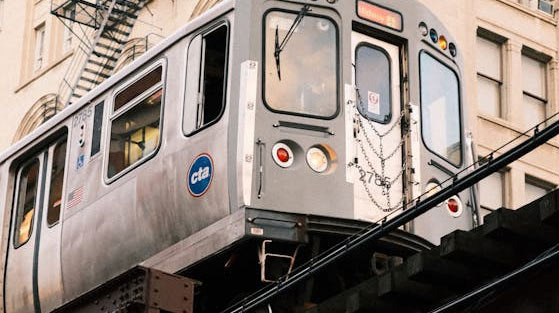
Chicago's urban transit system is a mode of transportation that combines the unique charm and efficiency of a major city, boasting the second highest ridership in the U.S. after the New York subway. However, this figure is only about one-tenth of New York's, and there are several reasons for this.
First, there is a significant population difference between the two cities. New York has a much higher population density than Chicago, and the overall size of the city, including surrounding metropolitan areas, is overwhelmingly larger in New York. Additionally, most of New York's transit-oriented areas are composed of medium to high-density residential zones, naturally leading to a higher number of users. In contrast, as one moves away from downtown Chicago, sprawl becomes more pronounced, and there are many low-density residential areas, resulting in relatively lower rail usage.
Moreover, the New York subway has implemented advanced systems such as dual tracks, express train operations, and direct service between lines to maximize transportation convenience. On the other hand, Chicago's "L" trains primarily operate on local routes, making longer trips take more time. Due to these structural differences, it is realistically challenging to match New York's level.
Nevertheless, Chicago's urban transit effectively connects the downtown and suburban areas, and it has excellent integration with buses and other modes of transportation. Particularly by U.S. standards, it is considered a highly efficient system, and many commuters and residents use it regularly. Chicago's public transport has become an essential element that supports the city's culture and lifestyle, going beyond just a means of transportation.
The fare system for Chicago's urban transit system, the CTA (Chicago Transit Authority) "L," is simple yet reasonable. Passengers can conveniently use prepaid transit cards or mobile payments, and fares vary depending on the type of passenger and mode of travel.
Basic Fare Structure
The CTA "L" system uses a fixed fare system regardless of distance or route.
- Regular Adult Fare:
- Subway: $2.50
- Bus: $2.25
- Transfers:
- First transfer: $0.25
- Second transfer: free
- Transfers must occur within 2 hours and are limited to 2 times.
- Child Fare:
- Children under 7 years old ride free (when accompanied by an adult)
- Children aged 7-11: $1.25
- Seniors and Disabled:
- Discount fare: $1.25
- Airport Surcharge:
- Passengers departing from O'Hare Airport: $5.00 (Blue Line)
Ventra Card
The Ventra card is the most widely used for public transportation in Chicago.
- Card Fee:
- Cost of purchasing a Ventra card: $5 (refundable on first charge)
- Charging methods: can be charged with cash, credit card, or through the app
- Mobile App:
- Digital tickets can be purchased through the Ventra app
- Real-time balance checking and charging features are available
Unlimited Pass Options
Various unlimited passes are available for tourists or frequent riders.
- 1-Day Pass: $5
- 3-Day Pass: $15
- 7-Day Pass: $20
- 30-Day Pass: $75
This pass is activated from the date of purchase and can be used unlimitedly on all CTA buses and the "L" system.
Transfers and Connections
- Transfer Cost Savings: Using a Ventra card significantly reduces fares when transferring between buses and subways.
- Connection Services: It is also connected with the Metra commuter trains and Pace bus system, which may incur additional charges.
Tips for Tourists
- 1-Day or 3-Day Pass Recommended: Tourists can save money and travel conveniently using short-term unlimited passes.
- Mobile App: The Ventra app allows for easy fare payment and real-time arrival information.
- Airport Travel: Both O'Hare International Airport (Blue Line) and Midway Airport (Orange Line) are connected by CTA subways, and while there is an additional fee, it is much more economical than a taxi.






 Khan Film Blog Production |
 Illinois Mom |
 Rice Shop Uncle BLOG |
 Enjoyable American Life Diary |
 allstar realty |
  laro90 |
  MEDBIO American Doctor Blog |
  SWAT TEAM BLK |
  DREAM BIG |
  frostbite |
  330 Forever My Love |
  El Dorado |
  dralix58 |
  Gorama Round |
  Skydiving |
  dreamport |
  Yellow Snowman |
  Toaster Pizza Magic Show |
  velvetnom |
  Anytime Journey |
  Mrs. Duluth |
  jaxter |
  Atlanta Mama |
  Baguette Blog |
  Tan Sol |