

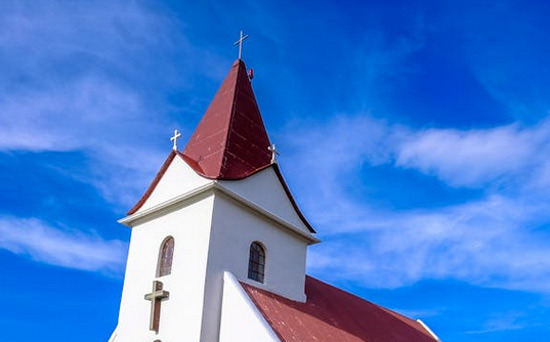
The reality faced by Korean church planters in various regions of the U.S. may sound like "it's tough because it's a small church just starting out," but in reality, there are much more complex and pressing economic pressures.
The emotions felt by pastors in the field of church planting are closer to "rebuilding what is collapsing every day" rather than "starting anew." It is overwhelming to deal with just one issue of faith, and when immigration culture, finances, and family issues are piled on top, merely enduring becomes a ministry in itself. In many places, the expectations placed on pastors are enormous, yet the resources and environment to meet those expectations are absurdly lacking.
Undoubtedly, the first challenge encountered is financial. Since church planters have a small number of congregants, there is little to no offering collected, and basic operating costs such as rent, insurance, advertising, and sound equipment are often covered by the pastor's personal finances. While the phrase "God will provide" is nice, realistically, it is common for pastors to work part-time jobs or wait tables before that provision comes. If someone who should be focused on ministry is worrying about making a living, the structure is already flawed.
The second issue is emotional exhaustion. Immigrants come to church with issues related to language, money, marriage, children, and identity. Since there are no counseling professionals available, all the burdens fall squarely on the church planter. Small churches are quick to spread rumors, so even minor conflicts can escalate rapidly, and pastors take on the roles of mediator, healer, and counselor all at once. The problem is that there are almost no people who understand and support the pastor. As a result, it is easy for the pastor to become an emotional dumping ground.
The third issue is the risk of family breakdown. In the early stages of planting, the pastor must handle everything alone: worship preparation, preaching, accounting, cleaning, meal preparation, visitation, and advertising. With such a schedule, spouses and children are continually pushed to the back burner, and the person who smiles brightly at church comes home exhausted and collapses. The unrealistic expectation that "the pastor's family should be exemplary" only adds to the burden. There are real reasons why the conflict rate among church planter families is high.
The fourth issue is the excessive expectations of congregants. Korean churches tend to view pastors as 'spiritual leaders,' 'counselors,' and 'family-like figures.' However, the problem is that while the demands are endless, the actual support is almost nonexistent. In an atmosphere where pastors are expected to be on call 24/7, the pastors themselves cannot rely on anyone and must continue to play the role of giver. Such an imbalance inevitably leads to burnout.
The fifth issue is the clash of generations and cultures. The first generation desires a Korean community, the 1.5 generation struggles with immigrant identity, and the second generation uses a completely different culture and language. In larger churches, there may be divisions into youth groups, English ministries, and departmental structures, but church plants lack such systems, so the pastor must handle all coordination alone. As a result, the situation repeats where no one's heart is fully aligned, and complaints come from both sides.
The difficulties faced by Korean church planters in the U.S. are not simply about having "few congregants"; they are structural issues involving financial pressure, emotional labor, relationship mediation, family sacrifice, excessive expectations, and generational and cultural conflicts all coming at once.
Thus, church planting ministry requires not just spiritual passion but also survival skills akin to a war of endurance. The weight that many church planters bear seems to be far more serious than we might think.
In fact, the concept of "church planting" in the U.S. is by no means exclusive to Korean churches. Rather, American denominations have been establishing church plants in a much more systematic way for a long time. The term 'church planting' that we commonly use may feel Korean, but American churches refer to it as Church Plant, New Church Start, or Mission Church.
First, many denominations in the U.S. view establishing churches in new areas as a very important ministry. The Southern Baptist Convention (SBC), Presbyterian Church (PCUSA, PCA), United Methodist Church (UMC), and even non-independent church networks operate separate 'Church Planting Departments.' New apartment complexes in metropolitan areas, college towns, and areas densely populated with young professionals are often classified as 'priority planting areas.' In other words, American churches approach planting strategically.
Moreover, unlike Korean church plants where the pastor shoulders everything alone, American church plants have a well-established system of support from larger denominations or mother churches in terms of finances, personnel, and training. This is referred to as the 'Mother Church & Daughter Church model' or 'Sponsor Model.' Some places even provide living expenses for church planters for 1 to 3 years.
Americans also worship in church plants. Particularly, the following areas are where many church plants are emerging:
- Rapidly growing new towns
- City centers with a large young population
- Areas with few existing churches
- Multicultural areas
- Near college campuses
Additionally, American denominations approach church planting like a startup. They experiment with various forms such as new styles of worship, modern music, coffee shop-style churches, and online-centered churches, functioning as a testbed for new cultures.
Another interesting point is that American church plants set specific "growth goals" and "community service goals" from the outset. Since churches often serve public service roles such as community service, homeless ministries, children's programs, and youth mentoring, they are seen not just as places of worship but as community hubs.
In conclusion, church planting is very common for Americans and can be seen as a more systematic and long-standing tradition. The difference from Korean church planting is that while the U.S. has systems and resources backing it, Korean and Korean-American church planting relies almost entirely on the personal sacrifices of the pastor.







 Toaster Pizza Magic Show |
 US Embassy |
 fortbliss |
 Folding Instructions |
 yentra |
 U.S. Weather Bureau News |
 Things to know |
 Premium Gas Camp |
 Texas Migration Story |
 Texas Real Estate Blog |
  laro90 |
  MEDBIO American Doctor Blog |
  SWAT TEAM BLK |
  DREAM BIG |
  frostbite |
  330 Forever My Love |
  El Dorado |
  dralix58 |
  Gorama Round |
  Skydiving |
  dreamport |
  Yellow Snowman |
  velvetnom |
  Anytime Journey |
  Mrs. Duluth |
  jaxter |
  Atlanta Mama |
  Baguette Blog |
  Tan Sol |