

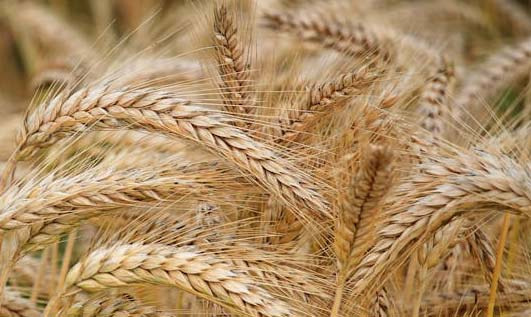
The utilization of wheat is quite high. It is used not only for staple foods like bread and noodles but also for snacks, tortillas, and alcoholic beverages.
Wheat has higher protein, mineral, and vitamin content than rice, and it has lower calories than rice or corn.
However, unlike rice, it does not contain a balanced amount of essential amino acids, so it is necessary to supplement protein through animal products like meat or dairy, or through beans.
Information on U.S. Wheat Production
Based on data from the U.S. Department of Agriculture (USDA), we have summarized the states with the highest total wheat production for the 2024 harvest year.
The unit is 1,000 bushels, and the figures in parentheses represent the approximate share of the total U.S. production (about 1.97 billion bushels).
North Dakota – about 463,450 (23.5 %)
• Winter 122,500 + Spring 309,750 + Durum 31,200
Kansas – about 307,450 (15.6 %)
• Almost all is Winter wheat
Montana – about 171,240 (8.7 %)
• Winter 91,500 + Spring 60,840 + Durum 18,900
Washington – about 143,570 (7.3 %)
• Winter 122,500 + Spring 21,070
Oklahoma – about 108,300 (5.5 %)
• Most is Winter wheat
These five states account for about 60% of the total U.S. production, showing that the Central and Northern Great Plains and the Pacific Northwest are the core of the wheat belt.
Why are these states strong?
-
Climate / Soil: Semi-arid summers and cool springs and autumns reduce pests and promote the growth of hard grains.
-
Vast large-scale farmland: Mechanized agriculture on thousands of acres increases productivity.
-
Variety optimization: ND and MT specialize in high-protein Hard Red Spring, KS and OK in efficient Hard Red Winter, and WA in high-quality Soft White varieties.
-
Infrastructure: Well-established grain elevators, railroads, and inland waterways reduce logistics costs to export ports (Portland, Gulf).
What to watch for in the future
-
As drought and heat stress increase, the volatility of harvests in western and southern states is expected to rise.
-
In the Northern Plains (especially ND), the expansion of durum and spring wheat acreage is ongoing, likely maintaining its top position for the time being.
-
With increasing demand for high-protein and environmentally certified wheat, diverse cultivation methods (cover crops, drone spraying, etc.) are rapidly spreading.
When examining field data, be sure to distinguish whether it is based on the 'marketing year' or the 'calendar year'.
Since the timing of report releases varies, the same numbers may correspond to different years.







 Moscow Kim |
 coloradoman |
 Montgomery Mom |
 GOGO SING |
 Hajiwon Blog Hair Salon |
 persiste |
 buddydakota |
 North Dakota Ragdoll Cat Owner |
 My Love Sandra |
 American National Singing Contest |
  forevergee |
  festival |
  manchester |
  constant |
  Leapfrog Move |
  vibranto |
  Tora Tora |
  yellowbutter |
  Dolly |
  US Embassy |
  NYC saladbar |
  Finding Superfoods |
  lightyear |
  song bang |
  vexomo |
  Indiana Jones |
  meloncat |
  novapixel |
  mortrix |
  Esther 1983 |