
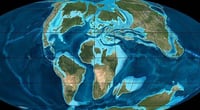
At this time, it was the late Miocene of the Cenozoic Era. While vast grasslands spread across the land, there were also significant changes in the ocean.
The heyday of whales
-
The ancestors of the giant whales we know today, such as the blue whale and sperm whale, were swimming in the ocean during this period.
-
In particular, supergiant sharks like the megalodon dominated the seas.
This megalodon was over 15 meters long, much larger than modern great white sharks. -
The ocean was literally a "battlefield of whales and sharks."
Warm ocean waters
-
At that time, the entire Earth was warmer than it is now, so the ocean was much warmer as well.
-
The area around the equator was warmer and wider than today, and while the polar regions were cold, they were not as icebound as they are now.
Expansion of coral reefs
-
Thanks to the warm ocean, coral reefs spread across the globe.
-
Coral regions like the current Great Barrier Reef began to grow gradually from this time.
-
Marine biodiversity was also incredibly high, with abundant fish, crustaceans, and mollusks.
Diversity of life in the ocean
-
On the ocean floor, various marine mammals (e.g., whales, dugongs), as well as ancient clams, sea urchins, and crabs thrived.
-
There was also a large amount of plankton in the sea, making the marine food chain very robust.
-
Some of the plankton that thrived during this period eventually became today's oil and natural gas.







 U.S. Weather Bureau News |
 Things to know |
 Premium Gas Camp |
 Texas Real Estate Blog |
 action blog 101 |
  Atlanta Mama |
  Baguette Blog |
  US Embassy |
  Korean Mom |
  My NYC |
  moo moo |
  Mr Oh |
  forevergee |
  festival |
  manchester |
  constant |
  Leapfrog Move |
  vibranto |
  Tora Tora |
  yellowbutter |
  Dolly |
  NYC saladbar |
  Finding Superfoods |
  lightyear |
  song bang |