


Former US President Joe Biden has recently been reported to have received a diagnosis of aggressive prostate cancer.
At 82 years old, Biden experienced unusual urinary symptoms, leading to the discovery of prostate nodules during a routine health check, and further tests confirmed that the cancer had spread to the bones. Medical professionals stated that this cancer is a hormone-sensitive type, and they are considering treatment options including hormone therapy.
Prostate cancer is a common cancer in men, particularly with a higher incidence in older males. In Biden's case, the cancer was found to have already spread to the bones, making treatment complex, but it may be possible to slow progression and maintain quality of life through hormone therapy and other means.
Prostate cancer occurs only in men. It is a cancer that develops in the prostate gland, which is located just below the bladder and plays an important role in producing part of the semen. The incidence rate increases after the age of 50, and the risk rises with age, especially in men over 60 and 70.
In the early stages, there are often no symptoms. Therefore, many people may not realize they have it unless they undergo regular check-ups, and it is often discovered incidentally during tests for other illnesses. However, as the disease progresses, symptoms such as discomfort during urination, frequent urges, needing to go to the bathroom often at night, or a weak urine stream may appear. More advanced cases may show systemic symptoms like bone pain or weight loss.
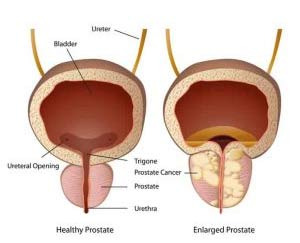
Prostate cancer can be detected early through a blood test called PSA test (Prostate-Specific Antigen test). If this level is high, it may indicate inflammation, benign enlargement, or cancer in the prostate, leading to further examinations. Additionally, a digital rectal exam (DRE), MRI, and biopsy are used for confirmation.
Treatment Methods
The treatment for prostate cancer varies based on the stage of cancer, age, and overall health status.
Active Surveillance
In cases where the cancer grows very slowly, especially in older patients, there is an approach of monitoring without immediate treatment, conducting regular check-ups instead. This allows for observation of the natural course rather than subjecting the patient to treatments with many side effects.
Surgical Treatment (Prostatectomy)
When the cancer is localized to the prostate, it can be removed surgically. Robotic surgery is commonly used nowadays, and recovery is relatively quick. However, side effects such as incontinence or erectile dysfunction may occur post-surgery.
Radiation Therapy
If surgery is difficult or not desired, radiation therapy is also an option. This method is effective for localized prostate cancer. There are external beam radiation therapy and brachytherapy, which involves inserting radioactive material into the prostate.
Hormone Therapy
Since prostate cancer grows under the influence of male hormones (testosterone), hormone therapy that lowers hormone levels is also used to suppress cancer growth. This is provided in injection or pill form and is mainly used for advanced cancer.
Chemotherapy
When the cancer has spread significantly or other treatments are ineffective, chemotherapy may be used. However, prostate cancer typically grows slowly, so the use of chemotherapy is relatively rare.
Cost of Prostate Cancer Surgery in the US
In the US, prostate cancer surgery is mainly divided into open surgery, laparoscopic surgery, and robotic-assisted surgery (Da Vinci surgery), with costs as follows:
Open and laparoscopic surgery: hospital costs around $10,000 to $135,000, with physician and anesthesia fees around $4,000 to $18,720.
Robotic-assisted surgery: total costs are estimated to be around $15,000 to $35,500.
If additional treatments such as radiation therapy or hormone therapy are needed, annual treatment costs can increase to $28,000 to $74,000.
Cost of Prostate Cancer Surgery in South Korea
In South Korea, costs vary depending on health insurance coverage and the type of surgery:
Open surgery: total medical costs around 6.2 million won, with surgery costs alone around 1.43 million won.
Robotic-assisted surgery: total medical costs around 18 million won, with surgery costs alone around 12.7 million won.
Robotic surgery has limited health insurance coverage, so patients should consider the significant out-of-pocket expenses.
Prostate cancer has a very high survival rate when detected early. If the cancer is confined to the prostate, the 5-year survival rate is nearly 100%. Even when the cancer has spread to surrounding tissues or bones, effective treatment can allow for survival for several years. Especially nowadays, medical technology has improved, allowing many to live longer while maintaining quality of life.
However, if the cancer has spread significantly, the focus may shift to pain management, hormone therapy, and quality-of-life-centered treatment. Therefore, the most important thing is early detection. The PSA test is a simple test that only requires a blood draw, so it is recommended to have it done at least once a year after turning 50.
For those with a family history, starting at 45 is advisable. In summary, prostate cancer has very few symptoms in the early stages but grows relatively slowly, and if detected early, treatment outcomes are good. There are various treatment methods such as surgery, radiation, and hormone therapy, and the survival rate is high, so there is no need to be overly fearful. However, do not forget the importance of early detection! Prevention is the best health strategy.







 El Dorado |
 lightyear |
 Moscow Kim |
 coloradoman |
 Montgomery Mom |
 Khan Film Blog Production |
 Illinois Mom |
 Rice Shop Uncle BLOG |
 allstar realty |
 Enjoyable American Life Diary |
  Tonky |
  viroma |
  cookie |
  Live and that's it |
  Alright Twain |
  eatontown blog |
  HAWAII Korean Church News |
  Amore |
  linex |
  Balancework |
  laro90 |
  MEDBIO American Doctor Blog |
  SWAT TEAM BLK |
  DREAM BIG |
  frostbite |
  330 Forever My Love |
  dralix58 |
  Gorama Round |
  Skydiving |