
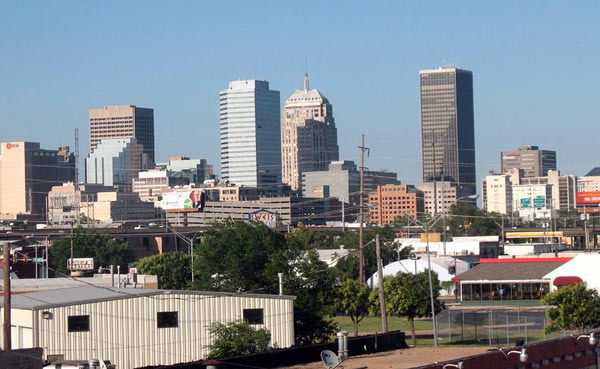
Over the past 20 years, Oklahoma City has completely transformed into a different city. Once considered an ordinary Midwestern town and a quiet administrative city centered around the oil industry, it is now referred to as a 'revived city' that has noticeably grown within the United States. Until the early 2000s, downtown was filled with empty buildings and old warehouses, and it was sparsely populated at night.
However, after the bombing in 1995, the entire city shifted to a "let's rise again" atmosphere, leading to significant redevelopment. The visible change was marked by the MAPS project. MAPS, which stands for 'Metropolitan Area Projects', was a long-term plan to redesign the city using citizen taxes. Thanks to this project, riverfront parks, gyms, libraries, and street improvements were carried out simultaneously, and particularly, the warehouse district known as Bricktown has transformed into a popular tourist and cultural street.
In the 2010s, economic growth accelerated with the energy industry boom. Oklahoma City emerged as a center for shale gas development, creating numerous jobs and increasing the average income in the area. As a result, new housing developments, shopping malls, and office buildings sprang up. Near Bricktown, large chains like Cheesecake Factory and Starbucks, along with local brewpubs, have turned the area into a gathering place for young people. Another change was the emergence of the NBA team 'Oklahoma City Thunder'.
Since relocating from Seattle in 2008, the city suddenly rose to prominence as a 'professional sports city'. On game days, the entire downtown turns blue, and with star players like Russell Westbrook and Kevin Durant showcasing their talents, the city's name has gained recognition worldwide. Hotels, restaurants, and fan shops have sprung up around the stadium, generating significant economic impact.
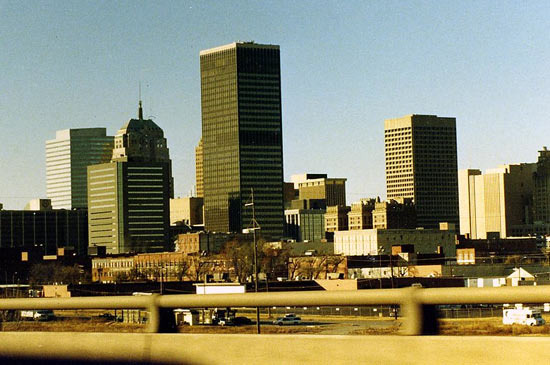
Photo of Oklahoma City in 2005
However, as energy prices fell, the local economy was shaken, and some urban areas experienced gentrification, leading to skyrocketing housing prices. Oklahoma City was originally known for its affordability, but recently, rent for downtown apartments has exceeded $2,000.
On the other hand, education, transportation, and cultural facilities have steadily improved. Urban park projects like Squire Park, completed in 2019, and the newly opened Skylines Bridge in 2022 have brightened the city's image. Along the Oklahoma River, walking paths have seen an increase in joggers, kayakers, and cyclists, and murals and outdoor sculptures have been installed in areas that were once only traversed by cars.
In the last five years, the IT and aerospace industries have emerged as new centers. Major companies like TikTok, Amazon logistics centers, and Boeing maintenance facilities have diversified the job structure. Additionally, since COVID-19, many people have moved from Texas and California, significantly increasing the population. The transportation system has also changed, with tram and bus routes expanded, and Will Rogers World Airport has modernized with the expansion of international routes.
Now, Oklahoma City is not just a Midwestern administrative city but has established itself as a vibrant metropolis where art, sports, and business coexist. What was once a quiet field with low buildings just 20 years ago is now referred to as a 'livable city' with high-rise hotels and beautiful night views. The steady development of the city explains why many Americans call it the "center of the future."



 daisypat |
 Chimhanbang Korea ACU |
 Trustworthy Faces |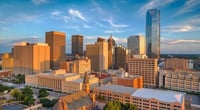
 US Regional Information Blog |
  dralix58 |
  Gorama Round |
  Skydiving |
  dreamport |
  Yellow Snowman |
  Toaster Pizza Magic Show |
  velvetnom |
  Anytime Journey |
  Mrs. Duluth |
  jaxter |
  Atlanta Mama |
  Baguette Blog |
  US Embassy |
  Korean Mom |
  My NYC |
  moo moo |
  Mr Oh |
  forevergee |
  festival |
  manchester |